Taranaki Shout Out ! A Pinnacle Way Adventure Coast to Coast

pinnacle-values

Taranaki GPs in the latest RNZCGP workforce survey were the LEAST likely to recommend General Practice as a career with  net promoter score of -20.

Trekking around Pinnacle MHN practices in the region with business development mangager and network leader Pauline Cruikshank and new GP Liaison and Auckland University Academic C0-ordinator Nadja Gottfert over the last few days it was really hard to match this fact with the enthusiasm and innovation that the GPs displayed.

img_2160

At Inglewood Medical Centre  we met Marie Fonseka, Cees Dekker and Steve Finnigan ( second from the left) – the FIRST GP to put his hand up for moving to the new PMS system INDICI which will create opportunities for true patient centred electronic medical records and an ability to integrate care across the whole of the health and social sector.
img_2189

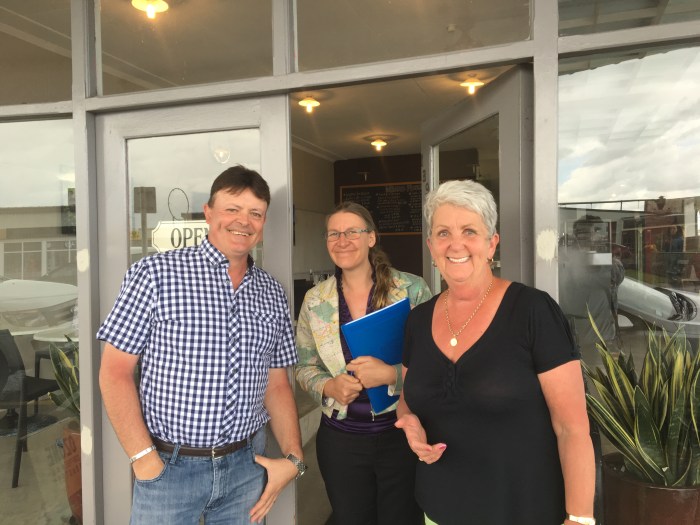
At Eltham Health Centre we met Anton Westraad – a solo GP who has championed insulin initiation in rural practices – preventing patients from having to travel an hour to Base hospital to meet with a specialist nurse. Anton’s work has been supported by Pinnacle’s Primary Options funding to keep patients close to home when they have issues like cellulitis, DVT , pneumonia, or needing rehydration after gastroenteritis.
img_2191

Gerard Radich and his wife Margot run a solo general practice in Stratford – his dedication to his patients is phenomenal – everyone is informed of every test result, he answers the phones at morning tea time so his staff can have a break – an early demonstration of the benefits of the Health Care Home GP phone triage he finds he can deal with most patients who call during this time without needing a face to face consultation.
img_2170

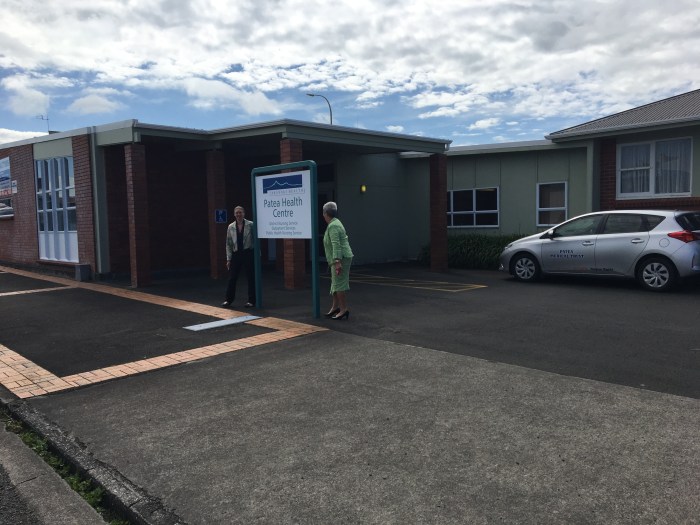
At Patea and District Community Medical trust we saw fantastic leadership in practice manager Christine Steiner who steers a practice in a very high needs community on the edge of the region in a small coastal town two hours away from Base hospital. The regular doctor Maria Beltran De Guervara was away on holiday when we visited but they provide PRIME services and the nurses truly work at the peak of their scope. img_2213
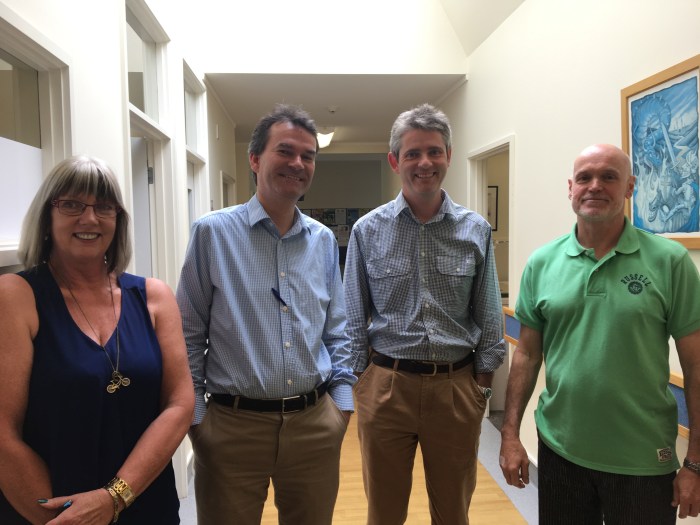
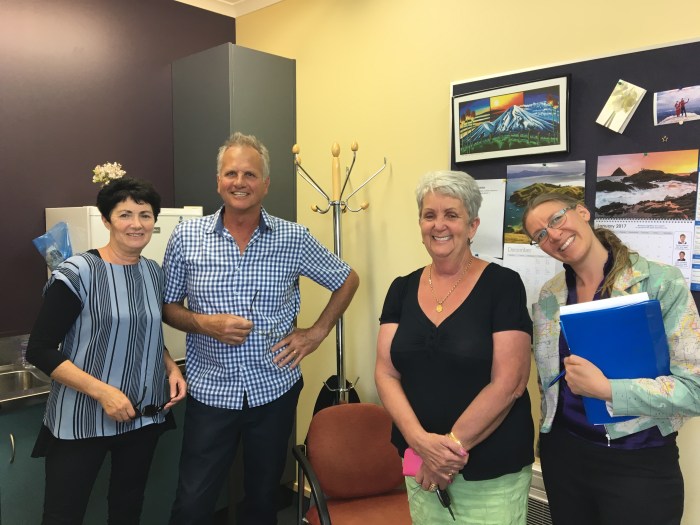
Karen Caskey ( Practice manager) Duncan Burns, Bill Carteledge, and Brian Wood at Avon Medical Centre are implementing the Health Care Home model of care, enthusiastic teachers with 2 RNZCGP registrars booked to learn alongside them in 2017.
img_2219

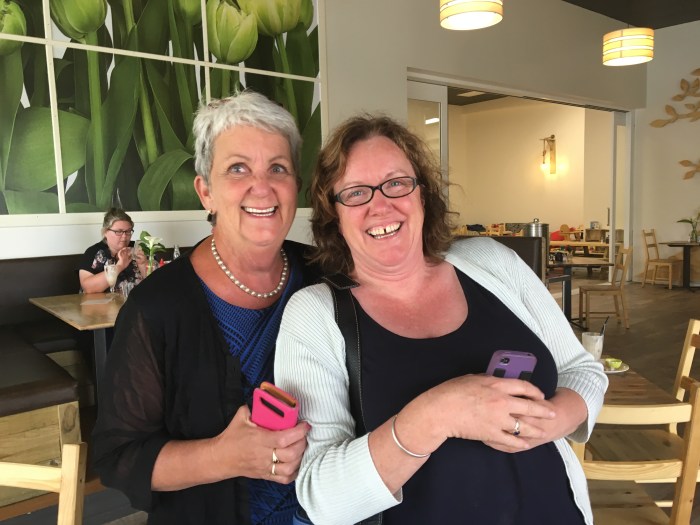
GP educator and ex-GP liaison Dr Viv Law of the Family Health Centre in New Plymouth runs the Taranaki Medical Foundation which Pinnacle supports to provide GPs with regular high quality education events in the region.

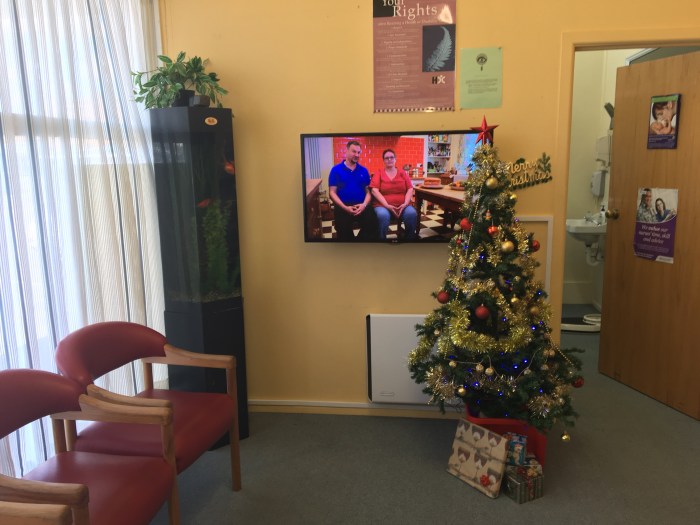
And we saw LOTS of Christmas Trees !!
img_2200

img_2203

img_2178

( Our Favourite !!)  Thanks to Ngati Ruanui Health Care.

So why the low “net promoter”score?

In a meeting with Taranaki CEO Rosemary Clements a group of GPs identified the pressures (and pleasures) of being a solo GP – maybe the need to be “bum up nose down”all the time seeing patients makes them less likely to recommend GP as a career.

The financial pressures on General Practice are worsening year on year – small rural practices really feel the pinch especially if they are Very Low Cost Access and the paperwork involved in managing a practice and compliance costs of meeting regulations and accreditation continue to escalate.

The solution may be to increase the number of training positions in the region for undergraduate and post-graduate doctors and nurses.

Enabling more to be done more simply in primary care through near patient testing and better management of patients as they approach end of life through advanced care planning.

The GP’s in the region discussed the need to change the business model and to look for other sources of funding outside of vote health.

They focused on the need to maintain the current aging work force to be happy and competent for as long as possible so that they as clinicians stay in position whilst new providers are in the pipeline. They also said they wanted a whole system approach to managing patients and look forward to better integration of care across primary and secondary sectors as promised by the Health Action Plan.

Pinnacle’s Mission is to get the best health outcomes for people and their communities and do this by supporting general practice to deliver high quality care.

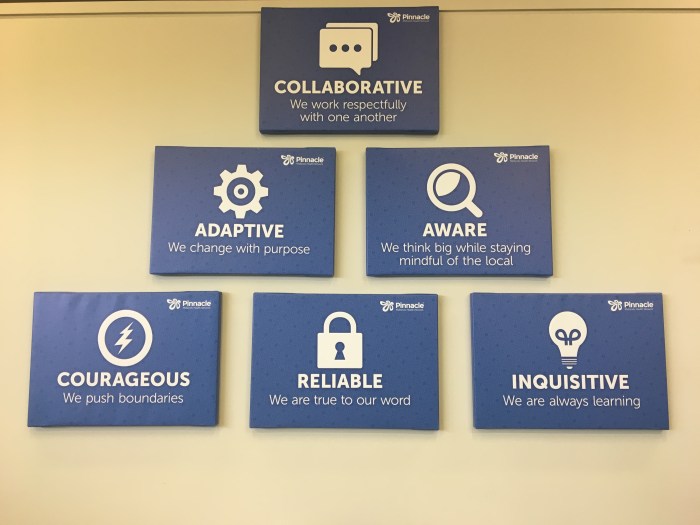
We are collaborative, adaptive, aware, reliable, innovative, inquisitive, courageous and keen to help !

Dr Jo Scott-Jones ( Medical Director) and Nadja Gottfert (GP Liaison and GP Academic)


Church Street Surgery 2016 Strategic Planning

How do you make a strategic plan a living document?

Our last plan 2013-2016 helped us to set values that we have stuck to and remembered for 3 years.

CARE – Compassion, Attitude, Respect and Excellence were linked to the local DHB values – we felt this would align us more closely with the DHB services in our region.

Last time we agreed goals around workplace improvements, process improvements, improved patient outcomes and improved services.

We have achieved a number of these goals and embedded them into our system – we have morning meetings, names on our doors, agendas for every meeting, reduced bad debt, expanded funding streams, and produced quarterly newsletters.

We now have an ecg and defibrillator as we planned, we have reduced waiting times and our waiting list, we have trialled nurse practitioner services and expanded our teaching opportunities.

Several issues we aimed for have not been achieved – we don’t have an USS and in retrospect most of our identified goals were achieved in the first 6 months after the plan was set.  Those we did not achieve were large projects that needed a long term focus – such as reducing teenage pregnancies in the town and running a community awareness programme on gout.

This year our strategic planning process was an opportunity to revisit our team culture and to revitalise our values , to find out what our community think of us and set some short term achievable goals, the start of a cycle of 3 monthly improvement plans.

Executive Summary:

Our New Values

Integrity Compassion Excellence Teamwork

ICE –T


Our Next Goals

Weekly Clinical Meetings

Expand the uptake of MMH – 300 by May 2016

Expand use of technology to educate patients – students to produce a MMH promotion video

Reduce waiting times for patients – expand the doctor workforce

Increase patient numbers to 3600 by May 2016


Detailed Report

VALUES

On Wed March 2nd we closed the surgery for the afternoon and after a shared lunch reminded ourselves of our #my3words for 2016 – a personal values exercise we had undertaken the week before.

For me those values for 2016 are Centre, Connect, Create. I need to remind myself to “centre” and look after myself physically and emotionally, if I can “connect” with others I will be more effective, and I will enjoy life more if I “create” new things.

We then moved onto a values exercise –

The instructions were to silently organise ourselves into a hierarchy of values (we had words posted on our backs) – once we had silently agreed an order we had to then speak to the value we had been assigned and argue for why it should be in our top 4.

We chose

integrity – because without integrity we have nothing

compassion – because you cannot do this job without compassion

excellence – because this encompasses a passion for quality, effectiveness, and great patient outcomes and

teamwork – because we need each other, our patients, and our colleagues to achieve our goals.


COMMUNITY INPUT:

We then headed out into the community to find out the community and patient view of our service:

In pairs we went out into the street and shops and spoke to at least 3 people and asked what they thought the surgery does, what it should do more of and what it should do less of.

We posted the findings on facebook and will continue to reflect on comments we get from our facebook followers.

FINDINGS:

What’s the most important things to you about your health ? Eating properly, keeping fit, lifestyle issues , be healthy for my kids and myself, having support, being well informed, being able to make decisions about your health, mental health, being given the tools to make my own decisions, Knowing my doctor is approachable and knowledgeable Making sure I am trying to help myself, Keeping informed and knowing my options

What are the most important things about a good GP surgery? Showing interest, thorough examinations, approachable, seeing the same doctor, familiarity Having good staff getting an appointment when needed, flexible times, reasonable price, affordable, good communication and openness – never rushed Care about the bigger picture – holistic health Being understood, people who listen On time Appointment availability friendly service Confidentiality

What would you like to your GP to do more of in the next 3 years ? Less waiting times, longer consultation times, after hours, educational sessions – smears and breast screening etc More doctors , after hours clinics. Push the antismoking – clean up the street education Use the whanau ora services to support wider families, one day late night clinic a week, Home visits Develop a formal engagement with the police More follow ups with the hospital – it is very hard to see a specialist Our next exercise was to reflect on these comments – and to use a set of craft materials to develop a model structure that described our ideal surgery in the next 3 years – we broke into two groups and thought about  what we should do more of as a team, what we should do less of as a team, and built our ideal worlds :

The “Whare Waka” model was based on Mason Durie’s Te Whare Tapa Wha model and “The Blue Path” was based on the materials in the box !

The Blue Path

The Whare Waka

The ideal world exercise was fun and creative and it also made concrete our values and started us thinking about the bigger and longer term picture for the surgery.

The videos can be viewed on Vimeo.com

The Blue Path – https://vimeo.com/157862107

The Whare Waka – https://vimeo.com/157812550

Each group then further explored the things we should do more of, the things we should do less of and 3 achievable goals for the next 3 months.

BRAINSTORM :


More of:

  • time availability to interact between staff – we need to be able to see more of each other to discuss clinical cases
  • awareness of how long people have been waiting in the book – protect your time for other patients
  • involvement of reception if the appointment is going to blow out in time
  • planning for unexpected patients.
  • longer opening hours
  • education training for staff
  • doctors
  • MMH – expanding the uptake

Less of:

  • chasing up patients – we can go round in circles chasing up things for patients
  • short staff days
  • bullying from patients
  • phone calls
  • bad debt
  • outstanding debt
  • people not using MMH even though they are signed up

Goals

Increase patient numbers to 3600 by May

Increase MMH numbers to 300 by May

MED students to do a video to promote health

Waiting time improvement.

Clinical time set aside every week

Our New Values

Integrity Compassion Excellence Teamwork

ICE–T

Our Next Goals

Weekly Clinical Meetings

Expand the uptake of MMH – 300 by May 2016

Expand use of technology to educate patients – students to produce a MMH promotion video

Reduce waiting times for patients – expand the doctor workforce

Increase patient numbers to 3600 by May 2016

WE WILL REVISIT THIS IN MAY 2016


Assisted dying – honest, early, hard conversations help. 

Koro was a funny man. Every consultation ended with a joke , jokes that were never offensive, sexist or racist, often stupid, and sometimes overlong but all the same, it was his gift to me after the consultation. Except that consultation. The “bad news” consultation. I told him, and his wife and son, he was dying, and with the rapid changes probably was dying quite quickly. There was no joke. Just tears. 

Over the next two weeks, when I visited him at home he took to his bed, and gradually the house filled up with relatives from all over the country, from far flung parts of the world. We live in New Zealand, so everywhere else is far flung. 

First one tent, then two, then a caravan, and finally a marquee was set up in the garden to house the gathering whanau, here to farewell Koro. Every time I visited there were more people. People singing, dancing, laughing, lots and lots of laughing, and Koro, there in the centre of it all began to worry me. He had colour in his cheeks, he was tired and not eating, but he looked better than he’d done for years. I even thought I’d got the diagnosis wrong, but a blood test assured me I had not. 

The night before he died he asked if he could be left alone with me. and after the family had gone he held my hand and cried. This time tears of joy. 

“Thank you for telling me” he said, “this has been the best time of my life.” 

Every day can be a good day in General Practice if we remember why we do it. 

In New Zealand we answer the question “What is the most important thing in life?” By saying “he Tangata, he Tangata he Tangata” – It’s “the people, the people, the people.” 

Dr Jo Scott-Jones @opotikigp 

Q:What have GPs lost by stopping doing after hours care ? Ans: Being there. 

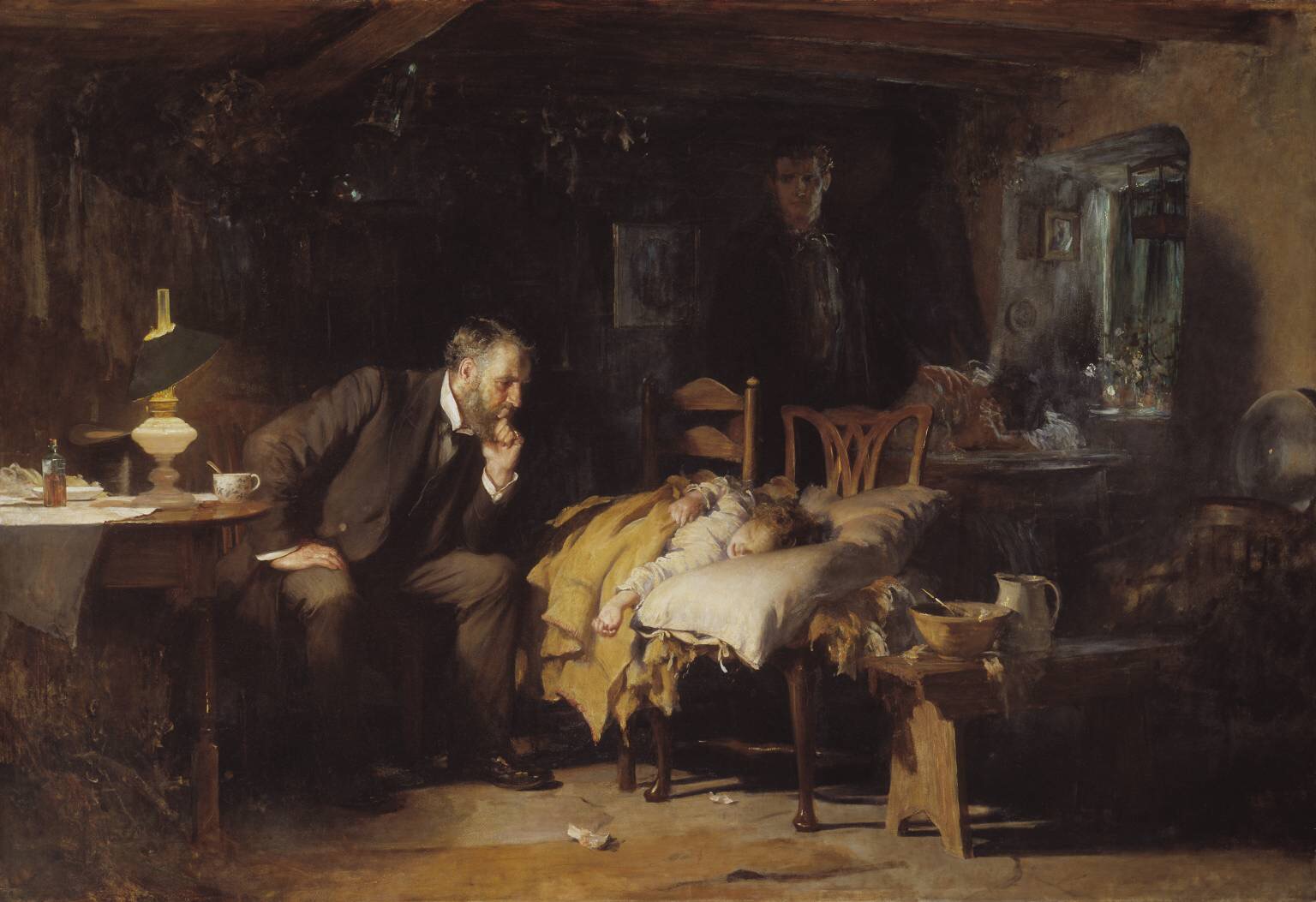
Take a moment and think of a picture showing a GP at work.

The chances you thought of Sir Luke Fildes 1891 painting “The Doctor.


The picture was inspired by what the artist described as the heroism of Dr Murray, their family GP, who cared for his own first born son when he died.

In the picture Sir Fildes placed the events in a fisherman’s cottage at dawn, to symbolise the beginnings of hope for this family as the child shows the first flickers of recovery.

It became hugely popular with late Victorian society and prints and engravings of it were best sellers at the time, and it remains one of the most memorable images of the work of a GP.

One of the things that strikes you is that the doctor is smartly dressed even thought it is dawn, and he is in someone else’s house presumably at some distance from his own more salubrious residence.

Someone has raced to the doctor’s home, before sunrise, let us assume it was the father. He roused probably the whole household and persuaded the doctor, despite any evident ability to pay other than in fish, to come to his home and see what could be done, what the signs that have been observed by the parents portent.

In 2016 what would this fisherman and his wife do if they lived in New Zealand?

After hours GP services, even in large cities, are as rare as hen’s teeth. Rural services have centralised into regional towns, urban GPs have devolved this care to larger accident and emergency centres that often close at 10.00pm, home visits if done at all, are confined to the dying, and often only undertaken during the working day.

It is extremely unusual to find a GP who is prepared to even answer the phone to a patient after their clinic has closed.

You cannot pay for an ambulance journey with fish.

In 2016 this family would most likely wait it out, see what happened, hope for the best. Like most of the people in poverty they probably don’t have their own car, if they were really worried they might rouse a neighbour,  and take the child to the nearest emergency department of a hospital.

It seems clear what the patients have lost by the inability of our health system to provide after hours GP services, but what has the system lost, and what has our profession lost?

Our small rural town is in the throes of losing our GP after hours service. The vision for the future given by the District Health Board and Primary Healthcare Organisation is one where a nurse and paramedic provide extended hours services until 10pm and the emergency department 45km away provides care from then until the GP clinics open in the morning.

This plan has been driven by the economic fact that after hours care does not make money and the small business model of care we rely on in New Zealand allows GPs to opt out of after hours services at little or no cost. We have also witnessed a dilution of professional ethics and values to the point where some GP colleagues feel justified in closing their doors at 5pm and leaving “emergency  care” to the “emergency” service.

For some of us this national transition has been very hard, and some still stand against the tide of this change like King Cnut.

We have just come to the end of the holiday season when my colleague and I have provided on call services on a 1:2 basis to our community.

Our “emergency” services over this time did deal with motor vehicle accidents, several of them, one involving nine people and three cars ! We were involved in attempting, and failing, to resucitate and new born child.

The “bread and butter” of our service was to holiday makers with hangovers, fishhooks in their skin, people with rashes and infections and worries, lots of them.

I appreciate that what we have done is not sustainable, we cannot keep on working a 1:2 on call roster. It is physically tiring, emotionally draining, and we know that over work leads to poor judgement and burnout.

But what will we lose when we no longer can do what Dr Murray did for Sir Luke Fildes and his family ?

By “being there” during the failed resuscitation, simply being there as a doctor, you provide assurance for the family that everything that could be done was being done.

By “being there” you provide reassurance for the nurses, ambulance officers, firemen and others people supporting and helping that they are doing the right things.

By “being there” you provide the level of expertise, experience and skill to know when to say stop and allow the family to begin to grieve.

At the motor vehicle accidents we saved lives,mint is not exaggerating to say that whilst waiting for the ambulances to arrive we provided essential life support to critically injured patients who would otherwise have died.

For the numerous people  who saw us with their “minor” ailments we saved a 90km round journey and a 4-8 hour wait in the emergency department to see a doctor, and we helped them enjoy their holiday.

When we stop providing after hours care as a profession we lose some of the respect we rightly hold in the eyes of our community, we lose the skills we have acquired to help people survive, we lose the excitement and thrill of providing essential care, we lose the satisfaction we get in a difficult job well done, and we lose some of the sense of professional pride we hold when we defend the role of the GP from those who still see it as a lazy, money grabbing, easy ride.

What does our system lose?

I think this is yet to be seen, I think “the system” hopes it will be cheaper, but  I don’t think the system will gain much in terms of cost savings.

Someone has to do the work. Someone has to be trained to “be there” in the same way. The need for care is not going away.

In the UK it seem they are struggling to reinstate the seven day a week GP service. Costs and workforce issues make it really hard to put back in place what you once had, but good luck to them.

We will work in our small rural community in 2016 to make the best of what we have, to provide the best service we can for our community, in our community. I don’t think we will be doing a 1:2 on call next Christmas, but I do know that whatever services we have in place, there will be a GP involved.

We are too important.

We need to “be there.”