The Doctors Dilemma Workshop Report – Recruitment and Retention – Junior Doctor’s Perspective

The Doctor’s Dilemma Workshop   – Ms Veronika Rasic (@DocVei) FM Trainee

Support and Scribe: Dr Jo Scott-Jones (@opotikigp)

The workshop was designed to explore the dilemma that we need people to work in health in rural areas, but we have great difficulty in attracting them.

Question : What would make an ideal future practice from the point of view of a young doctor or medical student?

Question : What needs to be done to make rural practice attractive from the point of view of a young doctor or medical student?  

In attendance were around 15 experienced and knowledgeable senior doctors from NZ, UK, Canada, Slovenia, Australia and Veronika a Family Medicine trainee and Rok Petrovcic (@Rok5rovcic) a Medical Student from Croatia.

Process:

Because the expected audience of young doctors and medical students did not attend, the original plan for the workshop was modified.

Veronika and Rok were given an exercise to perform which was observed silently by every one else. They each had 2 minutes to talk to each other without being interrupted. Each sentence they said they had to begin with the phrase “My ideal rural practice will….” Once their two minutes was up they swopped over. This was repeated 3-4 times until the issues rasied were becoming repetitive and the information gained exhausted.

They then undertook a brief reflection on the process and how it felt as did the observers – the main feedback being it is hard to listen without interruption.

(In this context it is a good exercise to ensure that a minority relative powerless voice is heard within a group setting, it quickly can take you places you would not usually go without support, and it produces an exhaustive list of issues that probably reflects combined wisdom.)

Outcome:

The discussion was captured on a flip chart using a “mind map” technique – My ideal rural practice will…

The students and larger group then discussed what “the system” needs to do in order to recruit more health professionals into this ideal rural practice:

  1. Start Early

Community role models have an early influence on career choice, be a great GP to your patients and you will inspire them – go into the primary schools and give talks,organise medical students to go into schools and give health or career talks.

It is most powerful when someone FROM that community can GO BACK and say “ I was once where you are now and it is possible to get to University, and to a health professional training” it is hard for kids to see unless they are shown it is possible.

  1. Undergraduates

Show undergraduates it is attractive to work in rural areas.

There are many myths that propagate amongst undergraduates – partly supported by the specialist who are training them in hospital settings – that GPs are the “poor cousins,” they not experts, they work long hours, they are isolated, that emergency work is overwhelming, they are isolated.

Hold an undergraduate “myth busting” evening to expose and modify the perception of risk at an early stage in undergraduate years. Try and persuade senior doctors to use less negative language about GPs and about Rural practice.

Of course selecting for rural, training in rural, maintaining long periods of time in rural communities is great for undergraduate education and for rural recruitment.

There is a feeling that even once qualified junior doctors don’t feel they have been given all the skills and attributes to “cope” in a rural practice – make sure they have the opportunity to gain those skills, or better skill make sure every graduate feels they could work in a rural practice.

  1. Make the workplace attractive.

Money makes the world go around.

It does cost more to live and work as a doctor in a rural area – there are greater locum costs, greater costs incurred in staffing, higher after hours work rosters to staff and pay for, greater costs getting away to education opportunities, and often a need to send children to boarding school because of lack of local facilities. A “rural premium” funding that gives a bonus to people working in a rural area can help make the job more attractive, it also shows the work is valued by the community.

Provide a junior doctor with a car and accommodation, at least for the first 6-12 months of work so they can find their feet and explore the community properly, it is a time when earning capacity os not great and this sort of incentive is highly prized.

Practices need to be well equipped.

It is satisfying to be able to provide comprehensive continuous care for a community. If the practice has access to some in-patient beds, and good diagnostic equipment like near patient laboratory services and an ultrasound scanner there will be fewer unnecessary transfers out of the rural community with the additional risk and costs that will occur. We know from work in Canada and Australia that small well equipped hospitals can be more cost efficient than larger centres.

Provide support.

Be a mentor to another doctor, older professionals can find this a sustaining role and younger colleagues are looking out for effective mentorship – if this can extend into private and personal aspects of life it can be even better to support a young professional through hard financial and personal decisions.

Support community initiatives.

An attractive community is a better place to work, a happy community is a better place to work, a resilient community is a better place to work. Engage in your community, support local initiatives that make the place you work more attractive, happy and resilient.

Gender Equity.

Make sure that maternity leave is provided for in a safe and comprehensive way within your system. Even if a junior doctor is not going to have a child, they need to know they could and it would be no problem, think about a crèche at work if the workplace is big enough. (In some countries it is still accepted practice to discriminate against women by asking about family planning during a job interview!)

Develop a clear career pathway for General Practice.

Young doctors want to see how they can advance in the career, often it seems that once you have become a GP you have reached the peak of the profession, the rest is experience. It is good to have something to strive for.

For Veronika and Rok, the students there it was good to hear the response of the experts and to understand that their ideal practices were achievable. The more senior people in the group felt the exercise was worthwhile for a variety of reasons, the two minute silence listening exercise was useful to observe, it was interesting that much of what the students had drawn out were issues that are on the agenda for the WONCA Working Party on Rural Practice.

The Rural Hero Test – #woncarural2015 

Rural Health Hero Test (after ZeFrank) 

It is safe here. 

Imagine We are surrounded by a soundproof glass bubble that protects us from all outside, only you and I are here and you and I can be honest with each other without fear. 

This test is designed to show if you are a rural health hero or not. 

Your only task is to answer honestly, by sitting down if the answer to the question is “yes”. 

Have you ever trodden in cow shit on your way to a home visit? 

It’s OK. You are with friends. 

Have you ever been chased by a gravel path by a goat, goose, dog, cow or chicken? 

Have you ever fallen over a wire fence at the scene of an accident and heard police, ambulance and fireman laugh  ? 

it is OK, you are with friends here,you are a rural health hero

Have you ever been on a home visit and had to have your car rescued by a tractor because it fell off the side of the road because the road was narrow and your reversing skills too poor? 

Have you ever fought with a manager or government official over the future of a service to your community? 

Yes. You are a rural health hero. 

Have you ever tried to match up skin edges ragged by a chainsaw? 

Have you ever fallen asleep in front of a patient on a warm afternoon after a busy  weekend on call?  

Have you ever spent an afternoon persuading a patient the trip to town to get healthcare is worth it? 

Have you ever seen a man, a barn, a gun, his blood and brains? 

Have you comforted a spouse in a kitchen left behind to deal with the debts? 

Be calm, you are safe here, you are a rural health hero. 

Has your spouse ever been asked by a stranger in the street if you have the results of their Chest X-ray ?

Have you ever sat at a family dinner party with your best friend and his wife who you have just treated for an STI that she caught from someone who is not at the party? 

Have you seen someone’s inner thigh in the cereal aisle of the local shop? 

You are safe here. It is OK. You are with friends. 

Do you live in a most beautiful house ? Is the view from your window amazing? Do you breathe clean air and walk in forests, fields, beaches, or mountains after work ? 

Have you ever thought your was the best job in the world ? 

Have you ever wondered what will happen next and smiled? 

It’s Ok, I see you have all passed the test, well done, you are all rural health heroes. 

Jo Scott-Jones 

(More on rural heroes can be found here  Rural Heroes

National Rural Health Conference 2015 – Closer to Home

http://www.nationalruralhealthconference.org.nz/nrhc15 

 People who have an interest in the health and wellbeing of rural communities will find substantial benefit from spending time at the National Rural Health Conference 2015 in Rotorua this year. 

 Rural communities are high needs communities, they have populations that are characterised by a high proportion of Maori, and poor socioeconomic profile. 

New Zealander of the year Lance OSullivan’s opening keynote will highlight some of the positive things that are being done in rural communities to address the gaps between mainstream and Maori New Zealanders.  This will be followed by Health Minister Jonathon Coleman who I am sure will talk about the current direction of travel of government policy and how initiatives like Alliancing are impacted on the way services are delivered. 

 The conference has clinical, research, management, hospital and community streams that reflect the pressures and issues that face rural health providers and communities.

Farmers, local government officers, rural business owners, NGOs and others will find specific conference presentations that will open opportunities and address the pressures they face in their daily lives. 

 Dr William Rolleston , National President of Federated Farmers will chair two presentations and workshops  about health and safety reforms implemented by WorkSafe NZ and the implications for rural businesses and workers, and around mental health issues, which remain a significant pressure in rural New Zealand. 

 Rural Communities in New Zealand have been referred to as “zombie towns” recently by an influential economic expert, to counter this world view Dr Ernesto Sirolli is coming back to New Zealand to present and run a workshop focussed on building community resilience and developing the economies of small communities.  Ian Proudfoot of KPMG will present on how rural communities can best equip themselves to deliver to global food markets. 

 New Zealand relies heavily on rural communities for its economic health, and the health of those  communities is vital to enable an effective workforce. All rural communities need to look at ways of futureproofing their rural health provider teams and leading rural educationalists will talk about how we ensure that we maximise training opportunities in rural communities. 

 What is amazing is that this is all on day one, and it represents only a small reflection of the opportunities the conference will offer to delegates. 

 Day two has more opportunities to work with Dr Sirolli on how to grow local economies,  inspiring stories from rural health students, developing sustainable health services, shifting services closer to home, challenges for Maori providers, technological advances in rural communities,  and how we best advocate for equitable sustainable services. 

 It is going to be a busy weekend – if you have an interest in the health and wellbeing of your community and want to socialise and network with like minded others – make time to be there !

Alliancing Progress

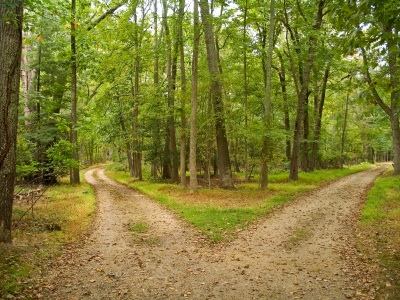
RoadNotTaken

The Road Not Taken by Robert Frost

Two roads diverged in a yellow wood,
And sorry I could not travel both
And be one traveller, long I stood
And looked down one as far as I could
To where it bent in the undergrowth;

Then took the other, as just as fair,
And having perhaps the better claim
Because it was grassy and wanted wear,
Though as for that the passing there
Had worn them really about the same,

And both that morning equally lay
In leaves no step had trodden black.
Oh, I kept the first for another day!
Yet knowing how way leads on to way
I doubted if I should ever come back.

I shall be telling this with a sigh
Somewhere ages and ages hence:
Two roads diverged in a wood, and I,
I took the one less travelled by,
And that has made all the difference.

DHBs and PHOs have by now all formed Alliance Leadership Teams, and in the near future ALTs will form “Service Level Alliance Teams” to provide advice and recommendations about “whole of system” approaches to improvement in services across a range of issues important in their communities – youth health, emergency care, and where appropriate rural providers across the country are being approached to engage in rural service level alliance teams.
This is a huge opportunity for rural providers. For the first time every DHB in the country – yes, even you South Canterbury – is being encouraged to develop an infrastructure that allows rural based providers a significant voice in the planning of sustainable health services for their communities.
At the recent workshop jointly organised by the MOH and NZRGPN (see what we are doing there – this is about working together) we heard the MOH say:
“This funding is to support rural general practice, there is no intention to reduce the financial sustainability of rural practice.”
“If ALTs think this is about making shifts in the way rural bonus is paid they have missed the point, this is about sustainable services for rural communities.”
Somewhere in ages and ages hence, we will tell our trainees with a heavy sigh, “two roads diverged in a wood, and I, I took the one less travelled by, and that has made all the difference.”
But if we are honest, just as for Robert Frost, the choice between the road taken and the alternative was not based on whether or not one was more trodden than another. For us the decision was based on the fact that one branch of the road looked pretty much like the road behind – increasingly fractured and uneven whilst the other had at the very least a few road signs.
At the end of the road whether we reach our destination will depend on how much effort we all put into the journey.
To be successful providers need to engage with the process.
The NZRGPN has on its website an “Alliance 101” link that hopefully will give rural providers a bit of a map to help them on their way. The website provides a link to tools to ensure that communication between the “centre” and rural communities works as best as it can in “rural proofing” – it provides a sample “terms of reference” to guide rural service level alliance teams as to how they should work together and direction for teams to consider principles and values by which they might work.
The website provides links to video summaries of the September Alliance Workshop and information about how these teams will be supported in the future.
The NZRGPN, MOH, DHBs and PHOs will regularly get together to share information and concerns about the sustainability of services to rural communities at the Rural Advisory Group – so even when the road travelled becomes leaf thick and slippery help is on hand to clear the path ahead.
No one relishes change, but the NZRGPN hopes and expects this change will be a positive one for our members and the communities they serve.

New Zealand “Alliance Contracting” Workshop – Sept 4th 2014

Alliancing is one approach that the New Zealand health system can use to efficiently allocate scarce resources through building communities of interest across more than one practitioner or organisation. There are core elements to alliancing that contribute to improving success.

An Alliance reflects a group of organisations agreeing to work together to achieve shared outcomes and using a shared decision-making forum, the Alliance Leadership Team (ALT). The approach provides a more ‘fit for purpose’ arrangement that promotes and facilitates integration, regional service planning, and alliance funding and planning. It provides a mechanism for clinical leaders to be involved in the development of health services.
Service Level Alliances are established by the ALT, as required, to implement significant service change and or specific service redesign. ALTs are decision-making forums for organising groups of related health services, including decisions on contractual mechanisms and budgets.

Who will be involved in a Rural Service Level Alliance?
DHBs, primary health organisations (PHOs) and providers will work together in a Rural Service Level Alliance. They will involve GPs and possibly other health professionals and organisations who deliver a given service. They are likely to engage with patient groups and communities. The range of participants depends on the agreed scope of the discussions.

Workshop Summary:

More than 80 representatives from rural general practices New Zealand-wide, DHBs, PHOs and other allied rural sector organisations attended a workshop in Wellington on September 4 to hear about and discuss the new Alliancing era and its impact on rural communities.
In October 2013, Associate Health Minister Jo Goodhew announced the Government’s support for a new way of allocating rural funding through Service Level Alliances and that additional rural funding would be provided in the form of transitional funding and rural practice sustainability funding.

Alliancing will see DHBs, PHOs and other health providers’ work together in Rural Service Level Alliance Teams. These teams will involve GPs and other health professionals, and organisations and could also involve community representation. Discussions and negotiations will ultimately determine funding levels allocated to rural practices for services provided.
Organised jointly by the New Zealand Rural General Practice Network and the Ministry of Health, workshop delegates gathered at the Rydges Hotel to hear speakers including the Deputy Director-General of the Sector Capability and Implementation Business Unit Cathy O’Malley, Network chairperson Dr Jo Scott-Jones, Network Board members and representatives from Midland Health Network and the Canterbury Clinical Network speak about the Alliancing concept and their experiences of instituting it. During the day delegates participated in workshops, listened to panel discussions and discussed and questioned the Alliancing concept.
New Zealand Rural General Practice Network chairperson Dr Jo Scott-Jones was delighted with the turn-out and with the positive attitude from delegates to embracing the new funding era. He urged them to “get involved” in the process and engage with their peers, communities, allied health services, DHBs and PHOs to ensure the future viability of their practices and services to communities and patients.

Dr Scott-Jones said Alliancing offered a formal infrastructure which would allow rural general practice to look closely at the way it operates alongside PHOs and DHBs.
“We need to be open to how we can “do things better”, so that services in rural communities continue into the future.
“At the same time we need to ensure the current somewhat fragile services are supported and retain their financially viability.”

Key outcomes of the workshop were:
• A MoH assurance that “there is no intent for rural funding to go anywhere other than rural general practice” There has been a lot of anxiety about this amongst providers. The process was much more about the sustainability of services in communities than about the funding.
• If an ALT wants to just talk about changing the “rural premium” funding streams it has missed the point – this is about big picture planning and innovation and is a real opportunity to develop sustainable rural health services
• Examples of Alliancing work already underway around the country provided an opportunity for delegates to hear what had worked well
• Acknowledgement that many rural practitioners, PHOs and DHBs will want to take their time over this process and develop these new relationships with trust and integrity
• The Network will continue to facilitate/share progress related to rural Alliancing
• Key messages and interviews with presenters will be available via the Network’s website: www.rgpn.org.nz

The Importance of Training in Rural Areas

The recent Rural Health Conference in Gramado gave us time to reflect on a number of important issues facing rural communities across the world – along with the pressures of climate change, population growth and increasing burdens of chronic disease the “perfect storm” is compounded by the continued problem of access to the quality medical services.

New Zealand began life as a rural nation, and our national identity takes pride in our ‘can-do’ approach to life. It is a fundamental human right that people living in all regions have access to high quality health services, perhaps especially in regions at distance from main population centres, regions that are often the backbone of a country’s economic wealth, and centre of leisure activities (1).

Having a healthy, engaged and well educated health workforce is important to the wellbeing of all communities. Attracting health professionals to live and work in rural areas is an international problem familiar to all WONCA members (2).

It may be a little confusing why this is a problem for those of us that have made this lifestyle choice, but it may be more prevalent in areas where there is a high demand, especially on after hours care, low reward and professional isolation and where family and social issues put pressure on rural providers (3).

In New Zealand year after year GP workforce surveys have detailed the on-going problems of recruitment and retention into rural practice (4-6), and the shortage of providers in rural areas continues, with over 25% of practices currently seeking full time GPs and Nurses (Rural General Practice Network unpublished data 2014.)

The medical workforce is the best studied example of a need that is widely reported to affect rural nurses, pharmacists, midwives, dentists and physiotherapists (7).

New Zealand needs 50% of its medical graduates to choose General Practice as a career, currently only 29% have a “strong interest” in doing so at the end of the medical degree offered by Auckland University, (8) and it is unclear how many NZ graduates actually become GPs and even less is known about how many of them to choose rural practice.

We do know that currently only 9.2% of doctors working in rural areas are NZ trained, and only 16.4% of NZ trained GPs choose to work in rural areas (9). We do know that as a proportion of the workforce the number of GPs is falling compared to specialists (10).

Rural workforce statistics show that the average age of rural General Practitioners continues to age and these communities rely heavily on international medical graduates to provide services. This leads to a continuing need for recruitment as we are failing to “grow our own” health workforce (9).

If we are to “grow our own” workforce it is very clear from international studies that choosing students with rural interests and backgrounds, exposing undergraduates to positive training experiences in rural areas, and providing well supported career pathways in rural practice increases the intention of medical students to work in rural communities once they graduate (2, 11).

We know that the career decisions of students and young professionals in the future will be affected by the way health career choices are viewed by society, available financial incentives, appropriate professional development and career opportunities, the availability of locums, a good quality of life ability to achieve balance, and the lifestyle choices of their spouses and family needs (2).

Many of us involved in education will be aware of the idea of “constructive alignment” of intended learning outcomes – what we hope to achieve – and the assessment and learning activities that are planned. The same theory applies to issues that face us in our rural communities.

We want to see an improvement in the health outcomes for rural communities, “Health for All Rural People”, we need our governments, colleges and colleagues to be measuring these outcomes – because of it is not measured it won’t be changed – and then we need our recruitment and retention and service delivery model thinking to be focused on achieving these outcomes.

This may seem bigger than Ben Hur but from what we do know it is clear that in order to meet the needs of our current and future population, in order to achieve equity and fairness or health outcomes for rural communities, in order to support and further develop the economic health of our rural sector, government needs to further support and expand initiatives that that increase exposure of training health professionals to positive rural experiences.

Dr Jo Scott-Jones

REFERENCES:

1. Ministry for Primary Industries : Rural Communities 2014 [09/05/2014]. Available from:http://www.mpi.govt.nz/agriculture/rural-communities.
2. WHO. Increasing access to health workers in remote and rural areas through improved retention:global policy recommendations. Geneva: World Health Organisation, 2010.
3. Burton J. Rural Health Care In New Zealand. Wellington: Royal New Zealand College of General Practitioners, 1999.
4. London M. New Zealand Annual Rural Workforce Survey 2000. Christchurch: Centre For Rural Health; 2001.
5. Mel Pande M, Fretter J, Stenson A, Webber C, Turner J. Royal New Zealand College Of General Practitioners Workforce Survey 2005 part 3: General Practitioners In Urban and Rural New Zealand. 2006.
6. The New Zealand Medical Workforce 2007. New Zealand Medical Council; 2008.
7. Health Workforce Development: An Overview. In: Health Mo, editor. Wellington, New Zealand2006.
8. Poole P, Bourke D, Shulruf B. Increasing medical student interest in general practice in New Zealand: where to from here? The New Zealand medical journal. 2010;123(1315):12.
9. Garces-Ozanne A, Yow A, Audas R. Rural practice and retention in New Zealand: an examination of New Zealand-trained and foreign-trained doctors. The New Zealand Medical Journal (Online). 2011;124(1330):14-23.
10. Medical Council of New Zealand: The New Zealand Medical Workforce in 2012 Wellington, New Zealand2013.
11. Walker JH, DeWitt DE, Pallant JF, CE. C. Rural origin plus a rural clinical school placement is a significant predictor of medical students’ intentions to practice rurally: a multi-university study. Rural and Remote Health. 2012;12(1908):Online.
12. Farry P, Hill D, Isobel Martin I. What would attract general practice trainees into rural practice in New Zealand? NZMJ. 2002;115(1161).
13. Worley P, Strasser R, D. P. Can medical students learn specialist disciplines based in rural practice: lessons from students’ self reported experience and competence. Rural and Remote Health. 2004;4(338):Online.
14. Ministry of Health: Voluntary Bonding Scheme Wellington, New Zealand2014 [09/05/2014]. Available from: http://www.health.govt.nz/our-work/health-workforce/voluntary-bonding-scheme.
15. Rural Health Interprofessional Immersion Programme Wellington, New Zealand2014 [09/05/2014]. Available from: http://www.rhiip.ac.nz/.
16. University of Otago: Rural Medical Immersion Programme Otago University, New Zealand2014 [09/05/2014]. Available from: http://rmip.otago.ac.nz/.
17. P Poole, W Bagg, B O’Connor, A Dare, J McKimm, K Meredith, et al. The Northland Regional-Rural program (Pukawakawa): broadening medical undergraduate learning in New Zealand. Rural and Remote Health. 2010;10(1254):Online


(published in Wonca News June 2014)

Wonca Rural Helps Fire up Enthusiasm

My Dad sang a song to me as I was growing up.

“It’s the same the whole world over, isn’t it a bloomin’ shame,
It’s the rich what gets the pleasure, and the poor what gets the blame.”

When you look at the state of healthcare around the world, it’s the poor what gets the blame alright, and the rural poor even more so.

Driven by the four horsemen of the rural apocalypse – distance, poverty, workforce statistics, and stoicism, rural health statistics across the globe are appalling.

Rural communities by definition are distant from the services available in urban areas, it takes longer for people to access care. Rural communities tend to be poor communities, people live a hand to mouth existence at the mercy of weather and crops. It can be hard to attract people with health care skills to work in rural places, and the “she’ll be right, mate” attitude of many people who live and work close the the land can add to delays in accessing healthcare.

Rural people, even in a sophisticated country like New Zealand, have worse expected outcomes for their health than people who live in an urban environment – worse suicide statistics, worse cancer statistics, worse heart disease statistics.

Rural communities and the governments that serve them would do well to listen to the voices of the health professionals who work in rural areas. Often the people who are living and working within a resource poor environment are the ones who have worked out the best, most pragmatic solutions to deal with the challenges they are facing.

Attending WONCA world rural health conferences has been a fantastic opportunity to listen to stories of rural practice from around the world.

Listen to the story of the Australian outback town where an aboriginal health worker, trained in a classical apprenticeship model, developed the skills to perform effective and safe general anaesthetics and surgery under supervision without ever seeing the inside of a surgical OSCE.

Listen to the story of the medical school that takes illiterate sons and daughters of fishermen and gradually trains them through midwifery, nursing and medicine into dedicated rural generalists capable of providing medical care in extremely resource poor environments.

Listen to the story of the medical students on elective charged with providing immunisations to a poor village, seeing the bigger picture and spending their time building boats to get the children from the village they lived in across the lake to the school, saving a two hour round trip through forests.

The Wonca Working Party for Rural Practice has over its 21 years of life developed an amazing resource of stories, pragmatic and evidence based solutions to the issues that face rural communities. Over the next year we will be revisiting many of these documents and thinking about what needs to be done to make sure that those stories are effectively heard.

Look at the Health for All Rural People statement, think about the role of women in a rural provider community, consider how best to support and develop effective teams of health care workers in rural communities.

We should all aspire to be like the WONCA expert “Five Star Doctor” – care providers, decision makers, communicators, managers and community leaders.

If you have an interest in rural communities, the documents available on the Wonca Working Party on Rural Practice page will help you.

Wonca Rural Focus on Rural Proofing

NZ Doctor Column

Those of us that work in rural areas know the issues caused by our distance from medical support and social amenities and the challenges of working with rural people who are classically stoical, used to waiting,hard working or not working at all.

We know the need for us to develop extended skills to serve our communities, whether it be to help at the emergency on the roadside, or deal with a mental health issue when no-one else is available.

We know what we need to do to manage with limited resources and in situations of chronic workforce shortages. And we know how to do all this year in year out for many years.

Rural practitioners world wide are described by Prof.Roger Strasser as “extended generalists” – we provide a wide range of services, take high levels of clinical responsibility, for individuals and our communities at large in relative isolation. We know as rural nurses and rural doctors that we cannot perform in isolation, we work in inter-professional teams, sharing decision making and planning for the best possible care for patients, frequently working at the peak of our scope.

Rural communities that are lucky enough to have a small rural hospital available to them have the added advantage of being able to access hospital level services close to their home, but these services need to be staffed and supported by the health system in their region.

Rural practitioners are often instrumental in developing, driving and sustaining the services in their communities – they have developed skills in clinical governance, management and health service planning that are vital to the health service for their community.

Tudor Hart’s Inverse Care Law still applies – people who most need services are those least likely to be given access to them – and when the rural team stops working, services fail and communities suffer.

I was able this month to attend the WONCA world rural health conference, and heard how our experience in New Zealand is repeated world over.

What is exciting is that all over the world, and no less in New Zealand, the health and wellbeing of rural communities is vital for the health and wellbeing of nations.

There is nothing to be gained by setting rural and urban communities against each other, competing for resources for health services. It is mutually beneficial for us to aim for “equity” in health service provision across urban / rural boundaries.

Here we see ourselves as “number 8 wire” people, our heritage and national identity is embedded in the close community of our rural origins.Those of us that live in cities see rural areas as our place for leisure and a source of refreshment and vitality, we expect to be kept well when we are visiting them.

Perhaps even more importantly our country’s wealth relies on our primary industries, based in and reliant upon the health and wellbeing of the people who live and work in rural places.

One of the key international movements that was heralded at the Brazil Wonca conference was the development of “Rural Proofing” tools – our Ministry of Agriculture and Fisheries developed one 10 years ago – the NZRGPN adapted it to apply to the health sector 5 years ago.

The idea is to ensure that whenever any new policy is developed the impact on rural communities is considered and adaptions made if necessary so that unintended consequences do not follow.

Taking this step will have a slow but important effect on health and wellbeing in small isolated communities across the country. I am looking forward to advocating further for the development of “rural proofing’ in New Zealand, and to the support of the international family medicine community in seeing this become a reality here.

More on the 12th Wonca World Rural Health Conference

Attending in international conference is always a valuable experience for me personally and for the two sponsoring organizations who helped towards my costs (The RNZCGP and the NZRGPN) important in maintaining an international profile and being able to influence decision making at this level in WONCA.

The conference was attended by Michael Kidd and Amanda Howe (WONCA president and president elect) and both of these people acknowledged the Wonca Working Party on Rural Practice (WWPRP) as the most productive working party within WONCA and that the qualIty and breadth of work produced in the past has had international influence, in particular in WONCA’s work with the WHO and UN.

Attendance at the WWPRP meeting on April 2nd was as usual very open and inclusive, this has been the philosophy of the working party, which has run on the basis of a core of dedicated and recurrently attending members who support a small executive. The whole working party meets face to face once a year at each rural or world WONCA conference, and these meetings take the form of a “council” made up by the people who attend.

I am an executive member (I was appointed as “public relations officer” in 2013 )

Present at this meeting were people from Alaska, Usa, Canada, Columbia, South Africa, Croatia, Serbia, Brazil, Australia, New Zealand, Nigeria, Germany, Norway and the UK.

Membership of the organisation was discussed and it was generally agreed that the WWPRP would remain open to all who come to the meetings, with an executive, a core of active members and a network of other interested people.
It was hoped that the working party will achieve a balance of gender, and more younger people, over the next 3 years.

Questions were raised about how to engage with “3rd world” countries especially when income is limited, and language a barrier. The executive will work on this but has in the past year established an active “google list server” creating email linkage between interested members (this has over 300 rural doctors linked currently and is still rising,) we have had a monthly “rural round up” in WONCA news, and have an active “twitter” presence @ruralwonca.

The group asked the executive to look at a regional structure for membership of the WWPRP whilst retaining the current open membership. Whilst applying some structure to membership of the WWPRP associated with WONCA regions the group suggested the executive use other working party policies to identify gaps, for example in the Working party for women, each region has an older and a younger member.

Social media links are an opportunity we need to build on – the group suggested the executive build and administer a “facebook” or “google hangouts” social presence as members of the list server seem to need a social outlet as well as discussion forum.

Funding was discussed as a perennial problem and some ideas as to how to raise money discussed.

The WWPRP has developed over time a number of influential policies, statements and declarations, these are being reviewed and people were allocated a responsibility. I will be looking at the policy on Information Technology and its use to improve rural health outcomes.

The main work undertaken by the Working Party over the past 7 years apart from the regular conferences has been the development of the Rural Medical Education Guidebook launched at this conference and the Melbourne Manifesto statement around ethical international recruitment.

Other issues to be discussed in workshops in this conference include the future role of rural hospitals, and rural proofing of policy. The WWPRP spent some time discussing these workshops and organizing the role of WWPRP members over the next few days.

The Dubrovnic conference in 2015 was discussed, and the organizing team, have decided to build in a nursing stream to be added to the conference, previous conferences I have attended have had a strong inter-professional education flavour to them, reflecting this.

The conference itself started the following day and although it is usual to find the main benefit from attending a conference like this is in the out of session networking and connections, all the keynote and individual workshop sessions were both useful and engaging.

Highlights of the conference programme included Michael Kidd’s presentation, inspired by the WWPRP guidebook and previous work, in which amongst other things, he quoted from the chapter of the Guidebook written by NZ’s Campbell Murdoch where he paraphrases Tudor Hart’s Inverse care law, claiming that quality of care is thought by some specialists to be inversely proportional to the distance from a teaching hospital.

Amanda Howe talked mainly about the role WONCA has in the international sector and how important it is for member organizations, through bodies like the WWPRP and the Working party of indigenous people, headed by Tane Taylor from New Zealand to be engaged in its work.

Roger Strasser gave the second John MacLeod address, succinctly detailing a lifetime’s worth of research and practice around rural medical education into a fascinating forty minutes. Along with John Wynn Jones’s keynote on Rural Proofing, these two orations emphasized the importance of rural communities to their countries, and of rural health workforce to those communities. They showed ways of addressing the issues raised by distance, lack of amenities, extended community expectations and workforce retention, recruitment and training.

I am very much looking forward to these speeches being available on line through the post conference website.

One of the changes implemented in Brazil compared to recent other WWPRP conferences was a “rural skills” stream, I ran a workshop focussing on or hospital assessment of trauma and pre hospital analgesia which was attended by around 15 Brazilian delegates and through the excellent “real time” translation worked well.

I also contributed to the workshop on small rural hospitals, sharing data from the DivRHM training scheme and emphasizing the NZ philosophy of including the Division within the RNZCGP. I also highlighted the joint training (around PRIME and APLS / ATLS) for example and extended responsibility of nurses in rural New Zealand.

I presented at the workshop on Rural Proofing and will continue to contribute to the work that is to be undertaken over the next 12 months leading to a larger presentation from the WWPRP on this issue in Dubrovnic in 2015. Amanda Howe took on board the message about rural proofing and committed to ensuring WONCA the executive considered “rural proofing” WONCA policy.

I also attended talks and workshops around concerning “rural stories”, innovation in rural practice, community engagement in rural areas, disaster management and rural family medicine, small group training “clinical jazz.”

I was also able to have NZ students highlight in the conference photographic exhibition.

The conference was personally very interesting and I learnt a lot. I consolidated relationships with other members of the WWPRP and made new connections with researchers in the USA (David Schmitz and Randall Longenecker) and the UK (Philip Wilson). I shared several conversations with Amanda Howe who is coming to the RNZCGP conference in July, and through conversations with Tanja (Croatia) expect to be invited to join the Dubrovnic organizing committee, along with a NZ rural nurse.

CONCLUSION

Rural health issues remain very important in the NZ context. Attending this conference and being part of the WWPRP help us to influence our own communities through the international influence it exhorts. We are strengthened by association with others dealing with similar issues.

The fact of being there indicates to our own Universities, members and Government that we do not suffer from what the Brazilians call “Stray Dog Syndrome” – the self doubt that arises from isolation.

I used the social network “twitter” (@RNZCGP1, @ruralwonca and #nzrgpn) to disseminate information about the conference as it happened, and will now undertake to disseminate further some of the learning from the conference through press releases, through this wordpress blog “Don’t shoot..” and facebook.