The New Zealand General Practice Podcast

Clinical Snippets February 2025

Clinical Snippets February 2025

1.  Measles and SSPE

Issue 60 of Paediatric Vaccines Research Review included comment on a recently published article in  J Child Neurology on pediatric subacute sclerosing panencephalitis complicating measles and the future of measles vaccination.

  • SSPE is a rare but invariably fatal complication of measles that can develop years after infection, particularly affecting those infected before age two. The latency period between acute measles and first symptoms of SSPE is usually 4 to 10 years but ranges from 1 month to 27 years.  Characterised by progressive neurological decline, SSPE leads to death usually within 1–3 years of onset.
  • Measles vaccination has drastically reduced SSPE cases, highlighting the importance of maintaining high immunisation coverage. SSPE, while rare, still remains a devastating potential outcome of measles, reminding us that vaccination extends beyond immediate benefits.
  • The commentator notes we rarely discuss SSPE – perhaps due to its low incidence – but as a life-altering complication it’s crucial to acknowledge and address its risks. A study from Germany published in 2013 found that children under 5 years of age when they contracted measles had a 1 in 1700–3300 risk of SSPE noting this risk is in the same order of magnitude as the risk of a fatal acute measles infection.  A study from Georgia published in 2020 found a similar incidence (crude incidence as high as 1:158 – 1:1580 (depending on estimates of measles reporting) for onset of measles at <1 year of age.  These figures are somewhat different to the 1:100,000 incidence quoted in current ImAC measles resources
  • Should we then bring this into our public health conversations as a stark reminder of measles’ broader dangers? Doing so could strengthen advocacy for vaccination, especially for early childhood immunisation in vulnerable populations.

2.  Lymphocytosis

  • I have recently reviewed a complaint relating to failure to inform a patient of their progressive lymphocytosis over several years.  On transferring to a new practice, they were diagnosed with CLL and informed of the preceding abnormal results.  Blood counts had been done occasionally over several years by the previous GP for symptoms unrelated to CLL but in addition to failing to inform the patient (who was well) of the abnormality, there was no structured monitoring in place.  
  • Health Pathways notes that transient increases in the lymphocyte count (lymphocytosis) are usually due to acute infections, such as Epstein-Barr virus infection and viral hepatitis, cytomegalovirus infection, HIV/AIDS. Less commonly, increased lymphocytes may be the result of pertussis and toxoplasmosis, or tuberculosis and brucellosis.  The lymphocyte count may also be elevated in smoking, post-splenectomy, acute stress response, trauma and autoimmune thyroiditis.
  • Look for associated anaemia, neutropenia, or thrombocytopenia.  Assess for any clinical signs of infection or inflammation including lymphadenopathy and hepatosplenomegaly which may represent a lymphoproliferative disorder.
  • If there is persistent lymphocytosis, consider:
    • autoimmune conditions, e.g. rheumatoid arthritis.
    • smoking.
    • post-splenectomy.
    • monoclonal B-cell lymphocytosis, a clonal lymphocytosis similar to chronic lymphocytic leukaemia (CLL), but with clonal lymphocytes less than 5 x 10⁹/L and without other features of CLL.
    • B-cell chronic lymphocytic leukaemia (B-CLL)
  • Request a haematology assessment or seek haematology advice if lymphocytosis with:
    • lymphadenopathy or hepatosplenomegaly.
    • rapidly rising lymphocyte count or blast cells present.
  • If the patient is well or has mild symptoms with lymphocyte counts 7 x 10⁹/L or less, recheck white blood cell count in 2 to 3 months. Reactive lymphocytosis generally resolves within 2 months. A stable increased lymphocyte count in an otherwise well person is unlikely to require treatment.
  • If persistent lymphocytosis is greater than 7 x 10⁹/L, consider a lymphoproliferative disorder (most commonly B-CLL) and if the immunophenotyping confirms a clonal population, follow the B-cell Chronic Lymphocytic Leukaemia (B-CLL) Pathway which advises when to seek haematology advice if clinically appropriate and gives specific monitoring advice.

3.  Preliminary Notice of Death

  • From mid-December 2024, medical practitioners and nurse practitioners have been required to send a Preliminary Notice of Death (PNOD) to Births, Deaths and Marriages (BDM) within 3 days of completing a Medical Certificate of Cause of Death (MCCD).
  • For those completing the MCCD online in Death Documents, the notice is sent automatically when the certificate is submitted.  Practitioners not currently registered to use Death Documents to complete a MCCD are encouraged to do so.
  • If a practitioner is not using Death Documents they need to complete a new PNOD form and email it to BDM. The PNOD contains a subset of the information contained on the MCCD and will be able to be completed on screen and emailed to BDM as an attachment. A digital signature can be accepted. Further information is available on the Te Whatu Ora website

4.  Cremation certification

  • Under normal circumstances, there is a requirement under Regulation 7 of the Cremation Regulations 1973 for the practitioner completing a cremation certificate to view the body of the deceased after death. Exemption from this requirement under specific circumstances has been in force since 2020 and was recently extended to 31 December 2025.  The exemption applies only in the following circumstances:   
  • This exemption does not apply to deaths in public hospitals, hospices, private homes, or other settings and where a medical practitioner does not know the medical history of the individual. Certifying practitioners are still required to view the body of a person who dies outside of a residential care facility in order to issue a cremation certificate.
  • Under this authorisation a medical referee must receive advice from a trusted source (usually a manager or registered nurse at the residential facility) who has a reasonable level of assurance of the cause of death to verify the identity of the deceased and that the deceased died of natural causes.
  • Under the exemption the Form B cremation certificate should be completed by a certifying practitioner who previously attended the deceased before death (by personal attendance or via video-link) and should state that “the deceased was not examined after death as per the Minister’s residential care facility exemption”.  A practitioner who did not attend the deceased before death must still examine the body after death in order to issue a medical certificate of cause of death.  It is still important to determine whether the deceased has a pacemaker or biomechanical aid and to complete the appropriate certification in this regard.  Further information is available on the Te Whatu Ora website.  

5.  In brief…

(i)  A reminder in the December 2024 Prescriber Update that acyclovir and valaciclovir can accumulate in patients with renal impairment. Therefore, a dose adjustment is needed in these patients to reduce the risk of risk of neurotoxicity.  NZ Formulary gives specific dosing instructions for various creatinine clearance  (CC)measurements eg using valaciclovir for herpes zoster, CC 30–50 mL/minute, 1 g every 12 hours, CC 10–30 mL/minute, 1 g every 24 hours, CC less than 10 mL/minute, 500 mg every 24 hours.   Advice is to monitor patients with renal impairment closely for signs of neurotoxicity, which may include confusion, agitation, hallucinations or seizures.

(ii)  The January 2025 NZF update includes new cautions added to the prescribing information for medroxyprogesterone acetate (MPA – Provera, Depo Provera): history of meningioma; increased risk of meningioma with prolonged use of injection or high oral doses (100 mg or more), discontinue if meningioma is diagnosed.  A recent French study showed no excess risk of intracranial meningioma for progesterone, dydrogesterone, or levonorgestrel intrauterine systems.  The meningioma warning has been in place for cyproterone acetate (CPA) for a number of years (see 2020 Prescriber Update) mainly in doses 25mg or higher and with extended use, with current meningioma or history of meningioma being a contraindication to use.  CPA may be used for androgen blockade in transgender therapy as well as in women for severe signs of androgenisation. The cited study found odds ratio of 5.55 for MPA and 19.21 for CPA for development of meningioma.  However, the background annual incidence of meningioma is low (9.7/100,000 in the US) although 2-3 times more common in females than males.  

(iii)  A recent Goodfellow Unit GEM notes serological testing for herpes simplex virus (HSV) is not recommended in most cases of genital herpes due to its accuracy and clinical utility limitations. Serology detects past exposure to HSV but cannot confirm active infections or distinguish between genital and facial infections. HSV IgG antibodies may take weeks to months to develop, leading to false negatives in early infection, and even seropositive individuals may revert to seronegative status. Genital herpes screening is not recommended and is likely more harmful than helpful.  Viral swab PCR testing from active lesions is the gold standard in NZ for accurate diagnosis. The New Zealand Herpes Guidelines advise that HSV-1 and HSV-2 serology is not recommended except in rare, specific situations (e.g., an asymptomatic pregnant partner of a newly diagnosed person); discuss these with a sexual health specialist.  See the national guidelines for management of genital herpes for more information. 

6.  Resources

(i)  A validated rapid (3-4 minutes) screening test for cognitive impairment is the Mini-Cog.  Follow-up abnormal testing with a suitable multi-domain test. 

(ii)  For patients with limited English, the Rowland Universal Dementia Assessment Scale (RUDAS) is specifically designed for use in culturally/linguistically diverse population and is validated when administered in English with a medical interpreter.  The link includes specific instructions on how to administer the test with an interpreter. 

(iii)  A combined brief (4 minute) patient screening and informant interview (if indicated by patient screening – takes 2 minutes) is the GPCOG test.  Printable versions of the test in various languages and an online version are available on the GPCOG website together with a training video. 

(iv)  Melanoma counselling – The Melanoma New Zealand Counselling Service supports anyone affected by melanoma, including individuals, families, whānau and carers facing the challenges of a new diagnosis, ongoing treatments, or post treatment. Free, and online or by phone, our counselling service offers you an opportunity to safely explore your thoughts and emotions with a professional counsellor, in complete confidence.  Up to four x 50 minute counselling sessions are available on self-referral or referral via a health professional.  The Melanoma NZ website also contains a wealth of resources for patients around all aspects of melanoma prevention, diagnosis and treatment. 

(v)  The December issue of NZ Doctor includes an article on the Post-Covid Syndrome symptom map which can be downloaded as a PDF from the Manatu Hauora Long Covid rehabilitation website along with guidelines and other clinical resources for managing the condition.  The article notes the map can be sent to the patient to complete in advance of their appointment, ensuring 15-minute appointment times are optimised. In addition, it can reduce patient fatigue, ensuring the patient does not expend precious energy retelling their story, by providing a representation of their situation which can be easily shared with other clinicians involved in their care.  From a GP’s perspective, the PCSM gets straight to the heart of the issue, highlighting attention to multisystem involvement and capturing both symptom severity and functional disability. The PCSM saves time by ruling out red flags or, conversely, highlighting the need for further investigations, thereby directing immediate care or onward referral. For complex patients who present with a multitude of symptoms without any discernible pattern, it provides a useful starting point from which to move forward.

The New Zealand General Practice Podcast

Clinical Snippets January 2025

Clinical Snippets January 2025 

1. New prostate cancer care pathway

Te Aho o Te Kaho (Cancer Control Agency) have recently published Optimal cancer care pathway for people with prostate cancer (OCCP – publication not yet available on their website).  The pathway extends from preventative health measures through to palliative and end of life care as it relates to prostate cancer.  There are some (mostly subtle) variations from current Community Health Pathways (CHP) guidance and these changes will be incorporated into the pathway in the future.  

  • Screening Recommendations

The CHP emphasizes shared decision-making for prostate cancer screening in men aged 50–70 years, and those over 40 years with a family history of prostate cancer or carrying BRCA2 mutations. The OCCP focuses on PSA testing for men aged 50–69 years and recommends screening for higher-risk groups such as positive family history, Māori or African descent (from age 45 years) and known BRCA2 carriers (from age 40 years). It advises against PSA testing in asymptomatic men older than 75 years or those with a life expectancy of less than 10 years.

  • PSA Thresholds and Management

Thresholds for referral based on PSA levels differ slightly between the two guidelines. The CHP and OCCP suggest a PSA level above 4 µg/L for men younger than 70 years and above 20 µg/L for men older than 76 years as markers for referral to urology. For men aged 71-75 years the OCCP recommends a referral threshold PSA level of 6.5 ug/L compared with the current CHP recommendation of 10 ug/L.   Both pathways agree that a PSA level above 50 µg/L warrants immediate referral for a high suspicion of cancer.

  • Repeat Testing and Diagnostic Pathway

Both guidelines recognize the importance of excluding transient causes of PSA elevation, such as urinary tract infections or recent ejaculation, before testing. However, the OCCP specifically recommends repeat PSA testing in six weeks to confirm an elevated result, whereas the CHP allows a window of 6–12 weeks for repeat testing. The OCCP also advocates for using adjunct diagnostic tools, such as MRI and PSA kinetics (density and velocity), to guide biopsy decisions. This is a key distinction, as the HealthPathways guidance primarily relies on PSA and digital rectal examination (DRE) findings.

  • Role of Digital Rectal Examination

The Community HealthPathways considers DRE as part of the screening process but allows for PSA testing alone if men decline DRE. In contrast, the OCCP strongly emphasizes the importance of DRE, noting that abnormal findings may warrant referral even if PSA levels are normal.

  • Management and Follow-Up

Both pathways provide guidance on active surveillance for low-risk cancers. The OCCP formalizes this process with regular PSA monitoring intervals based on risk level, while the Community HealthPathways recommends annual PSA and DRE for men with a family history or other high-risk factors. 

2.  FIT testing and colorectal symptoms

  • Current Health Pathways on investigation of patients with colorectal symptoms note that use of faecal occult blood test (FOBT) and immunochemical faecal blood test (iFOBT) are not recommended outside of the National Bowel Screening Programme although the Canterbury version notes that patients satisfying the criteria for direct access colonoscopy or CT colonography may be asked to provide a faecal sample for FIT testing.  
  • This variation relates to research being undertaken in the region with a study published in NZMJ towards the end of last year concluding that FIT based prioritisation of patients referred with symptoms concerning for CRC is feasible and reduces time to CRC diagnosis.  Participants (over 700) were 50 years or older (40 years or older for Maori) with colorectal symptoms satisfying non-urgent criteria for colonoscopy.  Depending on fHB concentration, patients were then triaged to either urgent colonoscopy, non-urgent colonoscopy or CT colonography.  Overall, 17.1% of the 715 patients returning a sample had FIT positivity ≥10mcg/g, and 2.2% of patients (n=15) were diagnosed with colorectal cancer. FIT detected colorectal cancer with sensitivity and specificity of 80.0% and 84.3%, respectively. The median time to diagnosis was 25 days, which the authors note is a reduction from what is currently seen in NZ due to long wait times for colonoscopy.
  • The authors comment also that informal feedback regarding the pathway has been universally positive, albeit with some criticism that general practitioners cannot yet request the test directly. Nevertheless, we anticipate with enthusiasm a national directive on the use of FIT in patients presenting with colorectal symptoms, a work in progress under the supervision of the national bowel cancer working group, which we hope will revolutionise the assessment, referral and triage of these cases, and help obtain the greatest benefit from our colonoscopy resource.

3.  Infrequent zoledronate from early menopause

  • Another New Zealand based study recently published in NEJM looked at the effect of infrequent administration of zoledronate in preventing vertebral fractures in early post-menopausal women.  The study was a 10-year, prospective, double-blind, randomized, placebo-controlled trial involving early postmenopausal women (50 to 60 years of age) with bone mineral density T scores lower than 0 and higher than −2.5 (scores of −1 or higher typically indicate normal bone mineral density) at the lumbar spine, femoral neck, or hip. 
  • Participants were randomly assigned to receive an infusion of zoledronate at a dose of 5 mg at baseline and at 5 years (zoledronate–zoledronate group), zoledronate at a dose of 5 mg at baseline and placebo at 5 years (zoledronate–placebo group), or placebo at both baseline and 5 years (placebo–placebo group). Spinal X-rays were obtained at baseline, 5 years, and 10 years. The primary end point was morphometric vertebral fracture defined as at least a 20% change in vertebral height from that seen on the baseline radiograph. Secondary end points were fragility fracture, any fracture, and major osteoporotic fracture.
  • Of 1054 women with a mean age of 56.0 years at baseline, 1003 (95.2%) completed 10 years of follow-up. A new vertebral fracture occurred in 6.3% in the zoledronate–zoledronate group, in 6.6% in the zoledronate–placebo group, and in 11.1% in the placebo–placebo group.  The relative risk of fragility fracture, any fracture, and major osteoporotic fracture was 0.72, 0.70 and 0.60, respectively, when zoledronate–zoledronate was compared with placebo–placebo and 0.79, 0.77, and 0.71 respectively, when zoledronate–placebo was compared with placebo–placebo.
  • The researchers concluded:  Ten years after trial initiation, zoledronate administered at baseline and 5 years was effective in preventing morphometric vertebral fracture in early postmenopausal women.

4.  Isotretinoin prescribing reminder

A recent issue of RNZCGP Pulse included a letter from Te Whatu Ora regarding isotretinoin prescribing.  This followed a coronial case relating to death by suicide of a young patient taking isotretinoin.  Prescribing advice includes:

  • Please refamiliarise yourself with the appropriate use of isotretinoin. Local information can also be found at Community HealthPathways, bpacnz, and New Zealand Formulary
  • Allow sufficient time to discuss the benefits and risks of isotretinoin and other treatment options with the patient (and their whānau/caregiver where appropriate). Although not every patient will experience adverse effects, every patient should know about them and what to do if they occur. We recommend discussing both common and potentially serious but rarer adverse effects and the pre-treatment screening and monitoring required to manage these risks. 
  • Document discussions and decisions. Please ensure that your records accurately reflect the information that was discussed/provided during the informed consent process. We recommend providing written information to supplement discussions. Printable patient information is available online from several trusted sources such as Healthify
  • Schedule follow-up appointments to monitor treatment effect and adverse effects. Regular follow-up is needed for all patients taking isotretinoin to ensure the treatment is working as intended and is being tolerated with no unacceptable adverse effects. 
  • Psychiatric adverse effects have been reported in people treated with isotretinoin. Successful treatment of acne can improve psychological wellbeing. However, serious mood and behavioural disorders have been reported in some patients taking isotretinoin. While a causal association has not been definitively established, mental health should be assessed before prescribing isotretinoin and during treatment. 
  • Isotretinoin is highly teratogenic. Isotretinoin is contraindicated in people who are pregnant or people at risk of becoming pregnant due to the rate of severe birth defects (25-40%) even with a short duration of exposure. Patients must be able to comply with the necessary contraceptive measures and pregnancy must be excluded before starting treatment and, periodically during treatment. 
  • Isotretinoin can cause liver function and lipid abnormalities. These effects are common (up to 25% of patients) and while usually mild, rare cases of hepatitis and pancreatitis have been reported. Serum lipids and hepatic function should be checked prior to starting isotretinoin and periodically during treatment.

5.  Plug for This Way Up

In this time of constrained mental health resources this is a reminder of the This Way Up resources summarised in a recent newsletter to primary care health providers.  Of note is a new on-line education and CBT programme designed for patients with health anxiety issues described as being suitable for patients who:  

  • tend to worry a lot about their health and the possibility of having or developing an illness
  • check their body frequently for signs and symptoms of disease or illness
  • feel compelled to research their symptoms or try to avoid health-related information or content entirely
  • seem to be stuck in the way they feel and would love to learn how to get out of this cycle
  • are ready and willing to learn new skills to change the way they feel

This is one of many on-line CBT programmes the site offers for a variety of psychological issues, all evidence based.  The programmes are offered at no charge to the patient if prescribed by you (provider registration required) and this facilitates patient support and monitoring.  

6.  Equity in H Pylori testing

  • The January issue of Helicobacter includes a New Zealand study on ethnic inequity in the current approach to H. pylori testing and treatment in Aotearoa New Zealand.  There are up to sixfold differences in gastric cancer mortality by ethnicity in this country, and H. pylori is the major modifiable risk factor. 
  • The study design was a retrospective cohort analysis of linked administrative health data. Laboratory testing data and pharmacy dispensing were linked to the Northern region health user population dataset (1.9 million) from 2015 to 2018 with an individual’s first test for H. pylori investigated. Ethnic differences in rates of H. pylori testing, infection, treatment, and retesting, adjusted for age, sex, and calendar year were analysed.
  • Ethnic inequities were present across the clinical pathway. Compared to sole-European, testing rates were lowest in Māori (OR 0.69) and Pacific (OR 0.81) and highest in Middle-Eastern/Latin-American/African (MELAA) (OR 2.21) and Asian (OR 2.02). Positivity rates were highest in MELAA (RR 2.96, 39%) and Pacific (RR 2.84, 38%) followed by Asian (RR 1.93, 26%) and Māori (RR 1.71, 23%). Treatment rates were similar for Asian (HR 1.05), MELAA (HR 1.03), and Māori (HR 0.98) compared to sole-European but lower in Pacific (HR 0.90). Māori and Pacific were half as likely to be retested as sole-European.
  • The investigators concluded:  Despite the higher prevalence of H. pylori and gastric cancer, Māori and Pacific are relatively underserved with lower rates of testing and treatment than sole-European. Improved guidelines and the consistent application of these along with an equity-focused test and treat program are likely to be particularly beneficial for Māori and Pacific in addressing inequities.
  • The local Health Pathways (Dyspepsia and Reflux) notes gastric cancer tends to occur a decade earlier in Māori or Pacific people, or immigrants from high-risk countries (defined as East Asia, Central and South America, Southern and Eastern Europe, the Caribbean, Middle Eastern, Latin American, African (MELAA)).  Recommended investigations include H pylori testing noting the faecal antigen test is the only test available in primary care and recommendation:
    • Advise the patient to only do the test when they have:
      • had no antibiotics for at least 1 month before the test
      • had no omeprazole or pantoprazole (PPIs) for at least 1 week before the test (even better 2 weeks)

7.  Resources and brief updates

  • BPAC Peer Group discussion points on drug misuse, best preceded by review of an earlier BPAC article on unintentional misuse of prescription medicines.  
  • One pager from Manatu Hauora summarising practical aspects of use of the Mental Health (Compulsory Assessment and Treatment) Act 1992 ( The Mental Health Act).  Further online training on application of the Act is available on the Te Pou website.  
  • Avoiding triple whammy handout from Healthify.  Consider supplying to all patients on an ACE/ARB (including valsartan)and diuretic.  
  • BPAC Best Practice bulletin 112 refers to availability of a new guide: Continence management for people with dementia mate wareware published by researchers from the University of Auckland.  The two-part guide provides practical information and advice for people with dementia mate wareware and their carers about how to navigate through the system, e.g. how to access disability support services, allied health professionals or specialist community support groups, and possible solutions to commonly encountered continence problems, e.g. locating, accessing and using public toilets, personal continence products.

A Pharmac press release last month notes that consultation is currently underway regarding a proposal to increase patient access to ADHD medications.  To quote the release:  The Ministry of Health is proposing to change the approval notices for these medicines, so that more doctors and nurse practitioners are able to prescribe them… Pharmac is proposing to change its Special Authority criteria for ADHD medicines to align with the changes the Ministry of Health is making.  This will mean more doctors and nurse practitioners will be able to submit Special Authority applications for people starting funded ADHD stimulant medicines…If this proposal is approved, the Ministry of Health will change the approval notices on 1 July 2025. Pharmac will update its Special Authority Criteria at the same time.  There is an ADHD update: Assessment, management, and care pathways webinar day being run by the Goodfellow Unit on Saturday 22 February 2025 (registration required, cost $320).  

The New Zealand General Practice Podcast

Clinical Snippets

December 2024

Clinical Snippets December 2024

1. Empagliflozin and ketoacidosis

The December 2024 Prescriber Update includes a reminder on the risk of ketoacidosis associated with use of SGLT2 inhibitors (empagliflozin in NZ) whether or not they are being used for treatment of diabetes.  Key messages and prescribing considerations include:

  • Patients taking SGLT-2 inhibitors are more likely to develop ketoacidosis when other risk factors are present, including acute illness, infections, surgery, pancreatic disorders, insulin dose reduction, insulin insufficiency, severe dehydration, reduced caloric intake, low carbohydrate diet, heavy alcohol use and a history of ketoacidosis.
  • Inform patients taking SGLT-2 inhibitors about ketoacidosis risk factors, signs and symptoms. Blood glucose levels may be normal or only mildly elevated. Symptoms may be non-specific and include nausea, vomiting, malaise, anorexia, abdominal pain, excessive thirst, shortness of breath, dizziness or confusion. Advise patients to seek medical attention immediately if they experience ketoacidosis symptoms, irrespective of blood glucose levels.
  • Consider monitoring ketones and temporarily discontinuing SGLT-2 inhibitors in clinical situations known to predispose patients to ketoacidosis. Refer to local clinical guidelines for further advice, including management before surgery/procedures and during acute illness.
  • Ketoacidosis may be prolonged in patients with T2DM, despite stopping SGLT-2 inhibitors.

Healthify has excellent resources for users of empagliflozin including a printable information sheet in a variety of languages that covers risks of ketoacidosis. 

2.  Decision to fund fosfomycin in the community

Pharmac has decided to fund fosfomycin (branded as UroFos) in the community from 1 November 2024. This decision will allow New Zealanders to access funded fosfomycin treatment in the community, reducing the need for people to be treated for urinary tract infections (UTIs) in the hospital.  Dose for an adult is 3 as a single dose – comes as a sachet which the patient mixes with water (see NZF).  Special authority is required with initial application from any relevant practitioner. Approvals are valid for 2 months for applications meeting the following criteria:

Both:

  • Patient has an acute, symptomatic, bacteriologically-proven uncomplicated urinary tract infection (UTI)/cystitis with Escherichia coli; and

Either:

  • Microbiological testing confirms the pathogen is resistant to all of: trimethoprim, nitrofurantoin, amoxicillin, cefaclor, cefalexin, amoxicillin with clavulanic acid, and norfloxacin; or
  • The patient has a contraindication or intolerance to all of: trimethoprim, nitrofurantoin, amoxicillin, cefaclor, cefalexin, amoxicillin with clavulanic acid, and norfloxacin that the pathogen is susceptible to.

3.  Latent autoimmune diabetes

I have received a complaint recently regarding delayed diagnosis of latent autoimmune diabetes of adults (LADA) in a patient in his 40’s with history of Graves disease who was diagnosed with type two diabetes and had two years of poor glycaemic control despite metformin and SGLT2 inhibitors before the correct diagnosis was made and insulin therapy commenced.  A BPAC article on management of type 2 diabetes notes at least 5-10% of adult-onset diabetes is not type 2 and this can result in suboptimal treatment.   LADA occurs when there is progressive autoimmune-mediated destruction of pancreatic beta cells commencing in adulthood, and has feature of both type 1 and type 2 diabetes (sometimes called type 1.5 diabetes).  Features that might raise suspicion of the condition include:

  • Symptoms of insulin deficiency at diagnosis e.g. polyuria, polydipsia, weight loss
  • Rapid deterioration in glucose levels/HbA1c
  • Ketoacidosis (NB: Ketoanaemia or ketonuria without acidosis are weak discriminators between the types of diabetes)
  • Normal or low BMI at diagnosis
  • Personal or family history of autoimmune disease
  • Family history of type 1 diabetes

Most cases of LADA are associated with positive anti-GAD antibodies and reduced C-peptide levels.  HealthPathways recommends if both are anti-GAD and anti-IA2 antibodies are negative and you still suspect a type 1 diabetes picture, seek specialist diabetes advice about arranging anti-ZnT8 antibodies.  Management principles are similar to that for general diabetes management although use of sulfonylureas is thought to accelerate beta cell loss and earlier progression to insulin therapy. The linked reference notes the main challenge is to distinguish patients with LADA from those with T2DM. By definition, patients with T2DM have absent autoantibodies to islet cell antigens, normal or elevated fasting, and stimulated C-peptide and usually do not require insulin for an extended period. Clinicians should consider screening for LADA in patients with T2DM who do not achieve adequate glycemic control within a reasonable period after compliance with therapy. This is particularly true if they are not obese, lack the features of the MetS, or they, or their first-degree relatives, have other autoimmune disorders, including Hashimoto thyroiditis, Graves disease, celiac disease, rheumatoid arthritis, or pernicious anemia.

4.  HINTS Test for vertigo

One reasonably common are of complaints I see is missed or delayed diagnosis of posterior circulation stroke, with a contributing factor being assessment of central vertigo as peripheral.  While most vertebrobasilar strokes are also accompanied by other signs (such as diplopia, dysarthria, dysphagia, motor and sensory deficits) a proportion of cerebellar strokes present only with vertigo and subtle incoordination on examination. A positive HINTS exam has been reported to have a high sensitivity and specificity for the presence of a central cause of vertigo.

The HINTS exam is only used on a subset of the patients who present with:

  • Persistent vertigo over hours or days
  • Nystagmus
  • A normal full neurological exam

HINTS is comprised of three core components: head impulse test, evaluation of nystagmus, and a test of skew.  An excellent 8-minute video that illustrates the tests including abnormal results is available on Youtube.

5.  Treating yourself and those close to you

MCNZ has updated their statement on treating yourself and those close to you.  

  • Allowance made for one-off management of minor ailments
  • Accommodating the challenges faced by doctors in rural, remote and under-served communities
  • Emergency situations

The statement notes that in those circumstances when treatment is provided, you must inform the patient’s general practitioner (with the patient’s consent).  There are some situations where you must not treat yourself or those close to you:

  • Issuing medical certificates, death certificates and conducting third party medical assessments
  • Providing psychotherapy
  • Providing recurring treatment or ongoing management of an illness or condition
  • Performing complex procedures
  • Performing sensitive examinations
  • Prescribing medication with a risk of or misuse, controlled drugs, and psychotropic drugs (except in an emergency) 

6.  ADHD changes

The ADHD landscapes is changing.  From 1 December 2024, Pharmac removed the renewal criteria for methylphenidate, dexamfetamine and modafinil, medicines used to treat ADHD and narcolepsy. This means that once an initial special authority approval for stimulant medicines has been granted, a doctor or nurse practitioner can continue to prescribe it.  From the same date, lisdexamfetamine will be funded when prescribed for people with ADHD who meet certain eligibility criteria, outlined in the Pharmac information page.  The Goodfellow Unit has scheduled a half-day online webinar event on 22 February 2025 that aims to provide an in-depth exploration of ADHD care, from initial assessment to long-term management – you can register here.  The Unit also has multiple existing podcasts/webinars on various aspects of ADHD diagnosis and management via their searchable database. 

7.  Pertussis

A whooping cough epidemic has recently been declared in NZ and it is timely to review our part in supporting pregnant patients/hapu mama to receive pertussis and influenza vaccines during pregnancy.  An interactive Geohealth Tool allows you to examine vaccination rates in your region by year, vaccine and ethnicity up to 2021.  For Hamilton City in 2021, pertussis vaccination rates for hapu mama were 46% for NZE, 13% for Maori, 27% for Pacifika and 49.4% for Asian ethnicity.  IMAC includes the following additional pertussis advice

  • Advise pregnant people of the current increase in pertussis cases and strongly recommend the free Boostrix vaccination with every pregnancy. The vaccine is funded from the second trimester of pregnancy and recommended from 16 weeks. Vaccination during pregnancy is 92% protective against infant death from pertussis.
  • Encourage all members of the extended whānau, including infants, children and older people to check they are up to date with all immunisations, especially their pertussis boosters – funded for people aged 4 years (Infanrix-IPV), 11 years, 45 years and 65 years (Boostrix). Some whānau may wish to privately purchase a booster (Adacel/Boostrix) if a newborn baby is expected to join the household.
  • Ensure all babies receive on-time 6-week immunisations.
  • Ensure pathways are in place to identify, diagnose and notify cases as well as seek public health advice for vaccinating close contacts, as recommended.
  • Encourage all staff, including reception, administrative and retail, to ensure they are up to date with immunisations (in particular pertussis and measles). Booster vaccinations of Boostrix every 5 years are recommended for all lead maternity carers and healthcare workers who are in regular contact with infants.
  • Notify the Medical Officer of Health as soon as you suspect a case of pertussis.

8.  Medical Aspects of Fitness to Drive

On 25 November 2024, Waka Kotahi published the 2024 edition of MAFTD.  A summary of changes is available and worth reviewing (15 pages).   Legal and other obligations to which the health practitioner undertaking the driver’s examination and completing certification are subject to include:

  • To use the guide when doing a medical examination
  • To give NZTA medical reports as soon as practicable of persons unfit to drive, or who should only drive subject to conditions, and are likely to continue to drive after being advised not to. Delays in sending or not giving enough information can create a road safety risk.
  • When issuing a medical certificate, to give NZTA written notice as soon as practicable that the applicant isn’t medically fit to drive. Delays in sending or not giving enough information can create a road safety risk.
  • Always advise your patient about the impact their medical condition, disability or treatment, may have on their ability to drive. Give this advice to them in writing as well as verbally.
  • Recommend any temporary driving restrictions to the patient where appropriate. This could be not driving for a specific amount of time or not driving at night.
  • Discuss with your patients any recommendations you’ll make to NZTA around their fitness to drive, including licence conditions, potential suspension, or revocation of their licence.
  • Advise patients on their responsibility to report their condition to NZTA if their long-term or permanent injury or illness may affect their ability to drive safely.
  • Include ongoing consideration of their fitness to drive while you treat, monitor, and manage the patient’s medical condition.

9.  Unexpected weight loss

Issue 247 of GP Research Review included a recently published paper in the BMJ looking at the predictive value that unexpected weight loss had for cancer, according to patient age, sex and clinical features.  The study population included 326,240 adults who presented to primary care with unexpected weight loss in England, between 2000-19. Within 6 months of presentation, 4.8% of all patients were diagnosed with cancer, of whom 98.9% were aged ≥40 years, and 96.3% ≥50 years. The most common malignancies were lung cancer (22.8%), bowel cancer (15.6%) and gastro-oesophageal cancer (12.4%). It was concluded that for men aged ≥50 years and women aged ≥60 years, the presence of unexpected weight loss alone warrants referral for invasive investigation, as the positive predictive values for cancer were above the recommended NICE threshold of 3%. Invasive investigation was also recommended for younger patients who presented with unexpected weight loss and concurrent clinical features (various symptoms and signs listed in the paper). Some of the concurrent clinical features with strongest associations with malignancy were bloating, dysphagia, chest signs, abdominal or rectal mass, VTE, pelvic mass (women) and iron deficiency anaemia (men). The blood test results associated with cancer included raised platelets (positive likelihood ratio 3.48), low albumin (3.24), raised CRP (3.13) and raised total white cell count (3.01).  Reviewer’s comment: It is the doctor’s dilemma! A patient presents with unexplained weight loss, a few non-specific blood results just outside normal parameters, and nothing else. How often do we as GPs see that?

10.  Quickies

  • A recent Medscape article looked at evidence for pharmacological agents used in post-Covid syndrome and listed the most promising (with cited references) as:  low dose naltrexone; SSRIs; modafinil; antihistamines.  
  • Goodfellow Unit has a learning module on Doxy-PEP to reduce chlamydia and syphilis risk, completion of which is eligible for professional development points. 
  • A reminder from Medsafe (Prescriber Update) that aciclovir and valaciclovir can accumulate in the presence of renal impairment and cause neurotoxicity (confusion, agitation, hallucinations or seizure).  NZ Formulary gives specific dosing instructions for various eGFR ranges.
  • The October issue of GP Voice  included links to a one-page summary regarding management of patient with possible MS relapse.  The MS Health Pathways section has more comprehensive advice including links to patient resources.  Both refer to use of methylprednisolone, not prednisone, if treatment of a relapse is required with dose recommendation differing between the two resources.  New Zealand Formulary recommends a dose of 1000mg once daily for three days or 500mg once daily for five days.  Tablets are available in 100mg strength. 

The New Zealand General Practice Podcast

Clinical Snippets November 2024

Clinical Snippets November 2024
 
1.  Eyesore
I have recently looked at a complaint regarding delayed diagnosis and treatment of acanthamoeba keratitis.  The patient presented with an irritated red right eye after showering in a residence on tank water and with her contact lenses in place.  The patient was treated initially as a bacterial conjunctivitis with chloromycetin drops changed to fucithalmic and Maxitrol ointment (steroid/antibiotic combination) when the symptoms worsened.  An optometrist detected severe keratitis when the patient presented for a second opinion and urgent referral was made to an ophthalmologist.  There were further delays waiting for results of PCR testing on a corneal swab before appropriate treatment was commenced and after many months of treatment including corneal transplant the patient was left with a nonfunctional phthisical eye. 
A referenced resource notes that up to 93% of cases occur in contact lens wearers, and approximately 5% of cases of contact lens associated keratitis are secondary to AK.  While the condition is rare (reported rates ranging from 1-33 per million contact lens wearers), early detection and treatment offers the best chance of recovery.  Several risk factors contribute to the occurrence of AK, including inadequate contact lens hygiene, overnight wear, prolonged use, lens use during activities like swimming and showering, exposure to contaminated water, trauma, the use of contaminated contact lens solution and orthokeratology.
 
AK typically manifests unilaterally, although it may rarely occur in both eyes. A defining characteristic of AK, even in its early stages, is severe pain disproportionate to the clinical findings believed to be triggered by the activity of trophozoite-derived proteases. Patients commonly complain of reduced vision, eye redness, a foreign body sensation, photophobia, tearing, and discharge. Symptoms may fluctuate in intensity, ranging from mild to severe.  Alarmingly, 75% to 90% of patients with early AK are initially misdiagnosed, underscoring the importance of considering AK in patients where symptoms persist for several weeks without improvement despite strict adherence to a daily regimen of topical antibiotics or antivirals. Approximately 39% of patients with AK do not respond to initial therapy. Individuals with more severe clinical presentations or a history of corticosteroid use before diagnosis face a higher likelihood of treatment failure.
 
Health Pathways section on the red eye emphasises the importance of an adequate eye examination including visual acuity and corneal staining when the history might suggest keratitis.  Keratitis red flags include painful, red eye in a contact lens wearer and severe pain that is inconsistent with clinical signs in a contact lens wearer.  The initiation of topical ocular steroids in primary care is open to discussion. 
 
2.  Syphilis again
The September Waikato Public Health Bulletin included a reminder regarding the increasing prevalence of syphilis in the community.  The 2023 STI Annual 2023 Dashboard and supplementary report demonstrate a 45% increase in syphilis cases in Aotearoa since 2022. In Waikato, there were 98 cases reported throughout 2023, an increase from 57 in 2022. The highest number of cases continue to be reported in men who have sex with men (MSM), and the 30-39 and 40+ year age group. There are increasing case numbers reported in men who have sex with women (MSW), particularly in Waikato.
Untreated syphilis in pregnancy can lead to adverse outcomes including stillbirth, premature birth, and neonatal death. The incidence of congenital syphilis is inequitable, with Māori and Pacific whānau disproportionately impacted.  Access to timely antenatal care is important to ensure early identification and treatment of syphilis in pregnancy.  
 
Consider testing for syphilis in patients with unusual skin rashes, oral, genital or perianal ulcers, lymphadenopathy, hepatitis and/or neurological symptoms. Syphilis can affect any body system and cause end organ damage in its secondary stage.
 
The NZSHS has produced a statement on the use of doxy-PEP (postexposure doxycycline prophylaxis).  Three randomised controlled trials among cisgender men who have sex with men and transgender women who have sex with men at risk of bacterial STIs have shown a relative risk reduction of 70 to 80% for syphilis and 70 to 90% for chlamydia in those randomised to take a single dose of 200mg doxycycline within 72 hours after a possible exposure.  Efficacy against gonorrhoea is highly variable (0-50%) dependent on local resistance patterns.   The statement outlines those situations where you might consider prescribing doxy-PEP including relevant precautions.   
 
3.  B12 and metformin
AI have recently reviewed a case of late diagnosis of symptomatic Vitamin B12 deficiency in a patient with T2DM on metformin.  A 2022 UK drug safety update gives useful information on the topic including:
 metformin can commonly reduce vitamin B12 levels in patients, which may lead to vitamin B12 deficiency
the risk of low vitamin B12 levels increases with higher metformin dose, longer treatment duration, and in patients with risk factors for vitamin B12 deficiency
Existing low B12 levels (lower end normal range)
People at risk of decreased absorption (elderly, inflammatory bowel disease, gastric resection or autoimmune conditions)
Strict vegan and some vegetarian diets
Concomitant use of medications known to decrease B12 absorption (proton pump inhibitors, colchicine)
test vitamin B12 serum levels if deficiency is suspected (for example, in patients presenting with megaloblastic anaemia or new-onset neuropathy) and follow current clinical guidelines on investigation and management of vitamin B12 deficiency (eg Health Pathways).
Other symptoms of low vitamin B12 levels may include mental disturbance (depression, irritability, cognitive impairment), glossitis (swollen and inflamed tongue), mouth ulcers, and visual and motor disturbances.
consider periodic vitamin B12 monitoring in patients with risk factors for vitamin B12 deficiency
administer corrective treatment for vitamin B12 deficiency in line with current clinical guidelines (oral vs IM – debated); continue metformin therapy for as long as it is tolerated and not contraindicated
 
4.  Itraconazole and heart failure
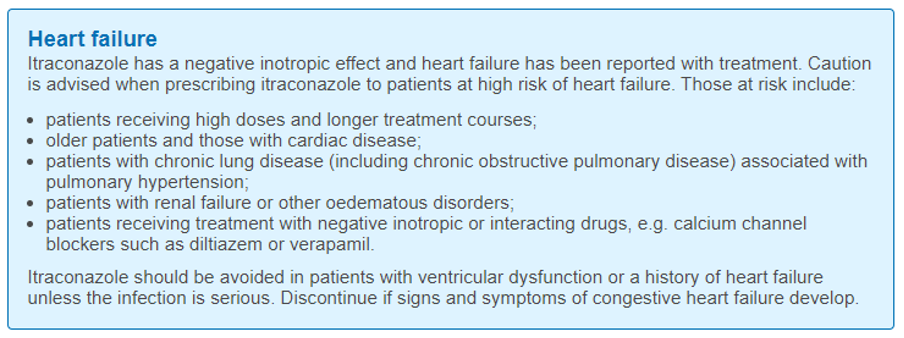
Another recent case I have reviewed involved a patient with heart failure secondary to cardiomyopathy being prescribed itraconazole for severe tinea corporis and developing a marked exacerbation of his heart failure.  He was not warned of the risk of exacerbation and the prescriber was not aware. 
NZF presents a ‘blue box’ precaution:


The MCNZ statement on Good prescribing practice (revised Feb 2024) includes:  Be familiar with the indications, adverse effects, contraindications, major drug interactions, appropriate dosages, monitoring requirements, effectiveness and cost-effectiveness of the medicines that you prescribe.  How is this requirement s best achieved in a time constrained environment?
 
5.  BP cuff position
A recent Medscape article reviewed a crossover, randomized trial published in JAMA last month looking at the effect of arm position on blood pressure readings.  Guidelines for BP measurement recommend arm support on a desk with the mid-cuff at heart level. The study found that supporting the arm on the lap overestimated systolic BP (SBP) by 3.9 mm Hg and diastolic BP (DBP) by 4.0 mm Hg. When the arm hung at the side, readings overestimated SBP by 6.5 mm Hg and DBP by 4.4 mm Hg, with consistent results across subgroups.  The conclusion:  Commonly used, nonstandard arm positions during BP measurements substantially overestimate BP, highlighting the need for standardized positioning.
 
6.  Low dose naltrexone
A September NZ Doctor article reviewed the use of low dose naltrexone in post-Covid syndrome and some other conditions.  Key points were: 
In low doses (typically 3–4.5mg daily), naltrexone appears to modulate neuroinflammation and increase endorphin production, resulting in improved immune system modulation.
Low-dose naltrexone has shown promising results in fibromyalgia/chronic fatigue syndrome, chronic pain, Crohn disease, multiple sclerosis and long COVID, although the quality of evidence is generally low.
While further research is needed, given the limited choice of effective therapies for functional syndromes, LDN is a relatively safe and, in many cases, effective treatment when first-line options fail.
The article examines the evidence base for use of LDN in the various conditions described.  Note: Naltrexone is produced as a 50mg tablet and LDN requires compounding by a pharmacy or compounding laboratory.  Cost is around $115 for 100 days’ supply direct from CompoundLabs (compoundlabs.co.nz); if ordered via a local pharmacy, they may add an extra charge.  The drug is only subsidised if prescribed through and alcohol and drug service for management of alcohol dependence (SA1408) and  note is being used of label outside the indications of opioid and alcohol dependence management. 
 
7.  Endometriosis and ovarian cancer risk
Issue 243 of GP Research Review reported a large population-based study published in JAMA looking at the relative risk of ovarian cancer in women with endometriosis (n=78,893) versus a control group without.
Overall, 597 women had ovarian cancer, and the mean age at first diagnosis was 36 years. Compared to women without endometriosis, those with endometriosis had a 4.2-fold increased risk of ovarian cancer even after adjustments for sociodemographic factors, gynaecologic surgical history and reproductive history.  The risk was most marked for type 1 cancers (aHR[1] 7.48).  Women with ovarian endometriomas and/or deep infiltrating endometriosis had a near 9.7-fold increased risk for all ovarian cancers, with aHR of almost 19 for type 1 cancers. 
Type 1 cancers are composed of low-grade serous cancers, endometrioid and clear cell cancers, and mucinous cancers. This group tends to grow locally, metastasize late, and behave in a more indolent fashion. Type 2 cancers are composed of high-grade serous cancers, carcinosarcomas, and undifferentiated carcinomas. These are highly aggressive malignancies that generally present at an advanced stage.
 
8.  ACC claim numbers
In early September 2024 ACC announced an improvement to their claim approval notification process. Most kiritaki/clients will receive a text message from ACC confirming a claim approval decision, date of injury and ACC45 claim number. They will no longer receive a posted letter. Kiritaki can use their claim number straight away when seeking treatment.  Those under 16 years or without a mobile contact number will continue to receive claim details by mail. 
 
9.  Goodfellow Gems
Gem 225Twenty Winks Sleep Questionnaire.  This questionnaire asks about sleep patterns and provides personalised recommendations to help improve your patient’s sleep. There are 20 questions about sleep habits, lifestyle and health.
 
Gem 226 – This looks at the 2024 update on modifiable risk factors for dementia published by the Lancet Commission on dementia prevention.  Two new factors (LDL cholesterol (7% contribution) and visual loss in later life (2%)) have been added since the 2020 update.  The accompanying infographic might be useful when discussing lifestyle improvements with your patients.
 
10.  Health Equity
Issue 111 of Maori Health Review looked at a study published in the NZMJ on the impact of continuous glucose monitors in reducing disparities in glycaemic metrics for Maori Tamariki with recently diagnosed type 1 diabetes.   At the time of the study of 206 children diagnosed over 12 months 2020-2021, CGM use was 56.7% for Māori and 77.2% for European children. At 12 months post-diagnosis, HbA1c was 10.8 mmol/mol (95% CI 2.3-19.4 mmol/mol; p = 0.013) higher in Māori vs European children without CGM, but was similar between ethnic groups in those using CGM.  Hopefully the disparity in numbers accessing CGM will reduce since the devices have become funded. 


[1] Adjusted hazard ratio

The New Zealand General Practice Podcast

Clinical Snippets August 2024

\

Clinical Snippets August 2024

1.  Diverticulitis

A recent Tools for Practice from the College of Family Physicians of Canada looked at the question:   Do antibiotics change clinical outcomes for patients with acute uncomplicated diverticulitis?  The bottom line based on current evidence is that for non-septic immunocompetent patients with acute uncomplicated diverticulitis, antibiotics do not alter early complication or recurrence rates.

This approach is emphasised in a 2023 BPAC article on diverticular disease which contains detailed diagnostic and management advice including the following practice points:

  • Patients with red flag symptoms indicative of complicated diverticulitis, e.g. abscess, perforation, obstruction or fistula, significant immune suppression or relevant uncontrolled co-morbidities likely to worsen their condition, e.g. diabetes, liver or renal disease, require referral to secondary care (where a CT scan can be performed to confirm the diagnosis)
  • For patients with less severe symptoms, a clinical diagnosis of uncomplicated diverticulitis can be made after reasonable exclusion of other causes, and conservative treatment initiated in the community, including paracetamol (NSAIDs or weak opioids can be considered if no contraindications). Patients should be ideally followed up in 48 hours, or earlier depending on their clinical condition.
  • Antibiotics are no longer routinely recommended for most patients with suspected acute uncomplicated diverticulitis; oral antibiotics may be considered for some patients who are at higher risk of complications (e.g. due to co-morbidities), but who do not meet criteria for secondary care referral.  Antibiotics can also be considered for patients managed conservatively who do not show improvement within 48 hours of their first presentation.
  • While conventional advice has recommended short-term diet modification for patients with acute uncomplicated diverticulitis, i.e. two to three days of clear liquids before slowly reintroducing dietary fibre, there is a lack of clinical evidence to support this. If tolerated, an unmodified diet may be more appropriate. It is now accepted that obstruction in acute diverticulitis is rare and diets high in nuts, seeds and corn do not increase this risk of developing diverticulitis, suggesting there are other mechanisms involved.

2a.  New Free Resources available through Healthpathways. 

  • Health New Zealand Te Whatu Ora has provided all Healthpathways users with access to two free “evidence-based medicine” tools – BMJ Best Practice, and EBSCO Dynamed.  
  • Just follow the links on your Health Pathways home page to sign up for your free profiles and have a look around.  
  • Both sites give access to up to the minute evidence-based guidance and information on a huge range of medical topics, medical calculators, clinical updates and medical news. Each have different flavours and styles. 

As an example, there was reference in a recent GPs for GPs Facebook post to changes in recommendations for first line drug therapy for patients with persistent restless legs syndrome (RLS).  The BMJ Best Practice site takes a practical approach through diagnosis and what tests to order to treatment algorithms with recommendations changing depending on severity of RLS (intermittent, chronic, refractory) and pregnancy status.  For non-pregnant patients with chronic RLS gabapentinoids (e.g., pregabalin, gabapentin) are the first-line pharmacological option with dopamine agonists now regarded as second line. 

2b.  WINZ Resource

WINZ have produced a downloadable one-page summary of main and supplementary financial benefits available to eligible patients which may be of assistance when advising patients in need.   

3.  Type 2 diabetes

A UK-based cohort study recently published in the BMJ and reviewed in Issue 13 of GP Practice Review found that, the GLP-1 receptor agonist-SGLT-2 inhibitor combination was associated with a lower risk of major adverse cardiovascular events and serious renal events compared with either drug class alone. The reviewer noted the study provides evidence that after initiating lifestyle change and pharmacotherapy with metformin and either a SGLT-2 inhibitor or a GLP-1 receptor agonist, stepping up to triple therapy by adding either a SGLT-2 inhibitor or a GLP-1 receptor agonist is an effective method of intensifying treatment to reduce cardiovascular risk and potentially improve renal outcomes. However, in New Zealand this would require patients to self- fund at least one of these medicines with Pharmac special authority criteria as they currently stand.

Related to this – Pharmac’s procurement process for continuous glucose monitoring (CGM) devices, insulin pumps and insulin pump consumables is progressing but it appears funding for these products will be limited to those with type 1 diabetes.  The Aotearoa Diabetes Collective has created a useful guide with templates for letters to support WINZ Disability Allowance applications for CGM and empagliflozin (for those already prescribed a GLP1 receptor agonist) for people living with type 2 diabetes.

4.  COVID-19 technology support changes

Health New Zealand Te Whatu Ora have provided an update on two COVID-19 technology products that are being decommissioned from 1 August 2024.

  • GP notifications: The technology supporting notifications to GPs is being decommissioned and you will no longer receive notifications of self-reported RAT results. This change aligns COVID-19 with other ‘point of care’ tests where patients self-test and proactively contact their healthcare provider for treatment if needed.  The text message that a person receives when they self-report a positive RAT result has been updated and they are taken through a questionnaire to assess if they are eligible for antiviral medicines. If they are unwell or if it appears they’re eligible they are recommended to contact their healthcare provider or a participating community pharmacy. The GP will not be aware of a self-reported RAT result, so will not contact them.
  • COVID-19 Clinical Care Module (CCCM): The CCCM will be decommissioned. GPs should continue to report COVID-19 cases via Healthlink as COVID remains a notifiable disease and this test result will automatically flow through to the Notifiable Disease Management System.

5.  Perinatal depression

A Recent issue of NZ Doctor contained an excellent article on management of perinatal depression.  Important practice points included:

  • Antidepressants are not risk free. However, given the adverse outcomes associated with uncontrolled depression for both the birthing parent and their baby, most antidepressants have a favourable risk–benefit ratio for moderate to severe depression during pregnancy and breastfeeding.
  • Routine discontinuation or switching of antidepressants during pregnancy and breastfeeding is discouraged without consideration and discussion of the specific risks (including the risks of relapse) and benefits for that individual. If the decision is made to discontinue, the antidepressant should be slowly tapered, not stopped abruptly.
  • If the patient has not had antidepressants before, selective serotonin reuptake inhibitors (SSRIs) are generally recommended for first-line treatment with Sertraline being the preferred SSRI in pregnancy. It is thought to have the lowest placental transfer of any SSRI and may have the lowest risk of neonatal persistent pulmonary hypertension.  Additionally, if breastfeeding is desired, it has low infant exposure via milk.
  • Escitalopram or citalopram are also relatively safe in pregnancy and breastfeeding and are reasonable alternatives. Fluoxetine, while having a reasonable safety profile during pregnancy, is least preferred during breastfeeding as it has a long half-life and may accumulate in milk. Paroxetine may have an increased risk of congenital heart defects, although this has not been conclusively proven. Paroxetine also has an increased risk of neonatal adaptation syndrome (NAS) compared with other SSRIs. For these reasons, some guidelines recommend avoiding paroxetine during pregnancy, if possible, although it has low infant exposure via milk for those who wish to breastfeed.

The article reviews use of all classes of antidepressants and current evidence base for risks versus benefits.   There are links to a variety of support and self-help resources including:

  • Perinatal Anxiety & Depression Aotearoa provides screening tools, factsheets on antenatal and postnatal anxiety and depression, and locally available support services and helplines
  • Mothers Helpers offers support for mothers with antenatal and postnatal anxiety and depression, including an online perinatal depression recovery course
  • Healthifyhas information on perinatal depression and anxiety, how it is treated, and a list of available support services
  • Beating the Blues provides free online cognitive behavioural therapy
  • Just a Thought offers two free specialised online perinatal CBT courses
  • Tuku Iho is a bilingual app that focuses on te ao Māori maternal and tamariki wellbeing

The article also includes links to two sites that provide consumer-oriented information on risks and benefits of various drugs that may be used in pregnancy:

6.  Patient information sheets available from bpacnz

The following information sheets are especially designed to support primary care consultations, and can be downloaded and printed, or the link sent to patients via text or email.

7.  HPV priority group funding

Funding for HPV screening and follow-up priority groups has been extended until 30th June, 2025.  Details of the process are available on the Heath NZ Te Whatu Ora website and includes two algorithms aimed at simplifying determination of eligibility for funding.

8.  Weird but wonderful

Preliminary studies have shown a significant decrease in severity of obstructive sleep apnea (OSA) with the use of a combination of atomoxetine and oxybutynin, with patients having moderate pharyngeal collapsibility during sleep (a higher proportion of hypopneas to apnea and mild degree of oxygen desaturation) more likely to respond. A 2022 study evaluated the efficacy and safety of atomoxetine 80 mg and oxybutynin 5 mg in the treatment of OSA confirming findings of previous studies.  The most common adverse events (insomnia (12%) and nausea) were consistent with the expected profile of the individual drugs.  A 2024 study adding acetazolamide to the combination found no increase in efficacy with this addition. 

9.  Why I don’t sleep at night…

I have recently reviewed the case of an older child assessed in primary care after running in to a barrier pipe (waist level) with subsequent abdominal pain.  There were no findings of an acute abdomen and the child was discharged after responding to simple analgaesia but collapsed and died at home about 36hrs later.  Post-mortem findings revealed a jejeunal rupture.    Children are more vulnerable to blunt abdominal injury than adults because they have relatively compact torsos with smaller anterior-posterior diameters, which provide a smaller area over which the force of injury can be dissipated; larger viscera, especially liver and spleen, which extend below the costal margin; and less overlying fat, and weaker abdominal musculature to cushion intra-abdominal structures.  Uptodate[1] notes that repeated, serial examinations are necessary in children with abdominal trauma because serious intra-abdominal injury (IAI) may not be apparent upon the initial examination. Abdominal tenderness may be especially difficult to determine in young children who are frightened and cannot clearly communicate and in older children who are uncooperative or neurologically impaired.  The message is to have a high index of suspicion for possible IAI in children presenting with blunt force abdominal trauma.   

Coincidentally, Issue 28 of Child Health Research Review reviewed the recently published Pediatric Emergency Care Applied Research Network (PECARN) prediction rules to reduce inappropriate use of computed tomography (CT) in children with abdominal or head trauma. The rules were validated with a high degree of accuracy: the intra-abdominal injury rule had a sensitivity of 100.0% and a negative predictive value (NPV) of 100.0% but has not been validated for use in primary care and given presence of abdominal pain is a ‘not very low risk’ criterion I’m not sure how practical it would be. 


[1] Saladino R et Conti K.  Pediatric blunt abdominal trauma: Initial evaluation and stabilization.  Uptodate.  www.uptodate.com  Accessed 1 August 2024

The New Zealand General Practice Podcast

Clinical Snippets July 2024

Shownotes

Clinical Snippets July 2024

1.  Heart Foundation resources

New home blood pressure resources – The Heart Foundation has created some handy guidance for patients using a blood pressure monitor at home. There’s a step-by-step guide and a video on how to take accurate blood pressure readings at home, along with a logbook for recording readings.  There are a number pf phone apps available for logging home blood pressure data eg. Blood Pressure Diary. 

2.  Atrial fibrillation and anticoagulation

I have recently reviewed a case where a patient with AF and a mechanical heart valve was swapped from warfarin to rivaroxaban and suffered a stroke several weeks later.  BPAC have published an updated article on atrial fibrillation management.  With respect to anticoagulation in AF:

  • The need for anticoagulant treatment to reduce this risk should therefore be considered immediately following diagnosis.  In primary care, this decision can be guided by balancing the patient’s CHA2DS2-VASc score (stroke risk) against their HAS-BLED score (bleeding risk), although there are no specific cut-offs in the HAS-BLED score to identify patients who should not be initiated on an anticoagulant, particularly as the consequences of a stroke are typically more severe than the consequences of a bleed ie.  an elevated bleeding risk alone does not automatically make patients ineligible for oral anticoagulant use.
  • ACC/AHA 2023 AF guidelines outline that stroke scoring tools such as ATRIA and GARFIELD-AF potentially improve the accuracy of stroke risk assessment compared with CHA2DS2-VASc scoring, and the GARFIELD-AF scoring includes mortality and bleeding risk assessment. However, the guidelines also note that the calibration and performance of ATRIA and GARFIELD-AF has not been as robustly evaluated as CHA2DS2-VASc.
  • Direct oral anticoagulants (DOACs) are typically preferred over warfarin as they are superior for reducing the risk of stroke and all-cause mortality, reduce the risk of intracranial bleeding and have a comparable risk of major bleeding. However, there are some situations in which DOACs are contraindicated (e.g. mechanical heart valves) or there is insufficient evidence to support their use (e.g. moderate-to-severe mitral stenosis, severe liver or renal dysfunction), and warfarin should be used instead.
  • Oral anticoagulants are superior to aspirin and/or clopidogrel for the prevention of stroke, systemic embolism and myocardial infarction in patients with AF, and are associated with a lower risk of major bleeding and intracranial haemorrhage. Long-term antiplatelet medicine use alone is therefore no longer recommended in patients with AF, even if they are at very low risk of stroke (i.e. CHA2DS2-VASc score of 1 for females or 0 for males).  NB Post acute MI situation – confirm intended duration of antiplatelet therapy if unclear.
  • The decision to stop anticoagulant medicines should be based on a continued evaluation of the patient’s stroke and bleeding risk (e.g. determined by CHA2DS2-VASc and HAS-BLED scores) and not because AF has reverted to sinus rhythm or symptom resolution. 
  • With respect to diagnosis of AF, the positive predictive values for AF reported in studies involving wearable devices using photoplethysmography and AF algorithms range from 84 – 98%,suggesting that these alerts are of clinical significance. However, this does not replace the need for usual diagnostic investigations for AF, i.e. pulse palpation and ECG

3.  Pharmac supply updates

(i)  Liquid morphine:  The latest Pharmac update re liquid morphine supplies –  Pharmac listed Oramorph CDC (2mg/mL) from 9 May 2024. It is not Medsafe approved so must be prescribed and dispensed as a section 29 medicine.

Important differences from the RA-Morph brand:

  • Labelled 10 mg per 5 ml (equivalent to 2 mg per ml)
  • Different morphine salt (sulphate instead of hydrochloride)
  • Contains alcohol (ethanol) 10%v/v as a preservative. The alcohol content in 5 ml of Oramorph is equivalent to 10 ml beer or 4 ml wine.
  • Colourless to pale yellow

It appears RA-Morph 1 mg per ml is now back in stock. The supplier has shipped stock to wholesalers in the week beginning 3 June 2024 but there may be some delay in pharmacies replenishing stock.

(ii)  Liraglutide and dulaglutide:  A reminder that from 1 May 2024, Pharmac is limiting funded access to dulaglutide and liraglutide to people already taking these diabetes medicines.  The suppliers of dulaglutide (Eli Lilly) and liraglutide (Novo Nordisk) in New Zealand have advised Pharmac that stock of both medicines for 2024 and 2025 is only enough to meet current demand.

Prescribers should consider clinically appropriate alternative medications, including SGLT2 inhibitors.

(iii)  Oestrogen patches:  Supply of all oestradiol patches remains very limited with Pharmac stating this situation will continue through 2024 and likely for some time into 2025.  The current supply status of each brand and strength of patches is available on the Pharmac website.  As at 13 June 2024 the 25 mcg patches are out of stock in all brands.  Stock of the 50, 75 and 100 mcg strengths is arriving but may not be available at your pharmacy.  

  • Update on 3 July 2024, a new funded brand (Lyllana) is becoming available.  25 mcg patches will be available from late July and 50 mcg Lyllana patches to be available in late August/early September. Monthly deliveries of all strengths of Lyllana patches until the end of the year to start in late September.
  • These patches are not Medsafe approved so will need to be prescribed and dispensed in line with section 29 of the Medicines Act. Pharmac has encouraged the supplier to apply for Medsafe approval.
  • Dr Samantha Newman of the FemaleGP Clinic has produced a very helpful resource for patients and GPs with respect to management options in light of the patch shortage.  This is available from the FemaleGP website (bottom of Home page under  ‘Files for Healthcare Professionals’ – When there are no patches (v2).)

4.  Prescriber Update

The June 2024 Prescriber Update is now available on the Medsafe website.  Brief highlights include:

(i)  Potassium in dietary supplements may lead to hyperkalaemia.  In patients with hyperkalaemia or signs and symptoms suggestive of hyperkalaemia, remember to ask about dietary supplement use. Hyperkalaemia-inducing medicines include angiotensin converting enzyme (ACE) inhibitors, angiotensin II receptor blockers (ARBs), non-steroidal anti-inflammatory drugs (NSAIDs), spironolactone, potassium supplements, beta blockers, digoxin and trimethoprim.  Some herbal ingredients in supplements contain potassium, including (but not limited to) stinging nettle, evening primrose, turmeric, dandelion. Other supplements may contain potassium as an ingredient or excipient, for example, glucosamine sulfate–potassium chloride complex.

(ii)  Medicine-induced hyponatraemia: increased risks in older people.  Hyponatraemia signs and symptoms range from mild and nonspecific (such as weakness or nausea) to severe and life-threatening (such as seizures or coma).   Hyponatraemia may also be asymptomatic.  In older people, hyponatraemia can be associated with cognitive impairment, gait disturbances and falls and fractures.  The most frequently reported suspect medicines for people >65 years were bendroflumethazide, omeprazole, citalopram, fluoxetine and cholecalciferol but the list of potential culprits is long!   

(iii)  With pseudoephedrine now available again there is a reminder that the drug must not be used in people with uncontrolled hypertension or severe coronary artery disease, concomitantly with monoamine oxidase inhibitors (MAOIs), or in people with hypersensitivity to pseudoephedrine.  Do not use in children aged under 12 years.  Use pseudoephedrine with caution in patients with hepatic or renal impairment, severe hepatic or renal dysfunction, controlled hypertension, hyperthyroidism, diabetes mellitus, coronary or ischaemic heart disease, glaucoma and enlarged prostate.  Additionally, pseudoephedrine is included on the World Anti-Doping Agency (WADA) in-competition prohibited list.  Athletes must stop taking pseudoephedrine at least 24 hours before competition.

5.  Prescribing to competitive athletes subject to drug testing

A recent NZ Doctor article reported the case of a competitive archer banned from the sport for two years after failing a drug test.  The archer tested positive for metoprolol after winning an event at the North Island Senior Target Archery Championships in April. The competitor stated he had been using the substance on the advice of his doctor. All beta-blockers are banned in and out of competition for the sports of archery, shooting and underwater sports.  In addition, they are banned in-competition for some automobile sports, billiards, darts, golf and mini-golf, some ski and snowboarding events   

An earlier NZ Doctor article on prescribing for competitive athletes subject to drug testing included the following points:

  • Athletes must take utmost care in ensuring they do not take any prohibited substances – they cannot rely on doctors and trainers.
  • Before prescribing to a competitive athlete, check whether they are subject to doping testing.
  • Advise athletes to check any medications you prescribe with their medical team.
  • Use an online tool (eg, globaldro.com) to check whether medications and ingredients of supplements are prohibited or permitted.

Drugs may be prohibited out of competition or just in-competition, and some prohibitions are sport specific.  In some circumstances, use of a prohibited drug may be allowed but the athlete must apply for a therapeutic use exemption (TUE).  Some athletes must apply for a TUE in advance (i.e. before using any banned medications or methods). Others can only apply retroactively (i.e. after a positive test).  TUE information and application forms are available on the Drug Free Sport website.   The advice provided to athletes is:

  • Tell your doctor that you’re an athlete and subject to anti-doping rules;
  • If prescribed a medication containing a banned ingredient, ask for a permitted alternative;
  • Know your TUE status (in-advance or retroactive);
  • Keep detailed medical notes for any diagnoses or treatments that involve a banned substance or method;
  • In an emergency, always get the treatment you need.

6.  Montelukast

A recent news article in the BMJ notes the asthma drug montelukast (Singulair) will carry more prominent warnings in the UK to alert doctors and patients to its potentially serious behavioural and neuropsychiatric side effects.  Previously noted side effects associated with the oral treatment include sleep disturbances, depression, and agitation (which may affect up to one in 100 people); disturbances of attention or memory (up to one in 1000); and hallucinations and suicidal ideation (up to one in 10,000).  A similar warning was provided to NZ prescriber in a 2017 Prescriber Update which included the recommendations that prescribers should advise patients that neuropsychiatric reactions can occur with montelukast and patients and/or family members should be instructed to contact a healthcare professional should any neuropsychiatric reaction occur.

7.  Vitamin D supplementation in pregnancy and infants

With winter upon us it’s time to consider local recommendations for Vitamin D supplementation in pregnancy and infants.  The Te Whatu Ora publication covers additional aspects such as appropriate risk benefit discussion, when you might test Vitamin D levels and sun safety advice but the basics include:

  • Risk factors during pregnancy:  naturally dark skin tone; live south of Nelson Marlborough during winter or spring; spend limited time outdoors and/or have minimal sun exposure due to religious, cultural, personal or medical reasons.
  • Offer vitamin D supplementation during pregnancy for women with any of the risk factors.  Prescribe 400 to 800 IU colecalciferol oral liquid per day (Clinicians Vitamin D brand 10mcg/drop is subsidised – dose 1-2 drops per day).  Individuals with all three risk factors in pregnancy may be at higher risk of vitamin D deficiency and blood testing may be considered. Where vitamin D insufficiency or deficiency is confirmed through testing, follow the advice from NZF regarding supplementation doses.
  • Advise people at lower risk of vitamin D deficiency during pregnancy that they may benefit (and are unlikely to suffer harm) from vitamin D supplementation of between 400 IU per day (10 micrograms/day) and 800 IU per day (20 micrograms/day) throughout their pregnancy, particularly in the third trimester.
  • Risk factors for infants less than 6 months:  exclusively breastfed or partially breastfed receiving less than 500 mL of infant formula per day; breastfed over winter/spring months;  a sibling diagnosed with rickets or hypocalcaemic seizures; maternal vitamin D deficiency or higher risk of maternal deficiency; preterm infants and infants who weigh less than 2.5 kg at birth;  naturally dark skin.
  • Offer to prescribe vitamin D supplements to all exclusively or partially breastfed infants as soon as practical, but by 4 weeks until 12 months of age.  Prescribe colecalciferol oral liquid (7,500 IU/mL vitamin D drops, one drop per day.  The subsidised formulation is Puria Vitamin D. Infant formula is fortified with vitamin D so fully formula fed infants or those receiving formula supplementation of >500mL per day should receive adequate vitamin D and do not require supplementation.

8.  Abortion reversal

The RNZCGP has recently released a statement on abortion reversal noting claims that medical abortion can be ‘reversed’ by a dose of progesterone after a woman has taken the first medical abortion medication are not based on reputable scientific evidence. The College upholds views by other medical Colleges’ that the promotion of the term ‘abortion reversal is ‘unproven and unethical’ based on the strength of evidence.   Abortion reversal involves administration of high dose progesterone (vaginally, orally or by injection) after the woman has taken mifepristone but prior to administration of misoprostol if she changes her mind about proceeding with medical abortion.   A 2024 systematic review concluded that based mostly on poor-quality data, it appears the ongoing pregnancy rate in individuals treated with progesterone after mifepristone is not significantly higher compared to that of individuals receiving mifepristone alone.  Despite this, a significant number of states in the USA have enacted medical abortion reversal laws that require patients receive information during pre-abortion counselling, require physicians or physicians’ agents to inform patients, instruct patients to contact a health care provider or visit “abortion pill reversal” resources for more information, and require reversal information be posted on state-managed Web sites.

The New Zealand General Practice Podcast

June 2024

CLINICAL SNIPPETS JUNE 2024

1.  Child Disability Allowance

  • MSD wishes to remind primary care providers of the Child Disability Allowance (CDA).  CDA is paid in recognition of the extra care and attention a caregiver needs to provide for a child or young person with a serious ongoing health condition or disability. The eligibility criteria include the applicant being the main carer of the child and a NZ citizen or permanent resident with both carer and child living and intending to stay in NZ.  The child must be under 18 years and assessed by you as needing constant care and attention for 12 months or more because of a serious disability.
  • The child or young person must need constant care and attention, over and above the ordinary care and attention required by a child or young person of the same age.  This might include frequent attention from another person in connection with their bodily functions or daily living activities, substantially more attention and supervision than is normally required by a child of the same age and gender, or regular supervision from another person to avoid substantial danger to themselves or others.  Examples of situations where the CDA might or might not be considered, and review times, are available on the MSD website
  • The CDA is currently $59.23 per week.  It is not taxable or means tested and is provided in recognition of the extra care and attention the child requires.   It isn’t paid to cover costs associated with the child or young person’s disability as these costs aren’t in themselves a qualification for the Child Disability Allowance. However, if the child’s condition does result in significant costs, they may be eligible (in addition) for the Disability Allowance which is means tested. 

2.  Isotretinoin and suicide risk

  • A paper reviewed in issue 56 of Dermatology Research Review looked at risk of suicide and psychiatric disorders among isotretinoin users via a meta-analysis of studies involving  over one and a half million patients.  The findings included the 1-year absolute risk of completed suicide, suicide attempt, suicide ideation, and self-harm among isotretinoin users was less than 0.5% each, while that of depression was 3.83%. Isotretinoin was not associated with the relative risk of all psychiatric disorders, and isotretinoin users were less likely than nonusers to attempt suicide at 2 to 4 years following treatment.  These findings indicate that there is no epidemiological evidence to suggest an increased relative risk of suicide or psychiatric conditions among isotretinoin users at a population level.
  • The authors note that relationship among acne, isotretinoin, and psychiatric disorders is a complex one. Some studies have provided strong evidence for a direct causal relationship between isotretinoin use and mood changes in rare individuals, via biological effects on the central nervous system. This may be an idiosyncratic reaction that is difficult to predict. However, there may be a second indirect effect of isotretinoin on improved mood, mediated by improved acne and self-image which is consistent with the meta-analysis findings.  Hence, while clinicians should remain vigilant and continue to practice holistic psychodermatologic care and monitor patients for signs of mental distress during isotretinoin treatment, they should be aware that isotretinoin appears to be safe at a population level.

3.  Scabies

  • Another paper reviewed in Dermatology Research Review compared the efficacy of topical permethrin (the only topical scabies treatment available in NZ) with benzyl benzoate (BB) for treatment of scabies.  They found a dermoscopy-verified cure rate of 27% in the permethrin group and 87% in the BB group, although the permethrin was far better tolerated than the BB (43% experienced burning sensation).
  • The reviewer (dermatologist Dr L Reiche) noted there are concerns regarding resistance to permethrin.  The current regimen is to apply permethrin from head to toe and wash off after 8–12 hours and then repeat after 1 week.  She suggests with more severe infections permethrin can be applied either daily for 1 week or for 3 days in a row followed by a repeat course after 1 week. It is important to treat contacts. Make sure the hands, face, scalp and under the nails are treated.
  • Health Pathways has a section on scabies treatment that includes considering oral ivermectin (requires Special Authority) for certain situations where oral treatment will be easier to implement, or if topical treatment fails and to repeat the dose after 7 days.  For more comprehensive discussion and advice, there is an excellent 2022 BPAC article available.
  • NZF notes that ivermectin is not approved for more than 2 doses in a course of treatment for scabies and to round the dose to the nearest 3 mg for adults. There is a rare risk of serious or fatal encephalopathy if the patient is co-infected with Loa-loa (African eye worm – endemic to Central and West Africa, where it is transmitted by deerflies). 

4.  ED in a young gym-goer

  • A recent NZ Doctor article presented the case of a younger male requesting sildenafil for ED.  It transpired this apparently fit gym goer was using self-obtained anabolic-androgenic steroids for muscle bulking and had developed secondary hypogonadism.  The author notes that anabolic-androgenic steroids (AASs) are one of the major concerns in professional and amateur athletes, particularly young men in their 20s and 30s who practise weightlifting to increase their muscle mass and improve their physical appearance. The prevalence of AAS use/abuse in this population is estimated to be approximately 5 per cent among all gym-goers (in a single study in Germany, it reached 13.5 per cent of gym clients) and 25–50 per cent among competitive bodybuilders.
  • The article discusses the multi-disciplinary approach (GP/endocrine/SH/psychologist) required if the patient wants to stop use of AASs and that on-demand sildenafil or daily tadalafil can be used temporarily to improve erectile function, as a component of the MDT plan. Isolated on-demand prescription of sildenafil for anabolic steroid induced hypogonadism (as requested by the patient) is futile as it is doomed to failure and can only serve the unhelpful purpose of delaying the comprehensive management of the syndrome.  However, one survey of AAS users found that 58.1 per cent of respondents felt it was unlikely or very unlikely they would stop AAS use in the next five years.  Message:  Ask about AAH use in younger patients presenting with ED. 

5.  PRESCRIBING UPDATES

(i)  Pharmac is funding the first single inhaler triple-therapy from 1 May 2024. Fluticasone furoate with umeclidinium and vilanterol (branded as Trelegy Ellipta) will benefit around 15,000 people with chronic obstructive pulmonary disease (COPD) in the first year of funding. For most people, this will mean switching from using two or three separate inhalers to using just one. NZ Formulary notes the indications as:  maintenance management of asthma in those not adequately controlled with combination inhaled corticosteroid and long-acting beta2-adrenergic agonist; maintenance treatment of moderate to severe chronic obstructive pulmonary disease.

(ii)  May NZF updates refer to a new section on Testosterone and management of menopausal symptoms.  This notes topical low-dose (10 mg/mL) testosterone cream may be considered for post-menopausal females who experience concern with hypoactive sexual desire dysfunction.  [Ssection 29, unapproved medicine – Androfeme $153 – 50mL tube, dose 0.5 – 1 mL daily.  The subsidised male formulations, Testogel, come in a 1% and 1.6% formulation with amounts dispensed per actuation of 12.5mg and 20.25mg respectively].     Careful education and correction of modifiable biopsychosocial factors affecting sexual desire should be trialled prior to testosterone treatment and referral to a specialist should be considered. Measure base-line testosterone level, liver function, full blood count, HbA1c, and lipids prior to treatment. Testosterone level should be measured again after 4–6 weeks to ensure the normal pre-menopausal female range is not exceeded. Reassess all parameters 6 and 12 months after initiation and then at least annually thereafter once treatment is stabilised. Discontinue after 6 months if no improvement in sexual function. Long-term safety data (longer than 24 months) for the use of testosterone in females at physiological doses is lacking, refer to product literature.

(iii)  ACEs – new starting dose for hypertension in individuals who are elderly, on concomitant diuretics, or at risk of ACE inhibitor-induced hypotension: 

  • Quinapril, lisinopril,   5mg daily
  • Captopril 6.25 – 12.5mg
  • Perindopril 2mg
  • Enalapril 2.5mg

(iv)  Quinolones:  new note added to cautions: Quinolones have been associated with prolonged, disabling, and potentially irreversible serious adverse reactions with reference to a September 2023 Prescriber Update .  Potential adverse reactions listed under this heading are:

  • Tendon damage
  • Aortic aneurysm/dissection
  • Heart valve regurgitation
  • Seizures
  • Psychiatric changes
  • Peripheral neuropathy

(v)  Aspen NZ, the supplier of Eltroxin® (levothyroxine) has informed Pharmac that the 50mcg and 100mcg tablets are changing in appearance. The new Eltroxin® (levothyroxine) 50mcg and 100mcg tablets were listed on the Pharmaceutical Schedule from 1 May 2024.  Aspen NZ has provided some materials to prepare you, and people who take Eltroxin, for this change:

(vi)  Medsafe have released a safety alert regarding oral promethazine products with the following information:

  • Promethazine (oral) is now contraindicated in children under 6 years of age (previously under 2 years of age).
  • A safety review identified a high risk of psychiatric and central nervous system side effects in this age group, including psychomotor hyperactivity, aggression and hallucination. Difficulties in learning and understanding, such as reversible cognitive deficit and intellectual disability, may also occur when high doses are given.
  • Use alternative treatment options for children under 6 years of age requiring allergy or nausea treatment. Refer to local guidelines.
  • There will be a time lag before medicines with updated package labelling are available in pharmacies.
  • Remind consumers who may have this medicine at home not to use it in children under 6 years of age and to consult a pharmacist or doctor for alternative treatment options and advice.

6.  He Ako Hiringa and the EPIC Dashboard

  • Pharmac sponsorship of He Ako Hiringa ends on 30 June 2024 but the service will continue under new ownership although with reduced staffing resource which will mean a reduction in publication of new resources.  Prescribing data is currently available as at 31 December 2023. 
  • The EPiC dashboard uses dispensed medicine data to create an interactive, personalised, report-style dashboard. Once logged in, you can explore prescribing trends for your patient population, your practice and nationally for a range of defined themes with RNZCGP approved audit and reflection templates available for completion.  Prescribing themes you can explore currently include antibiotic use, type-2 diabetes, asthma, opioids, gout, CVD and youth mental health. 

7.  The end

The early May issue of NZ Doctor (requires log-in) contains a medicolegal article on knowing your rights in the face of threatening behaviour from patients.   It is presented as a series of scenarios including: 

  • The patient is verbally abusive and rants at staff, causing us to feel unsafe. We want to call the police, but the patient says that if we do, it will be a breach of their privacy. What can we do?   Rule 11 of the Health Information Privacy Code 2020 provides that you can disclose information if it is “necessary to prevent or lessen a serious threat to public health or public safety, or to the life or health of the individual concerned or another individual”. The disclosure must be to someone who can do something about the threat (eg, the police).
  • The patient yelled at the receptionist and upset waiting patients. We don’t feel safe having them on our books, but no other practice has room for new patients. Do we have to keep them as a patient?  No. You can end the relationship or, as a compromise, enter into a behaviour contract to give the patient another chance. As long as the patient does not require urgent care, then the Medical Council of New Zealand guidelines for ending a doctor–patient relationship specifically allow that “if the patient is abusive, violent or poses a significant safety risk to you or your colleagues”, you can end the relationship. This is provided the steps are followed as set out in the MCNZ guidelines.
  • The article also covers issues such as when and how to issue a trespass notice and when you might consider applying for a restraining order.  Of course lower level resolution of issues that might lead to such behaviours is preferred and de-escalation training is available through a number of agencies (eg WorksafeReps) and a 1 hour training webinar is presented on My Health Hub

The New Zealand General Practice Podcast

Clinical Snippets February 2024

Shownotes

Clinical Snippets February 2024

1.  ACE and ARB and statin use in pregnancy – DON’T

The NZF notes that ACE inhibitors should be avoided at all stages of pregnancy. Fetal skull defects have been reported following first trimester exposure to ACE inhibitors although evidence of teratogenicity is inconclusive. In the second and third trimesters ACE inhibitors can cause abnormalities including fetal growth retardation, oligohydramnios and fetal or neonatal renal failure. Fetal death in utero has also been reported. Pregnant women who are taking an ACE inhibitor should be changed to an alternative antihypertensive as soon as possible.  Like ACE inhibitors ARBs should be avoided in pregnancy, particularly in the second and third trimesters, as similar effects to those caused by ACE inhibitors in pregnancy are expected.  

NZF notes also that Statins should be avoided in pregnancy as congenital anomalies have been reported and the decreased synthesis of cholesterol possibly affects fetal development. The individualstatin monographs state the drug is contraindicated during the first trimester and adequate contraception is required during treatment and for 1 month afterwards.  However, a 2022 metanalysis and systematic review noted there are some patients for whom there may be a significant benefit of maintaining statin therapy, in particular in the second and third trimesters. The risk and benefit of statins treatment during pregnancy need to be evaluated in an individualized approach and every trimester apart.

2.  Monitoring lithium drug interactions

A September NZ Doctor article on monitoring drug interactions with lithium is a helpful refresher on monitoring recommendations for patients on lithium therapy:

(i)  Usual monitoring: (current reference range for chronic use is 0.6-0.8 mmoL/L):

  • Three to six-monthly (depending on stability) – serum lithium level, electrolytes, eGFR.
  • Six-monthly – thyroid function, calcium, weight.
  • Annually (if over age 40 or obese) – HbA1c, lipids, consider ECG.

(ii)  When adding or removing medicines:

  • ACE inhibitors – baseline serum lithium level and renal function tests, then weekly for six weeks or until stable. For “at-risk” people (impaired renal function, volume depletion or heart failure) consider further two-weekly checks for six weeks.

20 to 35 % of people will have an increase in lithium levels if an ACE inhibitor is added to their regime, usually by around 33 %. The interaction can be delayed for up to five weeks, so it is important not to be reassured by steady lithium levels initially.  ARB interaction less likely but dose dependent (ARB) increases in lithium levels of up to 20 % after up to five weeks of treatment have been reported. 

  • Diuretics – baseline serum lithium level and renal function tests, then weekly for four weeks.

If a thiazide needs to be introduced, there may be a rapid increase in serum lithium levels by 20-25 % in 3-10 days, although this effect may also be delayed.  Loop diuretics have less impact, with potentially only up to a 20% increase in levels, and potassium-sparing diuretics appear to have no effect.

  • NSAIDs – baseline serum lithium level and renal function tests, then weekly for two weeks or until stable.

This interaction is well described for decreasing lithium clearance and increasing its toxicity, although it is unpredictable. While the average decrease in lithium clearance is usually 10-25%, there is wide variation, especially in people with impaired renal function. It is unlikely that COX-2 inhibitors would be any different to traditional NSAIDs regarding this interaction.

The risk is cumulative with concomitant use of ACE inhibitors, diuretics and NSAIDs.

3.  Shared care clozapine

The October 2023 NZ Doctor includes a refresher on shared care prescribing of clozapine.  Points include:

(i)  Clozapine can only be initiated by a psychiatrist. In some localities within Te Whatu Ora, GPs and nurse practitioners can be responsible for ongoing prescribing under the supervision of a psychiatrist. GPs can also prescribe for those with stable illness in collaboration with a community mental health team.  Patients are considered stable if they have been taking clozapine continuously for two years, had no mental-health-related hospital admissions in the last 12 months, are not taking other medications requiring close monitoring by a psychiatrist, and have been adherent to treatment and attending appointments.

(ii)  Due to the risk of agranulocytosis, all patients prescribed Clopine in New Zealand must be registered to ClopineCentral™ (the Clopine Monitoring System) or CareLink Plus (the Clozaril Monitoring System) by a registered medical practitioner.  Prescribing physicians must also register themselves onto the relevant monitoring system to access patient information. Brand swapping between clozapine products is discouraged and should occur on the advice of the initiating clinician or team. 

(iii)  The adverse effect and drug interaction profile of clozapine is wide (in particular agranulocytosis, severe constipation and cardiomyopathy/myocarditis) and there are specific requirements for pre-prescribing screening and subsequent monitoring which are critical to reduce the risk of patient harm.  There is comprehensive practical information available on HealthPathways (not yet localised for Midlands) and in publications by BPAC (2017) and SafeRx

(iv) Clozapine levels are reduced by cigarette smoking; however, it is the constituents of smoke, not nicotine itself, that is responsible.  Elevated clozapine levels, up to double baseline, may occur when patients stop smoking and this is not affected by NRT.  If patients stop smoking it is advisable to monitor plasma clozapine levels, dose reduction may be required in conjunction with mental health service advice. Conversely, if a patient starts smoking during treatment, the therapeutic effect of clozapine may be reduced. The plasma concentration of clozapine can also be increased by a high caffeine intake (more than 400mg/day – colas, tea and many energy drinks contain significant amounts of caffeine). Clozapine levels can subsequently decrease by nearly 50% after a 5-day caffeine-free period.

(v)  The article concludes:  Every time a patient comes in, there is an opportunity to query about adverse effects (with a focus on smoking status and bowel habits), check they are taking their medication appropriately, and offer lifestyle advice. Blood test results should be checked and compared with baseline. It is also important to ensure patients are aware of the need for blood tests to be done on the day they are due.  The Porirua Protocol is an evidence-based bowel management regime for patients taking clozapine.  

4.  PAD – best practice and equity

Issue 106 of the Maori Health Review reported a recent retrospective study from the Midland region on prescribing of cardioprotective medications and the impact on survival for patients with peripheral artery disease that undergo intervention.  Findings included:

  • Overall, 80.7% of patients received a prescription for antihypertensive medication, 77.4% for lipid-lowering medication and 89.9% for antithrombotic medication with prescribing of all three noted as ‘best medical therapy’.
  • Patients with concomitant ischaemic heart disease were more likely to be prescribed cardioprotective medication. Women were less likely to be prescribed lipid-lowering medication than men and younger patients were less likely to be prescribed lipid lowering medication than older patients.  Māori men were less likely to be prescribed antiplatelet medication compared with non-Māori men although were more often prescribed antihypertensive agents and no significant difference in statin prescribing.
  • Lipid-lowering and antiplatelet medication showed a survival advantage on univariate analysis, while antihypertensive and anticoagulant medication did not. Best medical therapy was associated with better survival after adjustment for age, sex, end stage renal failure and presence of chronic limb-threatening ischaemia.

On the equity theme, there is a great article from Cook Street Medical Centre in the January edition of GP Voice about their equity journey and outcomes. 

5.  Medsafe monitoring communication

In January Medsafe released a monitoring communication regarding the DPP4 inhibitor vildagliptin (Galvus, Galvumet).  The communication requested reporting to CARM of any patients on the medication being diagnosed with ileus.  While there is insufficient evidence currently to confirm any association between use of DPP4 inhibitors and ileus, the association may have biological plausibility as DPP-4 inhibitors act by inhibiting the breakdown of endogenous glucagon-like peptide-1 (GLP-1), which has a role in inhibition of gastrointestinal motility.

6.  Resource 1:  Pregnancy-related and post-natal depression and anxiety

Online mental health provider, Just a Thought, has launched CBT courses titled Pregnancy Wellbeing and Postnatal Wellbeing for women who experience depression and anxiety during their perinatal journey. The courses are evidence-based and free of charge.  You can refer your patients and follow their progress via the on-line dashboard once you are registered as a clinician with Just a Thought, or the patient can self-access.

7.  Resource 2:  Skin Cancer Symposiums

Educational provider Skin Cancer Symposiums offers a variety of on-line and in-person courses aimed at facilitating accurate and timely diagnosis of skin cancers, particularly melanoma.  They are currently offering a complimentary on-line mini-course on the basics of dermatoscopy and diagnosing melanomas (Register here)  with the goal of the course described as: to facilitate the basic understanding of the visual “red flags” of diagnosing melanoma.  In all of the cases presented, we include clinical and dermatoscopic images. In some, the diagnosis will be evident in the clinical image and reviewing the dermatoscopic image will further reinforce this. In some examples, the diagnosis is only evident in the dermatoscopic image.

8.  Covid vaccine 2024

Manatu Hauora confirmed at the end of December that a vaccine to combat the newer strains of COVID-19 has been approved by Medsafe and will be available to New Zealanders in time for winter 2024.  The COVID-19 XBB.1.5 (Comirnaty® Omicron XBB.1.5) has been approved for the 12+ age group with no plan reported for any changes in current eligibility criteria.   Eligible people are encouraged not to defer booster shots of the existing vaccine if due in view of prevalence of Covid-19 in the community.  While the most prevalent subvariant currently internationally and in NZ is JN.1, the receipt of updated SARS-CoV-2 vaccines containing the monovalent XBB.1.5 spike protein is anticipated to provide protection against JN.1[1].


[1] https://www.idsociety.org/covid-19-real-time-learning-network/vaccines/will-covid-vaccines-continue-to-work-against-jn.1-and-other-new-variants#/+/0/publishedDate_na_dt/desc/