The New Zealand General Practice Podcast

Clinical Snippets

December 2024

Clinical Snippets December 2024

1. Empagliflozin and ketoacidosis

The December 2024 Prescriber Update includes a reminder on the risk of ketoacidosis associated with use of SGLT2 inhibitors (empagliflozin in NZ) whether or not they are being used for treatment of diabetes.  Key messages and prescribing considerations include:

  • Patients taking SGLT-2 inhibitors are more likely to develop ketoacidosis when other risk factors are present, including acute illness, infections, surgery, pancreatic disorders, insulin dose reduction, insulin insufficiency, severe dehydration, reduced caloric intake, low carbohydrate diet, heavy alcohol use and a history of ketoacidosis.
  • Inform patients taking SGLT-2 inhibitors about ketoacidosis risk factors, signs and symptoms. Blood glucose levels may be normal or only mildly elevated. Symptoms may be non-specific and include nausea, vomiting, malaise, anorexia, abdominal pain, excessive thirst, shortness of breath, dizziness or confusion. Advise patients to seek medical attention immediately if they experience ketoacidosis symptoms, irrespective of blood glucose levels.
  • Consider monitoring ketones and temporarily discontinuing SGLT-2 inhibitors in clinical situations known to predispose patients to ketoacidosis. Refer to local clinical guidelines for further advice, including management before surgery/procedures and during acute illness.
  • Ketoacidosis may be prolonged in patients with T2DM, despite stopping SGLT-2 inhibitors.

Healthify has excellent resources for users of empagliflozin including a printable information sheet in a variety of languages that covers risks of ketoacidosis. 

2.  Decision to fund fosfomycin in the community

Pharmac has decided to fund fosfomycin (branded as UroFos) in the community from 1 November 2024. This decision will allow New Zealanders to access funded fosfomycin treatment in the community, reducing the need for people to be treated for urinary tract infections (UTIs) in the hospital.  Dose for an adult is 3 as a single dose – comes as a sachet which the patient mixes with water (see NZF).  Special authority is required with initial application from any relevant practitioner. Approvals are valid for 2 months for applications meeting the following criteria:

Both:

  • Patient has an acute, symptomatic, bacteriologically-proven uncomplicated urinary tract infection (UTI)/cystitis with Escherichia coli; and

Either:

  • Microbiological testing confirms the pathogen is resistant to all of: trimethoprim, nitrofurantoin, amoxicillin, cefaclor, cefalexin, amoxicillin with clavulanic acid, and norfloxacin; or
  • The patient has a contraindication or intolerance to all of: trimethoprim, nitrofurantoin, amoxicillin, cefaclor, cefalexin, amoxicillin with clavulanic acid, and norfloxacin that the pathogen is susceptible to.

3.  Latent autoimmune diabetes

I have received a complaint recently regarding delayed diagnosis of latent autoimmune diabetes of adults (LADA) in a patient in his 40’s with history of Graves disease who was diagnosed with type two diabetes and had two years of poor glycaemic control despite metformin and SGLT2 inhibitors before the correct diagnosis was made and insulin therapy commenced.  A BPAC article on management of type 2 diabetes notes at least 5-10% of adult-onset diabetes is not type 2 and this can result in suboptimal treatment.   LADA occurs when there is progressive autoimmune-mediated destruction of pancreatic beta cells commencing in adulthood, and has feature of both type 1 and type 2 diabetes (sometimes called type 1.5 diabetes).  Features that might raise suspicion of the condition include:

  • Symptoms of insulin deficiency at diagnosis e.g. polyuria, polydipsia, weight loss
  • Rapid deterioration in glucose levels/HbA1c
  • Ketoacidosis (NB: Ketoanaemia or ketonuria without acidosis are weak discriminators between the types of diabetes)
  • Normal or low BMI at diagnosis
  • Personal or family history of autoimmune disease
  • Family history of type 1 diabetes

Most cases of LADA are associated with positive anti-GAD antibodies and reduced C-peptide levels.  HealthPathways recommends if both are anti-GAD and anti-IA2 antibodies are negative and you still suspect a type 1 diabetes picture, seek specialist diabetes advice about arranging anti-ZnT8 antibodies.  Management principles are similar to that for general diabetes management although use of sulfonylureas is thought to accelerate beta cell loss and earlier progression to insulin therapy. The linked reference notes the main challenge is to distinguish patients with LADA from those with T2DM. By definition, patients with T2DM have absent autoantibodies to islet cell antigens, normal or elevated fasting, and stimulated C-peptide and usually do not require insulin for an extended period. Clinicians should consider screening for LADA in patients with T2DM who do not achieve adequate glycemic control within a reasonable period after compliance with therapy. This is particularly true if they are not obese, lack the features of the MetS, or they, or their first-degree relatives, have other autoimmune disorders, including Hashimoto thyroiditis, Graves disease, celiac disease, rheumatoid arthritis, or pernicious anemia.

4.  HINTS Test for vertigo

One reasonably common are of complaints I see is missed or delayed diagnosis of posterior circulation stroke, with a contributing factor being assessment of central vertigo as peripheral.  While most vertebrobasilar strokes are also accompanied by other signs (such as diplopia, dysarthria, dysphagia, motor and sensory deficits) a proportion of cerebellar strokes present only with vertigo and subtle incoordination on examination. A positive HINTS exam has been reported to have a high sensitivity and specificity for the presence of a central cause of vertigo.

The HINTS exam is only used on a subset of the patients who present with:

  • Persistent vertigo over hours or days
  • Nystagmus
  • A normal full neurological exam

HINTS is comprised of three core components: head impulse test, evaluation of nystagmus, and a test of skew.  An excellent 8-minute video that illustrates the tests including abnormal results is available on Youtube.

5.  Treating yourself and those close to you

MCNZ has updated their statement on treating yourself and those close to you.  

  • Allowance made for one-off management of minor ailments
  • Accommodating the challenges faced by doctors in rural, remote and under-served communities
  • Emergency situations

The statement notes that in those circumstances when treatment is provided, you must inform the patient’s general practitioner (with the patient’s consent).  There are some situations where you must not treat yourself or those close to you:

  • Issuing medical certificates, death certificates and conducting third party medical assessments
  • Providing psychotherapy
  • Providing recurring treatment or ongoing management of an illness or condition
  • Performing complex procedures
  • Performing sensitive examinations
  • Prescribing medication with a risk of or misuse, controlled drugs, and psychotropic drugs (except in an emergency) 

6.  ADHD changes

The ADHD landscapes is changing.  From 1 December 2024, Pharmac removed the renewal criteria for methylphenidate, dexamfetamine and modafinil, medicines used to treat ADHD and narcolepsy. This means that once an initial special authority approval for stimulant medicines has been granted, a doctor or nurse practitioner can continue to prescribe it.  From the same date, lisdexamfetamine will be funded when prescribed for people with ADHD who meet certain eligibility criteria, outlined in the Pharmac information page.  The Goodfellow Unit has scheduled a half-day online webinar event on 22 February 2025 that aims to provide an in-depth exploration of ADHD care, from initial assessment to long-term management – you can register here.  The Unit also has multiple existing podcasts/webinars on various aspects of ADHD diagnosis and management via their searchable database. 

7.  Pertussis

A whooping cough epidemic has recently been declared in NZ and it is timely to review our part in supporting pregnant patients/hapu mama to receive pertussis and influenza vaccines during pregnancy.  An interactive Geohealth Tool allows you to examine vaccination rates in your region by year, vaccine and ethnicity up to 2021.  For Hamilton City in 2021, pertussis vaccination rates for hapu mama were 46% for NZE, 13% for Maori, 27% for Pacifika and 49.4% for Asian ethnicity.  IMAC includes the following additional pertussis advice

  • Advise pregnant people of the current increase in pertussis cases and strongly recommend the free Boostrix vaccination with every pregnancy. The vaccine is funded from the second trimester of pregnancy and recommended from 16 weeks. Vaccination during pregnancy is 92% protective against infant death from pertussis.
  • Encourage all members of the extended whānau, including infants, children and older people to check they are up to date with all immunisations, especially their pertussis boosters – funded for people aged 4 years (Infanrix-IPV), 11 years, 45 years and 65 years (Boostrix). Some whānau may wish to privately purchase a booster (Adacel/Boostrix) if a newborn baby is expected to join the household.
  • Ensure all babies receive on-time 6-week immunisations.
  • Ensure pathways are in place to identify, diagnose and notify cases as well as seek public health advice for vaccinating close contacts, as recommended.
  • Encourage all staff, including reception, administrative and retail, to ensure they are up to date with immunisations (in particular pertussis and measles). Booster vaccinations of Boostrix every 5 years are recommended for all lead maternity carers and healthcare workers who are in regular contact with infants.
  • Notify the Medical Officer of Health as soon as you suspect a case of pertussis.

8.  Medical Aspects of Fitness to Drive

On 25 November 2024, Waka Kotahi published the 2024 edition of MAFTD.  A summary of changes is available and worth reviewing (15 pages).   Legal and other obligations to which the health practitioner undertaking the driver’s examination and completing certification are subject to include:

  • To use the guide when doing a medical examination
  • To give NZTA medical reports as soon as practicable of persons unfit to drive, or who should only drive subject to conditions, and are likely to continue to drive after being advised not to. Delays in sending or not giving enough information can create a road safety risk.
  • When issuing a medical certificate, to give NZTA written notice as soon as practicable that the applicant isn’t medically fit to drive. Delays in sending or not giving enough information can create a road safety risk.
  • Always advise your patient about the impact their medical condition, disability or treatment, may have on their ability to drive. Give this advice to them in writing as well as verbally.
  • Recommend any temporary driving restrictions to the patient where appropriate. This could be not driving for a specific amount of time or not driving at night.
  • Discuss with your patients any recommendations you’ll make to NZTA around their fitness to drive, including licence conditions, potential suspension, or revocation of their licence.
  • Advise patients on their responsibility to report their condition to NZTA if their long-term or permanent injury or illness may affect their ability to drive safely.
  • Include ongoing consideration of their fitness to drive while you treat, monitor, and manage the patient’s medical condition.

9.  Unexpected weight loss

Issue 247 of GP Research Review included a recently published paper in the BMJ looking at the predictive value that unexpected weight loss had for cancer, according to patient age, sex and clinical features.  The study population included 326,240 adults who presented to primary care with unexpected weight loss in England, between 2000-19. Within 6 months of presentation, 4.8% of all patients were diagnosed with cancer, of whom 98.9% were aged ≥40 years, and 96.3% ≥50 years. The most common malignancies were lung cancer (22.8%), bowel cancer (15.6%) and gastro-oesophageal cancer (12.4%). It was concluded that for men aged ≥50 years and women aged ≥60 years, the presence of unexpected weight loss alone warrants referral for invasive investigation, as the positive predictive values for cancer were above the recommended NICE threshold of 3%. Invasive investigation was also recommended for younger patients who presented with unexpected weight loss and concurrent clinical features (various symptoms and signs listed in the paper). Some of the concurrent clinical features with strongest associations with malignancy were bloating, dysphagia, chest signs, abdominal or rectal mass, VTE, pelvic mass (women) and iron deficiency anaemia (men). The blood test results associated with cancer included raised platelets (positive likelihood ratio 3.48), low albumin (3.24), raised CRP (3.13) and raised total white cell count (3.01).  Reviewer’s comment: It is the doctor’s dilemma! A patient presents with unexplained weight loss, a few non-specific blood results just outside normal parameters, and nothing else. How often do we as GPs see that?

10.  Quickies

  • A recent Medscape article looked at evidence for pharmacological agents used in post-Covid syndrome and listed the most promising (with cited references) as:  low dose naltrexone; SSRIs; modafinil; antihistamines.  
  • Goodfellow Unit has a learning module on Doxy-PEP to reduce chlamydia and syphilis risk, completion of which is eligible for professional development points. 
  • A reminder from Medsafe (Prescriber Update) that aciclovir and valaciclovir can accumulate in the presence of renal impairment and cause neurotoxicity (confusion, agitation, hallucinations or seizure).  NZ Formulary gives specific dosing instructions for various eGFR ranges.
  • The October issue of GP Voice  included links to a one-page summary regarding management of patient with possible MS relapse.  The MS Health Pathways section has more comprehensive advice including links to patient resources.  Both refer to use of methylprednisolone, not prednisone, if treatment of a relapse is required with dose recommendation differing between the two resources.  New Zealand Formulary recommends a dose of 1000mg once daily for three days or 500mg once daily for five days.  Tablets are available in 100mg strength. 

The New Zealand General Practice Podcast

Clinical Snippets November 2024

Clinical Snippets November 2024
 
1.  Eyesore
I have recently looked at a complaint regarding delayed diagnosis and treatment of acanthamoeba keratitis.  The patient presented with an irritated red right eye after showering in a residence on tank water and with her contact lenses in place.  The patient was treated initially as a bacterial conjunctivitis with chloromycetin drops changed to fucithalmic and Maxitrol ointment (steroid/antibiotic combination) when the symptoms worsened.  An optometrist detected severe keratitis when the patient presented for a second opinion and urgent referral was made to an ophthalmologist.  There were further delays waiting for results of PCR testing on a corneal swab before appropriate treatment was commenced and after many months of treatment including corneal transplant the patient was left with a nonfunctional phthisical eye. 
A referenced resource notes that up to 93% of cases occur in contact lens wearers, and approximately 5% of cases of contact lens associated keratitis are secondary to AK.  While the condition is rare (reported rates ranging from 1-33 per million contact lens wearers), early detection and treatment offers the best chance of recovery.  Several risk factors contribute to the occurrence of AK, including inadequate contact lens hygiene, overnight wear, prolonged use, lens use during activities like swimming and showering, exposure to contaminated water, trauma, the use of contaminated contact lens solution and orthokeratology.
 
AK typically manifests unilaterally, although it may rarely occur in both eyes. A defining characteristic of AK, even in its early stages, is severe pain disproportionate to the clinical findings believed to be triggered by the activity of trophozoite-derived proteases. Patients commonly complain of reduced vision, eye redness, a foreign body sensation, photophobia, tearing, and discharge. Symptoms may fluctuate in intensity, ranging from mild to severe.  Alarmingly, 75% to 90% of patients with early AK are initially misdiagnosed, underscoring the importance of considering AK in patients where symptoms persist for several weeks without improvement despite strict adherence to a daily regimen of topical antibiotics or antivirals. Approximately 39% of patients with AK do not respond to initial therapy. Individuals with more severe clinical presentations or a history of corticosteroid use before diagnosis face a higher likelihood of treatment failure.
 
Health Pathways section on the red eye emphasises the importance of an adequate eye examination including visual acuity and corneal staining when the history might suggest keratitis.  Keratitis red flags include painful, red eye in a contact lens wearer and severe pain that is inconsistent with clinical signs in a contact lens wearer.  The initiation of topical ocular steroids in primary care is open to discussion. 
 
2.  Syphilis again
The September Waikato Public Health Bulletin included a reminder regarding the increasing prevalence of syphilis in the community.  The 2023 STI Annual 2023 Dashboard and supplementary report demonstrate a 45% increase in syphilis cases in Aotearoa since 2022. In Waikato, there were 98 cases reported throughout 2023, an increase from 57 in 2022. The highest number of cases continue to be reported in men who have sex with men (MSM), and the 30-39 and 40+ year age group. There are increasing case numbers reported in men who have sex with women (MSW), particularly in Waikato.
Untreated syphilis in pregnancy can lead to adverse outcomes including stillbirth, premature birth, and neonatal death. The incidence of congenital syphilis is inequitable, with Māori and Pacific whānau disproportionately impacted.  Access to timely antenatal care is important to ensure early identification and treatment of syphilis in pregnancy.  
 
Consider testing for syphilis in patients with unusual skin rashes, oral, genital or perianal ulcers, lymphadenopathy, hepatitis and/or neurological symptoms. Syphilis can affect any body system and cause end organ damage in its secondary stage.
 
The NZSHS has produced a statement on the use of doxy-PEP (postexposure doxycycline prophylaxis).  Three randomised controlled trials among cisgender men who have sex with men and transgender women who have sex with men at risk of bacterial STIs have shown a relative risk reduction of 70 to 80% for syphilis and 70 to 90% for chlamydia in those randomised to take a single dose of 200mg doxycycline within 72 hours after a possible exposure.  Efficacy against gonorrhoea is highly variable (0-50%) dependent on local resistance patterns.   The statement outlines those situations where you might consider prescribing doxy-PEP including relevant precautions.   
 
3.  B12 and metformin
AI have recently reviewed a case of late diagnosis of symptomatic Vitamin B12 deficiency in a patient with T2DM on metformin.  A 2022 UK drug safety update gives useful information on the topic including:
 metformin can commonly reduce vitamin B12 levels in patients, which may lead to vitamin B12 deficiency
the risk of low vitamin B12 levels increases with higher metformin dose, longer treatment duration, and in patients with risk factors for vitamin B12 deficiency
Existing low B12 levels (lower end normal range)
People at risk of decreased absorption (elderly, inflammatory bowel disease, gastric resection or autoimmune conditions)
Strict vegan and some vegetarian diets
Concomitant use of medications known to decrease B12 absorption (proton pump inhibitors, colchicine)
test vitamin B12 serum levels if deficiency is suspected (for example, in patients presenting with megaloblastic anaemia or new-onset neuropathy) and follow current clinical guidelines on investigation and management of vitamin B12 deficiency (eg Health Pathways).
Other symptoms of low vitamin B12 levels may include mental disturbance (depression, irritability, cognitive impairment), glossitis (swollen and inflamed tongue), mouth ulcers, and visual and motor disturbances.
consider periodic vitamin B12 monitoring in patients with risk factors for vitamin B12 deficiency
administer corrective treatment for vitamin B12 deficiency in line with current clinical guidelines (oral vs IM – debated); continue metformin therapy for as long as it is tolerated and not contraindicated
 
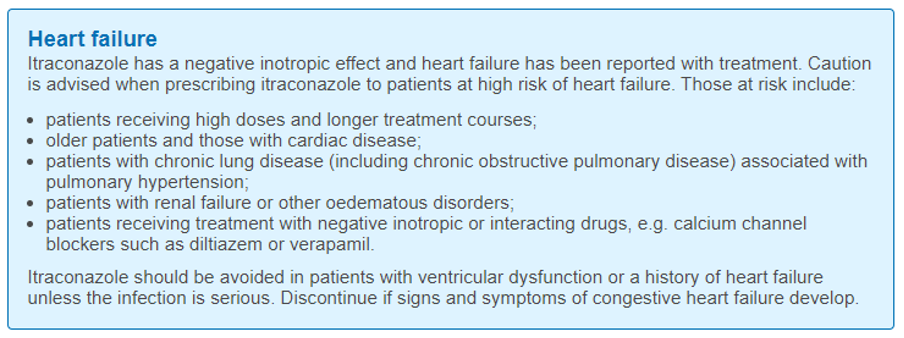
4.  Itraconazole and heart failure
Another recent case I have reviewed involved a patient with heart failure secondary to cardiomyopathy being prescribed itraconazole for severe tinea corporis and developing a marked exacerbation of his heart failure.  He was not warned of the risk of exacerbation and the prescriber was not aware. 
NZF presents a ‘blue box’ precaution:


The MCNZ statement on Good prescribing practice (revised Feb 2024) includes:  Be familiar with the indications, adverse effects, contraindications, major drug interactions, appropriate dosages, monitoring requirements, effectiveness and cost-effectiveness of the medicines that you prescribe.  How is this requirement s best achieved in a time constrained environment?
 
5.  BP cuff position
A recent Medscape article reviewed a crossover, randomized trial published in JAMA last month looking at the effect of arm position on blood pressure readings.  Guidelines for BP measurement recommend arm support on a desk with the mid-cuff at heart level. The study found that supporting the arm on the lap overestimated systolic BP (SBP) by 3.9 mm Hg and diastolic BP (DBP) by 4.0 mm Hg. When the arm hung at the side, readings overestimated SBP by 6.5 mm Hg and DBP by 4.4 mm Hg, with consistent results across subgroups.  The conclusion:  Commonly used, nonstandard arm positions during BP measurements substantially overestimate BP, highlighting the need for standardized positioning.
 
6.  Low dose naltrexone
A September NZ Doctor article reviewed the use of low dose naltrexone in post-Covid syndrome and some other conditions.  Key points were: 
In low doses (typically 3–4.5mg daily), naltrexone appears to modulate neuroinflammation and increase endorphin production, resulting in improved immune system modulation.
Low-dose naltrexone has shown promising results in fibromyalgia/chronic fatigue syndrome, chronic pain, Crohn disease, multiple sclerosis and long COVID, although the quality of evidence is generally low.
While further research is needed, given the limited choice of effective therapies for functional syndromes, LDN is a relatively safe and, in many cases, effective treatment when first-line options fail.
The article examines the evidence base for use of LDN in the various conditions described.  Note: Naltrexone is produced as a 50mg tablet and LDN requires compounding by a pharmacy or compounding laboratory.  Cost is around $115 for 100 days’ supply direct from CompoundLabs (compoundlabs.co.nz); if ordered via a local pharmacy, they may add an extra charge.  The drug is only subsidised if prescribed through and alcohol and drug service for management of alcohol dependence (SA1408) and  note is being used of label outside the indications of opioid and alcohol dependence management. 
 
7.  Endometriosis and ovarian cancer risk
Issue 243 of GP Research Review reported a large population-based study published in JAMA looking at the relative risk of ovarian cancer in women with endometriosis (n=78,893) versus a control group without.
Overall, 597 women had ovarian cancer, and the mean age at first diagnosis was 36 years. Compared to women without endometriosis, those with endometriosis had a 4.2-fold increased risk of ovarian cancer even after adjustments for sociodemographic factors, gynaecologic surgical history and reproductive history.  The risk was most marked for type 1 cancers (aHR[1] 7.48).  Women with ovarian endometriomas and/or deep infiltrating endometriosis had a near 9.7-fold increased risk for all ovarian cancers, with aHR of almost 19 for type 1 cancers. 
Type 1 cancers are composed of low-grade serous cancers, endometrioid and clear cell cancers, and mucinous cancers. This group tends to grow locally, metastasize late, and behave in a more indolent fashion. Type 2 cancers are composed of high-grade serous cancers, carcinosarcomas, and undifferentiated carcinomas. These are highly aggressive malignancies that generally present at an advanced stage.
 
8.  ACC claim numbers
In early September 2024 ACC announced an improvement to their claim approval notification process. Most kiritaki/clients will receive a text message from ACC confirming a claim approval decision, date of injury and ACC45 claim number. They will no longer receive a posted letter. Kiritaki can use their claim number straight away when seeking treatment.  Those under 16 years or without a mobile contact number will continue to receive claim details by mail. 
 
9.  Goodfellow Gems
Gem 225Twenty Winks Sleep Questionnaire.  This questionnaire asks about sleep patterns and provides personalised recommendations to help improve your patient’s sleep. There are 20 questions about sleep habits, lifestyle and health.
 
Gem 226 – This looks at the 2024 update on modifiable risk factors for dementia published by the Lancet Commission on dementia prevention.  Two new factors (LDL cholesterol (7% contribution) and visual loss in later life (2%)) have been added since the 2020 update.  The accompanying infographic might be useful when discussing lifestyle improvements with your patients.
 
10.  Health Equity
Issue 111 of Maori Health Review looked at a study published in the NZMJ on the impact of continuous glucose monitors in reducing disparities in glycaemic metrics for Maori Tamariki with recently diagnosed type 1 diabetes.   At the time of the study of 206 children diagnosed over 12 months 2020-2021, CGM use was 56.7% for Māori and 77.2% for European children. At 12 months post-diagnosis, HbA1c was 10.8 mmol/mol (95% CI 2.3-19.4 mmol/mol; p = 0.013) higher in Māori vs European children without CGM, but was similar between ethnic groups in those using CGM.  Hopefully the disparity in numbers accessing CGM will reduce since the devices have become funded. 


[1] Adjusted hazard ratio

The New Zealand General Practice Podcast

Clinical Snippets October 2024

Dr Dave Maplesden and Dr Jo Scott-Jones – video version available at https://myhealthhub.co.nz/the-new-zealand-general-practice-podcast/ and on the Pinnacle Practice website.

Clinical Snippets October 2024

1.  No thanks doc

I have recently looked at a complaint where the consumer had declined follow-up of an elevated PSA level over several years although did get occasional tests done which confirmed progressive elevation of the PSA.  He was eventually diagnosed with metastatic prostate cancer and a complaint was made that he had not been adequately informed of the risks of not proceeding earlier with further investigations. 

MPS have published some general advice on this situation in the latest issue of Casebook noting the consumer has a right to refuse treatment even if the clinician feels this is unwise.  Advice includes:

  • There should be clear written documentation that the consumer has been offered treatment but has declined it.  This should include that the possible consequences of declining the treatment have been explained to the patient, including the worst possible outcome.  Giving the consumer written information about the recommended treatment is always helpful and you should document in the notes what written material has been provided.
  • Available alternative treatments should be discussed including pros and cons of these and the discussion documented.  Try and arrange a follow-up appointment to allow the consumer time to reconsider their choice.  If possible, it is helpful for a relative or support person to be with the consumer at follow-up, both to support the consumer and also so whanau is aware of the choices being offered to the consumer.
  • There is no legal requirement for the patient to sign a document saying they have declined treatment and good contemporaneous notes detailing the discussion undertaken is appropriate.    It should be made clear to the patient that if they were to change their mind in the future and wish to undertake treatment, whether that may be possible and what pathway the patient would follow to achieve this.
  • If there is any concern that the patient may not have the decision-making capacity to consent or decline treatment, a formal competence assessment is advisable. 

2.  Salty navels, warts and gels

(i)  Goodfellow Gem #224  recommends that neonatal umbilical granulomas are treated with cooking salt.  Due to a propensity to infection potentially leading to omphalitis and necrotizing fasciitis, an umbilical granuloma should be treated. Silver nitrate is often advocated as the first-line treatment for umbilical granulomas. However, along with its antiseptic effect, it is caustic and could damage healthy tissue adjacent to the umbilicus. A systematic review demonstrated that salt treatment was effective in most of 10 studies with no adverse effects.  The NHS provide a treatment pamphlet outlining the regime and Children’s Health Queensland also provide a printable resource that could be adapted for local practice use. 

(ii)  Duct tape has been used to treat warts in children for many years with several studies attesting to its efficacy and tolerability and in these constrained economic times the fact it is an inexpensive treatment option is important.  Instructions are to cut a piece of duct tape close to the size of the wart, place it on the wart and leave in place for six days.  Then remove the tape, soak the wart in warm water, pare off any soft skin, and leave overnight.  Replace the tape the next morning and follow the process for up to two months or until the wart is gone, whichever comes first.    A printable instruction sheet for patients is available on the Healthinfo website

(iii)  Pharmac has confirmed that from 1 November 2024, Estrogel (oestradiol gel) will be funded without restriction alongside other funded presentations of oestradiol.  The Australasian Menopause Society produces a guide to MHT progestogen and oestrogen doses comparing strength of the various products. 

3.  Coffee and pre-diabetes

Issue 242 of GP Research Review looked at a cohort study on habitual coffee drinking and the chance of prediabetes remission.  A total of 334 patients with pre-diabetes (mean age 49.4 years; 51.5% male) were followed over a period of 9 years. Overall, 39.8% of all patients returned to normal glycaemia, while 39.8% progressed to type 2 diabetes. The likelihood of achieving normal glycaemia was substantially higher among patients who reported habitual coffee consumption (OR 2.26; 95% CI 1.03-4.97), although there was no association with total daily caffeine intake.  Previous studies have suggested a protective association between habitual coffee intake and risk of developing type 2 diabetes in women with a history of gestational diabetes and in prevalence of metabolic syndrome in men and women. 

4.  Breast Resource

  • BreastNet NZ is a knowledge base for clinicians, including GPs, practice and breast nurses, SMOs and allied health providers.  It promotes adherence to best-practice care through equipping primary care professionals with accurate, up-to-date information about breast cancer. By providing trusted information to medical professionals, BreastNet hopes to support the development of a skilled breast cancer workforce.
  • The site has a searchable database on all things breast and breast cancer related including descriptions of investigations and breast cancer treatments and support for cancer patients.  There are currently two clinical tools available – a breast cancer risk calculator and Screen 70+ tool to help a patient to decide whether or not to continue screening beyond age 70 years.
  • For example – comment on breast density:  Cancer cells and dense breast tissue appear white on mammograms. Dense breasts can make it harder to interpret mammogram results, and can ‘mask’ cancer cells. However, the risk of the masking effect has reduced since BreastScreen Aotearoa, the national breast screening programme, became fully digital.  Breast density is not currently measured through BreastScreen Aotearoa (BSA). Women must have mammograms through the private system if they wish to know their density grade. Those with high breast density could consider having yearly mammograms at their own cost. These patients may also be offered ultrasound, digital breast tomosynthesis or MRI (for high-risk patients) for more accurate imaging.

5.  Diabetes resources

(i)  Novo Nordisk is discontinuing its supply of Penmix30, Penmix50 and Mixtard30 to the NZ market from September 30th 2024.  If you have patients that still require changing from these products there is a 1-page advisory document available to download on the NZSSD Noticeboard.  This advises on alternative products and their dose equivalents with respect to the discontinued products.   The importance of monitoring and titrating accordingly after any dose or product change is emphasised. 

(ii)  From 1 October 2024 some patients will become eligible for subsidised continuous glucose monitors and insulin pumps.  Pharmac has provided a list of resources for clinicians and patients to assist with new prescribing of or transition on to the subsidies products and you can subscribe to the resource to be kept updated on any developments.  Goodfellow Unit have published a half-hour podcast on the devices with links to additional training resources.  Starship Hospital has also produced a resource which compares features of the subsidised CGM and pump devices. 

(iii)    A meta-analysis on efficacy and safety of the ultra-long-acting basal insulin analogue icodec administered one weekly in type 2 diabetics concluded Once-weekly insulin icodec showed a better HbA1c reduction with a higher proportion of patients achieving HbA1c targets in comparison with once-daily basal insulin analogues. They were no major safety concerns with respect to hypoglycaemia or adverse events.

6.  Safety netting

BPAC’s best practice bulletin Issue 105  reviewed a UK study on provision of safety netting advice in after-hours primary care.  The article published in the British Journal of General Practice found safety-netting advice was provided in more than three-quarters of consultations, however, patients were given generic advice in approximately half of those consultations and only one-fifth were advised of a specific timeframe after which to seek medical attention (if their symptoms did not improve or deteriorated). Clinicians were also more likely to provide safety-netting advice in-person, when prescribing or if an infection was suspected. Surprisingly, situations where safety-netting advice was less commonly given included mental health and telephone consultations. As primary care continues to evolve in the face of current challenges, safety-netting advice remains a critical tool in preventing serious patient harms, but clinicians must keep their tools sharp. BPAC provided a list of ‘Clinical Sharpeners: Safety-netting advice’:

  • Provide specific rather than generic advice where possible (enabling patients to take more responsibility for their health)
  • Give timeframes for when to seek further medical attention
  • Use written advice (if available), especially with more complex information, e.g. multiple symptoms
  • Document any advice given in the patient’s notes, e.g. symptoms, timeframes

7.   Nitrofurantoin

The NZ Formulary September 2024 update includes a practice highlight on nitrofurantoin with safety reminders for prescribing, dispensing, and monitoring.  Comments and recommendations include:

  • Nitrofurantoin is commonly used for the treatment of urinary-tract infection (UTI) and may also be used in some cases for prophylaxis of recurrent UTI. Duration of treatment for prophylactic doses may be up to 6 months, and in some instances longer if treatment is reviewed and the benefits outweigh the risk.
  • Always check you are prescribing and dispensing the correct product and dose—immediate-release and modified-release preparations are available and funded:  Standard dosing of modified-release capsules is twice daily for a urinary-tract infection, while the immediate-release tablets are typically prescribed four times daily.
  • Prescribers should ensure the correct brand is noted on the prescription so that it is clear whether they intend to prescribe the modified-release or immediate-release preparation, and pharmacists should query any non-standard dosing to ensure it is intentional.
  • Serious pulmonary reactions such as pulmonary fibrosis (may be irreversible) and interstitial pneumonitis can occur with short-term or long-term use:  Keep an eye out for signs and symptoms of pulmonary toxicity in your patients on nitrofurantoin.  Ensure your patient is aware of what to watch for, including new or worsening symptoms of cough or shortness of breath, and that they must report these.  Monitor lung function in patients on long-term nitrofurantoin.  Stop treatment at the first sign of pulmonary toxicity.
  • Creatinine clearance of less than 60 mL/minute is listed as a contraindication to prescribing of nitrofurantoin with specialist advice recommended if prescribing is required.  NZF also includes the comment that concomitant urinary alkalinisers (e.g. Ural®) are no longer routinely recommended in the acute treatment of urinary tract infections as they raise urinary pH which may decrease the effectiveness of nitrofurantoin.

8.  Methylphenidate supply issues

Pharmac is regularly updating their information regarding methylphenidate supplies.  The latest update (23 September) includes detailed clinical advice regarding management options for affected patients including dose equivalence charts and pharmacokinetics summaries of the products concerned.  General advice includes: 

Do not start any new patients on a methylphenidate extended-release formulation unless absolutely necessary. Instead consider alternative shorter duration methylphenidate formulations, i.e. immediate release tablets, or one of the 8-hour formulations Ritalin LA or Rubifen SR (note the release profiles of these two formulations are different).

For patients currently treated with a methylphenidate extended-release formulation, make an individual case by case decision. You may wish to consider the following:

  • can the patient/parent/carer liaise with their usual pharmacy to establish whether they are expecting deliveries of their required strength of methylphenidate?
  • is the patient’s prescribed strength anticipated to have an upcoming shortage?
  • is a treatment break an option?
  • is an alternative formulation of methylphenidate an appropriate interim measure?
  • is an alternative formulation appropriate to switch to over a longer period?
  • does the patient have an appropriate Special Authority approval.

Note that while the SA approval criteria apply to methylphenidate rather than a specific formulation of the drug, a different SA form/number is required for Concerta and Ritalin LA (SA 2305) with the SA 1964 form required for other preparations.  Pharmac notes that GPs and nurse practitioners can legally apply for an alternative Special Authority for a methylphenidate presentation if needed, provided that all other relevant eligibility criteria are met.  This relates to the legal situation only. From a clinical perspective, GPs and nurse practitioners may still need specialist advice to change presentations of methylphenidate.

9.  MPOX

The Community Health Pathway on Mpox has been updated since the recent outbreak with advice as follows.  Clinicians are asked to:

  • Be alert for cases linked to the Queenstown Winter Pride festival.
  • Prioritise assessment and testing of people with symptoms compatible with mpox who attended Winter Pride or related events, or had sexual contact with event attendees.
  • Notify Public Health urgently of suspected and confirmed cases. Public Health will contact these people to provide advice and support.

Note:

  • Isolation is not routinely required; covering lesions is the mainstay of preventing transmission. Public Health will advise cases of any additional restrictions required to prevent transmission.
  • Mpox vaccination is recommended for mpox contacts as post-exposure prophylaxis, ideally within 4 days of exposure to a case, although it can be given up to 14 days after exposure. A list of established Mpox clinics is available on the Pathway.
  • Mpox consultations and vaccinations at sexual health clinics are free.

The Pathway includes more detailed information on assessment and diagnosis including criteria for testing and appropriate use of PPE when assessing and testing suspected cases. 

The New Zealand General Practice Podcast

Clinical Snippets August 2024

\

Clinical Snippets August 2024

1.  Diverticulitis

A recent Tools for Practice from the College of Family Physicians of Canada looked at the question:   Do antibiotics change clinical outcomes for patients with acute uncomplicated diverticulitis?  The bottom line based on current evidence is that for non-septic immunocompetent patients with acute uncomplicated diverticulitis, antibiotics do not alter early complication or recurrence rates.

This approach is emphasised in a 2023 BPAC article on diverticular disease which contains detailed diagnostic and management advice including the following practice points:

  • Patients with red flag symptoms indicative of complicated diverticulitis, e.g. abscess, perforation, obstruction or fistula, significant immune suppression or relevant uncontrolled co-morbidities likely to worsen their condition, e.g. diabetes, liver or renal disease, require referral to secondary care (where a CT scan can be performed to confirm the diagnosis)
  • For patients with less severe symptoms, a clinical diagnosis of uncomplicated diverticulitis can be made after reasonable exclusion of other causes, and conservative treatment initiated in the community, including paracetamol (NSAIDs or weak opioids can be considered if no contraindications). Patients should be ideally followed up in 48 hours, or earlier depending on their clinical condition.
  • Antibiotics are no longer routinely recommended for most patients with suspected acute uncomplicated diverticulitis; oral antibiotics may be considered for some patients who are at higher risk of complications (e.g. due to co-morbidities), but who do not meet criteria for secondary care referral.  Antibiotics can also be considered for patients managed conservatively who do not show improvement within 48 hours of their first presentation.
  • While conventional advice has recommended short-term diet modification for patients with acute uncomplicated diverticulitis, i.e. two to three days of clear liquids before slowly reintroducing dietary fibre, there is a lack of clinical evidence to support this. If tolerated, an unmodified diet may be more appropriate. It is now accepted that obstruction in acute diverticulitis is rare and diets high in nuts, seeds and corn do not increase this risk of developing diverticulitis, suggesting there are other mechanisms involved.

2a.  New Free Resources available through Healthpathways. 

  • Health New Zealand Te Whatu Ora has provided all Healthpathways users with access to two free “evidence-based medicine” tools – BMJ Best Practice, and EBSCO Dynamed.  
  • Just follow the links on your Health Pathways home page to sign up for your free profiles and have a look around.  
  • Both sites give access to up to the minute evidence-based guidance and information on a huge range of medical topics, medical calculators, clinical updates and medical news. Each have different flavours and styles. 

As an example, there was reference in a recent GPs for GPs Facebook post to changes in recommendations for first line drug therapy for patients with persistent restless legs syndrome (RLS).  The BMJ Best Practice site takes a practical approach through diagnosis and what tests to order to treatment algorithms with recommendations changing depending on severity of RLS (intermittent, chronic, refractory) and pregnancy status.  For non-pregnant patients with chronic RLS gabapentinoids (e.g., pregabalin, gabapentin) are the first-line pharmacological option with dopamine agonists now regarded as second line. 

2b.  WINZ Resource

WINZ have produced a downloadable one-page summary of main and supplementary financial benefits available to eligible patients which may be of assistance when advising patients in need.   

3.  Type 2 diabetes

A UK-based cohort study recently published in the BMJ and reviewed in Issue 13 of GP Practice Review found that, the GLP-1 receptor agonist-SGLT-2 inhibitor combination was associated with a lower risk of major adverse cardiovascular events and serious renal events compared with either drug class alone. The reviewer noted the study provides evidence that after initiating lifestyle change and pharmacotherapy with metformin and either a SGLT-2 inhibitor or a GLP-1 receptor agonist, stepping up to triple therapy by adding either a SGLT-2 inhibitor or a GLP-1 receptor agonist is an effective method of intensifying treatment to reduce cardiovascular risk and potentially improve renal outcomes. However, in New Zealand this would require patients to self- fund at least one of these medicines with Pharmac special authority criteria as they currently stand.

Related to this – Pharmac’s procurement process for continuous glucose monitoring (CGM) devices, insulin pumps and insulin pump consumables is progressing but it appears funding for these products will be limited to those with type 1 diabetes.  The Aotearoa Diabetes Collective has created a useful guide with templates for letters to support WINZ Disability Allowance applications for CGM and empagliflozin (for those already prescribed a GLP1 receptor agonist) for people living with type 2 diabetes.

4.  COVID-19 technology support changes

Health New Zealand Te Whatu Ora have provided an update on two COVID-19 technology products that are being decommissioned from 1 August 2024.

  • GP notifications: The technology supporting notifications to GPs is being decommissioned and you will no longer receive notifications of self-reported RAT results. This change aligns COVID-19 with other ‘point of care’ tests where patients self-test and proactively contact their healthcare provider for treatment if needed.  The text message that a person receives when they self-report a positive RAT result has been updated and they are taken through a questionnaire to assess if they are eligible for antiviral medicines. If they are unwell or if it appears they’re eligible they are recommended to contact their healthcare provider or a participating community pharmacy. The GP will not be aware of a self-reported RAT result, so will not contact them.
  • COVID-19 Clinical Care Module (CCCM): The CCCM will be decommissioned. GPs should continue to report COVID-19 cases via Healthlink as COVID remains a notifiable disease and this test result will automatically flow through to the Notifiable Disease Management System.

5.  Perinatal depression

A Recent issue of NZ Doctor contained an excellent article on management of perinatal depression.  Important practice points included:

  • Antidepressants are not risk free. However, given the adverse outcomes associated with uncontrolled depression for both the birthing parent and their baby, most antidepressants have a favourable risk–benefit ratio for moderate to severe depression during pregnancy and breastfeeding.
  • Routine discontinuation or switching of antidepressants during pregnancy and breastfeeding is discouraged without consideration and discussion of the specific risks (including the risks of relapse) and benefits for that individual. If the decision is made to discontinue, the antidepressant should be slowly tapered, not stopped abruptly.
  • If the patient has not had antidepressants before, selective serotonin reuptake inhibitors (SSRIs) are generally recommended for first-line treatment with Sertraline being the preferred SSRI in pregnancy. It is thought to have the lowest placental transfer of any SSRI and may have the lowest risk of neonatal persistent pulmonary hypertension.  Additionally, if breastfeeding is desired, it has low infant exposure via milk.
  • Escitalopram or citalopram are also relatively safe in pregnancy and breastfeeding and are reasonable alternatives. Fluoxetine, while having a reasonable safety profile during pregnancy, is least preferred during breastfeeding as it has a long half-life and may accumulate in milk. Paroxetine may have an increased risk of congenital heart defects, although this has not been conclusively proven. Paroxetine also has an increased risk of neonatal adaptation syndrome (NAS) compared with other SSRIs. For these reasons, some guidelines recommend avoiding paroxetine during pregnancy, if possible, although it has low infant exposure via milk for those who wish to breastfeed.

The article reviews use of all classes of antidepressants and current evidence base for risks versus benefits.   There are links to a variety of support and self-help resources including:

  • Perinatal Anxiety & Depression Aotearoa provides screening tools, factsheets on antenatal and postnatal anxiety and depression, and locally available support services and helplines
  • Mothers Helpers offers support for mothers with antenatal and postnatal anxiety and depression, including an online perinatal depression recovery course
  • Healthifyhas information on perinatal depression and anxiety, how it is treated, and a list of available support services
  • Beating the Blues provides free online cognitive behavioural therapy
  • Just a Thought offers two free specialised online perinatal CBT courses
  • Tuku Iho is a bilingual app that focuses on te ao Māori maternal and tamariki wellbeing

The article also includes links to two sites that provide consumer-oriented information on risks and benefits of various drugs that may be used in pregnancy:

6.  Patient information sheets available from bpacnz

The following information sheets are especially designed to support primary care consultations, and can be downloaded and printed, or the link sent to patients via text or email.

7.  HPV priority group funding

Funding for HPV screening and follow-up priority groups has been extended until 30th June, 2025.  Details of the process are available on the Heath NZ Te Whatu Ora website and includes two algorithms aimed at simplifying determination of eligibility for funding.

8.  Weird but wonderful

Preliminary studies have shown a significant decrease in severity of obstructive sleep apnea (OSA) with the use of a combination of atomoxetine and oxybutynin, with patients having moderate pharyngeal collapsibility during sleep (a higher proportion of hypopneas to apnea and mild degree of oxygen desaturation) more likely to respond. A 2022 study evaluated the efficacy and safety of atomoxetine 80 mg and oxybutynin 5 mg in the treatment of OSA confirming findings of previous studies.  The most common adverse events (insomnia (12%) and nausea) were consistent with the expected profile of the individual drugs.  A 2024 study adding acetazolamide to the combination found no increase in efficacy with this addition. 

9.  Why I don’t sleep at night…

I have recently reviewed the case of an older child assessed in primary care after running in to a barrier pipe (waist level) with subsequent abdominal pain.  There were no findings of an acute abdomen and the child was discharged after responding to simple analgaesia but collapsed and died at home about 36hrs later.  Post-mortem findings revealed a jejeunal rupture.    Children are more vulnerable to blunt abdominal injury than adults because they have relatively compact torsos with smaller anterior-posterior diameters, which provide a smaller area over which the force of injury can be dissipated; larger viscera, especially liver and spleen, which extend below the costal margin; and less overlying fat, and weaker abdominal musculature to cushion intra-abdominal structures.  Uptodate[1] notes that repeated, serial examinations are necessary in children with abdominal trauma because serious intra-abdominal injury (IAI) may not be apparent upon the initial examination. Abdominal tenderness may be especially difficult to determine in young children who are frightened and cannot clearly communicate and in older children who are uncooperative or neurologically impaired.  The message is to have a high index of suspicion for possible IAI in children presenting with blunt force abdominal trauma.   

Coincidentally, Issue 28 of Child Health Research Review reviewed the recently published Pediatric Emergency Care Applied Research Network (PECARN) prediction rules to reduce inappropriate use of computed tomography (CT) in children with abdominal or head trauma. The rules were validated with a high degree of accuracy: the intra-abdominal injury rule had a sensitivity of 100.0% and a negative predictive value (NPV) of 100.0% but has not been validated for use in primary care and given presence of abdominal pain is a ‘not very low risk’ criterion I’m not sure how practical it would be. 


[1] Saladino R et Conti K.  Pediatric blunt abdominal trauma: Initial evaluation and stabilization.  Uptodate.  www.uptodate.com  Accessed 1 August 2024

The New Zealand General Practice Podcast

Clinical Snippets April 2024

Shownotes :

Clinical Snippets April 2024

1.  Adrenaline auto-injectors – think twice

  • Hosted content (Viatris – manufacturer of Epi-Pen) in the March edition of NZ Doctor noted a report by the Commission on Human Medicines’ Adrenaline Auto-injector Expert Working Group that highlights the latest safety advice including the recommendations of prescribing two AAIs, and patients should carry these at all times.
  • For children attending daycare or school, this approach ensures that one Adrenaline Auto-Injector remains with the child at all times, whether at home or outside, while the second one is stored at the daycare or school for additional coverage.
  • Similarly, for older children or adults weighing 50 kg or more, having two Adrenaline Auto-Injectors enables individuals to carry both with them at all times. This becomes crucial in situations where more than one dose of AAI may be required, offering an added layer of preparedness. This could include reasons such as ambulance delays, a biphasic reaction (3-20% of patients) or incorrect administration technique.
  • EpiPen is fully funded for patients meeting the Pharmac eligibility criteria, including:
    • A patient who has had a previous anaphylactic reaction which required ED visit or hospital admission; OR
    • A patient who has had a significant anaphylaxis risk as determined by a relevant practitioner.

There is a maximum of 2 devices per prescription with additional prescriptions limited to replacement of up to two devices prior to expiry, or replacement of used device(s) for treatment of anaphylaxis.

2.  Scam Alert

The latest Medical Council newsletter reports actions taken by them on learning that the personal and professional details of several NZ practitioners have been utilised on a counterfeit telehealth platform, known as “prescripson.com.”   The Council recommends:

  • We urge all registered doctors to remain vigilant and to monitor any unsolicited or suspicious activities related to your professional credentials. Regularly review your online presence and the use of your professional details on websites outside of your control.
  • Should you encounter any unauthorised use of your details or receive questionable inquiries that seem related to this scam, please report them immediately to the authorities and the Medical Council for further action.

3.  Goodfellow Gem

  • The latest Goodfellow Gem reviews a meta-analysis of the effect of NSAIDs on post-fracture bone healing.    In this analysis, six RCTs (609 patients) were included. The risk of non-union was higher in the patients who were given NSAIDs after the fracture, with an OR of 3.47. 
  • However, once the studies were categorized into the duration of treatment with NSAIDs, those who received NSAIDs for a short period (<2 weeks) did not show any significant risk of non-union compared to those who received NSAIDs for a long period (>4 weeks).
  • Indomethacin was associated with a significantly higher non-union rate and OR ranging from 1.66 to 9.03 compared with other NSAIDs that did not show a significant non-union risk. This is not the best evidence, but perhaps we should avoid indomethacin. 

4.  On Road Safety Test

  • A NZ Herald article last month reported comments from NZ cognitive neuroscientist Dr Kerry Spackman criticising use of the SIMARD-MD test and other general cognitive screening tools in determining whether patients undergoing senior driving assessment medicals were safe to drive.  He cited a 2021 Canadian study which concluded the SIMARD-MD should not be used with either healthy drivers or those with cognitive impairment for making decisions about driving.
  • An on-road safety assessment (ORST) usually carried out by a driving instructor may be considered when mild cognitive impairment is suspected or reassurance is required regarding the patient’s driving habits. The Waka Kotahi website contains information regarding the ORST including written advice for candidates.  Selected AA and VTNZ branches offer the service.  AA also offer senior driving coaching sessions for 65-74 yo ($80 member, $65 non-member) and for 74+ yo (members only – free). 
  • The ORST is carried out in the patient’s vehicle and is in three parts:
    • Basic driving skills
    • Basic driving skills and hazard detection
    • More complex driving situations and hazard detection
  • The AA website notes the patient may fail the ORST because of a few simple mistakes or small lapses of concentration. The average pass rate is about 56%. If the patient’s licence is still current, they can continue driving until it expires. If they wish to re-sit the test, they can book another appointment with the testing officer. They may re-book your first test once at no extra charge, but subsequent attempts will incur an additional test fee.
  • Note the ORST is a limited test assessing the patient’s driving habits. Health Pathways advises a medical practitioner cannot use a driving instructor’s report to make a decision on someone’s fitness to drive. Instead, if an instructor has been used, this report can be forwarded to Waka Kotahi NZ Transport Agency (Waka Kotahi), along with the medical report from the medical practitioner, for Waka Kotahi to make a decision.  The ORST is not the same as a medical OT driving assessment which may be undertaken when the health professional is unsure whether the patient is medically fit to drive.  This is a comprehensive off-road and on-road assessment undertaken by an OT and driving instructor that includes checking of vision, range of movement, strength, sensation, coordination, judgement, memory, directional orientation, movement and decision-making times, cognition and comprehension and knowledge of road rules and signs in addition to practical driving skills and safety.  Private assessments cost up to $1000 and are not available in all areas.  TWO may fund assessments in some areas (see Health Pathways). 
  • Detailed advice on medical aspects of fitness to drive are contained in the Waka Kotahi health practitioner’s guide.  The Goodfellow Unit has published a ‘how-to guide’ on driving assessment for patients with dementia using a case example.  The Health Pathways section on Fitness to Drive is useful and includes a section on alternative transport and assistance options for patients deemed no longer safe to drive.  

5.  Medication Communications

(i)  Medsafe – Eczema with CCBs:  As of 18 March 2024, CARM has received six reports of eczema where the suspect medicine was a CCB.  In one case the diagnosis of CCB-associated eczema was made several years after initiation of the drug.  Of these reports, five were associated with felodipine and one with diltiazem.  Medsafe is encouraging reporting of new-onset eczema with calcium channel blockers to further determine whether there is cause for concern. 

(ii)  Medsafe – Undeclared topical steroids:  Do not use NaturaCoco Moisturising Cream or Dok Apo Moisturiser Soothing Cream.  These topical cream products have been found to contain fluocinonide, a potent corticosteroid, which is not listed in the product ingredients.  If a patient not currently using steroid creams presents with symptoms consistent with use potent steroids, then consider use of the above products.

(iii)   Novo-Nordisk has given advance notice to Pharmac that supply of three of its insulin products – PenMix 30, PenMix 50 and Mixtard 30, will be discontinued from 30 September 2024.  It is recommended patients using these products be transitioned to suitable alternatives.   Expect further advice from Pharmac in the near future. 

(iv)  Pharmac – a request for proposal for supply of oestradiol gel (subsidized) for the NZ market was released by Pharmac earlier this month, partly in response to ongoing supply issues with transdermal oestrogen patches.   Suppliers mist apply by 13 May 2024 and the bids will then be evaluated by Pharmac and its clinical advisers.

6.  Chasing results

Te Whatu Ora has published a document outlining four high level principles aimed at ensuring patient safety and equitable health outcomes by clarifying areas of responsibility and reducing ambiguity, in particular when there are transfers between secondary and primary care.

  • Principle 1: The clinician who orders an investigation (the requestor) is responsible, either personally or delegated, through defined team processes for review and actioning of the results regardless of subsequent transfer of care, unless explicitly agreed to and documented otherwise.
  • Principle 2: Where information is shared to add value to care and continuity, copying results to other clinicians or service providers is appropriate. But clear, separate communication is required if the recipient is expected to act on the result.
  • Principle 3: Any clinician copied into a significantly abnormal result needs to ensure appropriate action has been taken.
  • Principle 4: The requirements for regular monitoring and follow-up must be agreed between the referring and receiving clinicians.

The document notes: Copying of results is not a transfer of care and results should not be routinely copied to any other clinician at the time of request. This ensures that ongoing responsibility lies unambiguously with the requester. If handover of responsibility is requested, this needs to be clearly communicated in writing and with closed loop communications – ie, by phone call.

7.  Cellulitis study

  • Issue 231 of GP Research Review reported a recently published retrospective study from Dunedin comparing compare the safety and efficacy of outpatient parenteral antimicrobial therapy versus oral antimicrobial therapy in the treatment of cellulitis associated with the clinical pathway change from  IV cefazolin + probenecid, to oral flucloxacillin + probenecid.
  • When comparing outcomes before and after the change, there were no significant

differences in the rates of clinical treatment failure (15.4% vs. 14.3%, respectively; p=NS), treatment changes due to intolerance (3.2% vs. 5.7%; p=NS) or inpatient admission within 28 days (12.2% vs. 12.9%; p=NS). The pathway change was also associated with substantial cost savings, with a significant reduction in scheduled ED reattendances (43.1% vs. 2.9% of cellulitis patients; OR 0.04; p<0.01), mainly due to the decreased need for intravenous support.

  • Health Pathways gives comprehensive management advice including recommended antibiotic regimes for patients with history of mild and severe penicillin reactions or suspected MRSA.  Importance of screening for sepsis is emphasised with additional practical advice such as when wound swabs and blood tests including cultures might be considered (not routine) and:
  • Treat Māori and Pacific patients early – Māori and Pacific patients have high rates of hospitalisation due to sepsis and cellulitis. Start effective treatment early and arrange a review acceptable to the patient to monitor progress.
  • Be aware that the natural history of cellulitis shows increasing redness and swelling within the first 48 hours.  If the patient is improving overall at 48 to 72 hours after initiation of oral therapy, do not start intravenous therapy solely due the persistence of redness or swelling.
  • Always reassess moderate cellulitis at 48 hours and monitor fever. This is the most important indicator of response to antibiotics.

8.  Mirena for contraception

  • In January this year regulatory approval was received in the UK to extend the use of Mirena, for contraception only, to eight years from the previously recommended five years.  In the USA the FDA approved the device for eight years for contraception in August 2022.  The NZF and Medsafe data sheet in NZ currently retain the previous recommendation of five years so use for contraception beyond this time, while supported by evidence of efficacy, would require informing the patient such use in NZ is ‘off label’.  
  • Note there has been no change to approval or recommendations for use of Mirena for the management of heavy menstrual bleeding, or for endometrial protection as part of hormone replacement therapy which remain, in New Zealand, as five-year duration of use for each. 

9.  Did you know that…

  • The Australasian Menopause Society provides information on management of patients with endometriosis after menopause. They note that OCPs which contain oestrogen and progestin are often effective in controlling endometriosis in premenopausal women and it is prevention of ovulation by oophorectomy or medically, as in OCP use, or naturally by menopause, that has the major impact on the treatment of endometriosis.
  • Although the evidence remains sparse there have been case reports of endometriosis recurrence or malignant transformation of extrauterine endometriotic deposits in women with a history of extensive endometriosis treated with unopposed oestrogen therapy following menopause. Current recommendations favour continuous combined oestrogen-progestogen preparations instead of unopposed oestrogens for women with a history of substantial endometriosis even after hysterectomy, especially if there has been extensive disease.

The New Zealand General Practice Podcast

Clinical Snippets March 2024

Listen on all podcast platforms – remember to like and subscribe.

Dr Dave Maplesden educates Dr Jo about….

CLINICAL SNIPPETS – MARCH 2024 

1.  Prescribing 

Health Pathways has released a new section on practical prescribing aimed mainly at new prescribers but some helpful reminders for veteran prescribers.  Covers most general aspects of prescribing including legal requirements.  Some practical information includes: 

  • If you prescribe intermittent PRN medicines e.g., two tablets QID PRN, without ordering a specific amount then the pharmacy will dispense the maximum allowable amount i.e., 720 tablets for three months. If you continue to print this medicine automatically on your repeat prescriptions the patient is liable to receive excessive amounts. This has safety implications, especially if it is a medicine of potential abuse such as codeine-containing medicines. 
  • When a patient tells a prescriber they have different numbers of each of their medications, write “Please vary quantities for patient stock management.” Pharmacists can then dispense the required quantities to bring medications into line. 
  • Patients not eligible for pharmaceutical subsidies but covered by ACC  for an injury may be eligible to claim back the cost of usually subsidised prescriptions related to that injury using an ACC249 form (which the pathway suggest the prescriber gives to the patient) 
  • Pharmacists check that a medicine or a dose of medicine is correct by comparing the new prescription with the patient’s medicine history.  To avoid the pharmacist needing to check with you that a change in the prescription is deliberate, please underline and annotate any change from the previous prescription. Annotation of changes is important. Pharmacists’ systems are not linked and if a patient does not return to the same pharmacy, the pharmacist may be unaware of a change in prescription for that patient. 

2.  Concussion   

  • BPACs Best Practice Bulletin: Issue 92 includes updated Sport Concussion Guidelines from ACC including a six-stage graduated return to education/work & sport protocol.  It is worth familiarising yourself with the protocol to ensure patients are given a consistent message regarding return to sport.  The protocol notes day 14 is the earliest time at which return to normal work/study and sports specific training should be considered, and day 21 is the earliest at which return to competitive sport should be considered.  
  • There is reference to the recent ACC statement on post-concussion syndromeACC considers that post-concussion syndrome is an unhelpful and out-dated clinical construct. Our view is that there are risks inherent in continuing to diagnose clients with this condition, not least that disabling symptoms will be misattributed to this condition rather than to potentially reversible medical, psychological, or psychiatric factors that remain undiagnosed and untreated. Consequently, ACC no longer accepts ‘post-concussion syndrome’ as a covered injury. Where clients/patients have persisting symptoms that clinicians consider are caused by concussion, the appropriate covered injury would be ‘concussion’. Symptoms that persist beyond three months are most appropriately described as ‘persisting concussion symptoms.’ 
  • I’ll put in my regular plug for use of the Brain Injury Screening Tool (BIST-2) (not just for sports related concussion) which is validated for patients aged over 8 years and is designed to be completed in about six minutes.  It gives objective baseline and progress measures covering physical, vestibular-ocular and cognitive symptoms of concussion.   
  • There is an excellent 2022 BPAC article on diagnosing and managing concussion in primary care.    

3.  Two defibrillators? 

  • The February edition of NZ Doctor describes a new emergency procedure for cardiac arrest known as double sequential external defibrillation (DSED) which has been adopted here, the second country after Canada to do so.  The article notes that early defibrillation can dramatically improve the likelihood of surviving a cardiac arrest but around 20% of patients whose cardiac arrest is caused by VF or pulseless VT don’t respond to the standard defibrillation approach.  The use of DSED has been shown to double the survival rate of such patients.  
  • DSED provides rapid sequential shocks to the heart using two defibrillators. The pads are attached in two different locations: one on the front and side of the chest, the other on the front and back. A single operator activates the defibrillators in sequence, with one hand moving from the first to the second. New Zealand ambulance data from 2020 to 2023 identified about 1,390 people who could potentially benefit from novel defibrillation methods. This group has a current survival rate of only 14%.   
  • Relevant paramedic guidelines are to be updated reflecting the new approach including that if ventricular fibrillation or pulseless ventricular tachycardia persist after two shocks with standard defibrillation, the DSED method should be administered. Two defibrillators need to be available, and staff must be trained in the new approach.   

4.  Equitable prescribing 

  • Issue 230 of GP Research Review reviews a recently published study on inequities in pre-pregnancy folic acid use in Central and South Auckland. The study notes that rates of neural tube defects are markedly higher among Māori (4.58/10,000 live births), and Pacific peoples (4.09/10,000 live births) as compared with non-Māori, non-Pacific peoples (2.81/10,000 live births).  
  • Only 46% of the 400 women surveyed as part of the study reported using pre-pregnancy folic acid supplementation. Rates were lower among women who did not intend to become pregnant (21%) or were “pregnancy-ambivalent” (27%) than in those who intended their pregnancy (58%). Women who identified as European, Middle Eastern, Latin American or African were around five times more likely to use supplementation than Māori.  Supplementation was also more likely among those managed by a private obstetrician versus a midwife and in women aged over 30 years. 
  • The study concluded Low rates of pre-pregnancy folic acid supplementation exist in Auckland with significant ethnic disparity. Mandatory fortification of non-organic wheat is important, but supplementation is still recommended to maximally reduce risk. 

5.  Medication supply issues and brand changes 

  • Morphine oral liquid (RA-Morph) 1 mg per ml and 10 mg per ml strengths are out of stock, and remaining supply of RA-Morph 2 mg per ml and 5 mg per ml will expire at the end of March.  Re-supply RA-Morph 1 mg per ml is expected by June-2024. Other strengths of RA-Morph are expected later in 2024.  This leaves two unapproved but funded (s29) brands of 2mg per ml strength available – Wockhart and Oramorph.  Further detail and prescribing advice is available on He Ako Hiringa website.   
  • Omeprazole 20 and 40mg capsules – monthly dispensing from 1 March 2024 until stocks arrive (expected April 2024) 
  • Oestradiol valerate 1mg tabs (Progynova) – monthly dispensing from 1 March 2024 until stocks arrive (expected June 2024).  2mg tabs not affected. 
  • Mesalazine 800mg tabs (Asacol) – shortage expected until July 2024.  Two x 400mg tabs suitable alternative 
  • Olsalazine 250 and 500mg tabs (Dipentum) – both unavailable with 500mg expected available from April 2024.  Consider change to alternative medication eg mesalazine 
  • The funded bisoprolol brand is changing from 1 April 2024 when bisoprolol-Mylan and Viatris will no longer be funded.   A patient information leaflet about the brand change is available on the Pharmac website.  
  • From 1 March 2024, Pharmac has removed the requirement for annual renewal of SA numbers for patients taking sacubitril with valsartan (Entresto), for heart failure.  
  • Modafinil – contra-indications (contraindicated in pregnancy), contraception and conception, pre-treatment screening, and patient advice has been updated in NZF.  This includes pretreatment screening with BP, ECG and excluding pregnancy, and Effective contraception is recommended during treatment and for 2 months after stopping treatment. Effectiveness of hormonal contraception (including contraceptive pills, implants, injectables and hormone releasing intrauterine devices) may be reduced.  The UK FSRH gives current guidance on contraceptive options in patients taking enzyme inducers.    

6.  Frank’s sign 

Issue 111 of Cardiology Research Review reports a Spanish study looking at Frank’s sign (Sanders T Frank – 1973) and cardiovascular risk.  Frank’s sign is a diagonal earlobe crease.   The estimated cardiovascular mortality risk was significantly higher in individuals who presented diagonal earlobe crease. The number of individuals with moderate, high, or very high cardiovascular risk increased significantly as the presence of the crease increased (23.8% had no crease, 35.6% had unilateral creases, and 58% had bilateral creases). The mean cardiovascular risk estimated was significantly higher for individuals with longest and deepest diagonal earlobe crease, and with accessory creases.  The conclusion:  The diagonal earlobe crease is independently associated with higher cardiovascular risk scores, especially when the crease is complete, bilateral, deep, and has accessory creases.  

7.  The limping adolescent 

  • Beware the child with unexplained limp or knee pain.  I’ve recently reviewed a case of missed diagnosis of SUFE in a slim 11yo female which had disastrous consequences for her – stable mild slip converting to a severe acute slip. 
  • Health Pathways has a section devoted to SUFE partly because of the potentially severe consequences of missed or late diagnosis.  This includes the practice point:  All children complaining of knee pain need exclusion of hip pathology. If there is no evidence of knee pathology on examination, arrange hip X-ray with AP pelvis and frog lateral view.  However, if you suspect an acute SUFE on the basis of history and examination, refer immediately for orthopaedic assessment rather than imaging.   
  • As a quick refresher, SUFE usually occurs in the 8-15 year age group, more common in males and a more than half of sufferers are overweight or obese.   The most common presentation is a chronic slip with gradual movement of the epiphysis and the patient may present with vague chronic or intermittent aching pain in hip, groin, thigh or medial knee. 15% of patients only have thigh or knee pain. Pain worsens with physical activity and there is usually no preceding trauma. It may be bilateral (18-50%).  An acute slip presents after a sudden event with inability to weight bear and appearance of a hip fracture.  You can get an acute slip on background of a chronic slip (sudden exacerbation of symptoms in a setting of more consistent low-grade symptoms, may be episodic). 
  • A chronic slip may present with persistent or episodic limp. Foot on the affected side may be out-turned. Loss of internal rotation at hip.  Leg length shortening may be present.  When the hip is flexed passively to 90º, the thigh will abduct and roll into external rotation. Examine the knee to rule out local process at the knee to account for knee pain.  With an acute slip there is a marked limp and Trendelenburg gait and often an inability to weight bear.  There may be an external rotational deformity of the hip and shortening of the affected leg. 
  • The annual incidence of SUFE in the 0–16-year age group is around 5/100,000 meaning around 40-50 cases in NZ annually so you may never see one.  An Australian study suggests there is delayed diagnosis (weeks to years) in around 60% of cases of chronic stable slip, and most patients (76%) present initially to their GP.      

The New Zealand General Practice Podcast

Clinical Snippets February 2024

Shownotes

Clinical Snippets February 2024

1.  ACE and ARB and statin use in pregnancy – DON’T

The NZF notes that ACE inhibitors should be avoided at all stages of pregnancy. Fetal skull defects have been reported following first trimester exposure to ACE inhibitors although evidence of teratogenicity is inconclusive. In the second and third trimesters ACE inhibitors can cause abnormalities including fetal growth retardation, oligohydramnios and fetal or neonatal renal failure. Fetal death in utero has also been reported. Pregnant women who are taking an ACE inhibitor should be changed to an alternative antihypertensive as soon as possible.  Like ACE inhibitors ARBs should be avoided in pregnancy, particularly in the second and third trimesters, as similar effects to those caused by ACE inhibitors in pregnancy are expected.  

NZF notes also that Statins should be avoided in pregnancy as congenital anomalies have been reported and the decreased synthesis of cholesterol possibly affects fetal development. The individualstatin monographs state the drug is contraindicated during the first trimester and adequate contraception is required during treatment and for 1 month afterwards.  However, a 2022 metanalysis and systematic review noted there are some patients for whom there may be a significant benefit of maintaining statin therapy, in particular in the second and third trimesters. The risk and benefit of statins treatment during pregnancy need to be evaluated in an individualized approach and every trimester apart.

2.  Monitoring lithium drug interactions

A September NZ Doctor article on monitoring drug interactions with lithium is a helpful refresher on monitoring recommendations for patients on lithium therapy:

(i)  Usual monitoring: (current reference range for chronic use is 0.6-0.8 mmoL/L):

  • Three to six-monthly (depending on stability) – serum lithium level, electrolytes, eGFR.
  • Six-monthly – thyroid function, calcium, weight.
  • Annually (if over age 40 or obese) – HbA1c, lipids, consider ECG.

(ii)  When adding or removing medicines:

  • ACE inhibitors – baseline serum lithium level and renal function tests, then weekly for six weeks or until stable. For “at-risk” people (impaired renal function, volume depletion or heart failure) consider further two-weekly checks for six weeks.

20 to 35 % of people will have an increase in lithium levels if an ACE inhibitor is added to their regime, usually by around 33 %. The interaction can be delayed for up to five weeks, so it is important not to be reassured by steady lithium levels initially.  ARB interaction less likely but dose dependent (ARB) increases in lithium levels of up to 20 % after up to five weeks of treatment have been reported. 

  • Diuretics – baseline serum lithium level and renal function tests, then weekly for four weeks.

If a thiazide needs to be introduced, there may be a rapid increase in serum lithium levels by 20-25 % in 3-10 days, although this effect may also be delayed.  Loop diuretics have less impact, with potentially only up to a 20% increase in levels, and potassium-sparing diuretics appear to have no effect.

  • NSAIDs – baseline serum lithium level and renal function tests, then weekly for two weeks or until stable.

This interaction is well described for decreasing lithium clearance and increasing its toxicity, although it is unpredictable. While the average decrease in lithium clearance is usually 10-25%, there is wide variation, especially in people with impaired renal function. It is unlikely that COX-2 inhibitors would be any different to traditional NSAIDs regarding this interaction.

The risk is cumulative with concomitant use of ACE inhibitors, diuretics and NSAIDs.

3.  Shared care clozapine

The October 2023 NZ Doctor includes a refresher on shared care prescribing of clozapine.  Points include:

(i)  Clozapine can only be initiated by a psychiatrist. In some localities within Te Whatu Ora, GPs and nurse practitioners can be responsible for ongoing prescribing under the supervision of a psychiatrist. GPs can also prescribe for those with stable illness in collaboration with a community mental health team.  Patients are considered stable if they have been taking clozapine continuously for two years, had no mental-health-related hospital admissions in the last 12 months, are not taking other medications requiring close monitoring by a psychiatrist, and have been adherent to treatment and attending appointments.

(ii)  Due to the risk of agranulocytosis, all patients prescribed Clopine in New Zealand must be registered to ClopineCentral™ (the Clopine Monitoring System) or CareLink Plus (the Clozaril Monitoring System) by a registered medical practitioner.  Prescribing physicians must also register themselves onto the relevant monitoring system to access patient information. Brand swapping between clozapine products is discouraged and should occur on the advice of the initiating clinician or team. 

(iii)  The adverse effect and drug interaction profile of clozapine is wide (in particular agranulocytosis, severe constipation and cardiomyopathy/myocarditis) and there are specific requirements for pre-prescribing screening and subsequent monitoring which are critical to reduce the risk of patient harm.  There is comprehensive practical information available on HealthPathways (not yet localised for Midlands) and in publications by BPAC (2017) and SafeRx

(iv) Clozapine levels are reduced by cigarette smoking; however, it is the constituents of smoke, not nicotine itself, that is responsible.  Elevated clozapine levels, up to double baseline, may occur when patients stop smoking and this is not affected by NRT.  If patients stop smoking it is advisable to monitor plasma clozapine levels, dose reduction may be required in conjunction with mental health service advice. Conversely, if a patient starts smoking during treatment, the therapeutic effect of clozapine may be reduced. The plasma concentration of clozapine can also be increased by a high caffeine intake (more than 400mg/day – colas, tea and many energy drinks contain significant amounts of caffeine). Clozapine levels can subsequently decrease by nearly 50% after a 5-day caffeine-free period.

(v)  The article concludes:  Every time a patient comes in, there is an opportunity to query about adverse effects (with a focus on smoking status and bowel habits), check they are taking their medication appropriately, and offer lifestyle advice. Blood test results should be checked and compared with baseline. It is also important to ensure patients are aware of the need for blood tests to be done on the day they are due.  The Porirua Protocol is an evidence-based bowel management regime for patients taking clozapine.  

4.  PAD – best practice and equity

Issue 106 of the Maori Health Review reported a recent retrospective study from the Midland region on prescribing of cardioprotective medications and the impact on survival for patients with peripheral artery disease that undergo intervention.  Findings included:

  • Overall, 80.7% of patients received a prescription for antihypertensive medication, 77.4% for lipid-lowering medication and 89.9% for antithrombotic medication with prescribing of all three noted as ‘best medical therapy’.
  • Patients with concomitant ischaemic heart disease were more likely to be prescribed cardioprotective medication. Women were less likely to be prescribed lipid-lowering medication than men and younger patients were less likely to be prescribed lipid lowering medication than older patients.  Māori men were less likely to be prescribed antiplatelet medication compared with non-Māori men although were more often prescribed antihypertensive agents and no significant difference in statin prescribing.
  • Lipid-lowering and antiplatelet medication showed a survival advantage on univariate analysis, while antihypertensive and anticoagulant medication did not. Best medical therapy was associated with better survival after adjustment for age, sex, end stage renal failure and presence of chronic limb-threatening ischaemia.

On the equity theme, there is a great article from Cook Street Medical Centre in the January edition of GP Voice about their equity journey and outcomes. 

5.  Medsafe monitoring communication

In January Medsafe released a monitoring communication regarding the DPP4 inhibitor vildagliptin (Galvus, Galvumet).  The communication requested reporting to CARM of any patients on the medication being diagnosed with ileus.  While there is insufficient evidence currently to confirm any association between use of DPP4 inhibitors and ileus, the association may have biological plausibility as DPP-4 inhibitors act by inhibiting the breakdown of endogenous glucagon-like peptide-1 (GLP-1), which has a role in inhibition of gastrointestinal motility.

6.  Resource 1:  Pregnancy-related and post-natal depression and anxiety

Online mental health provider, Just a Thought, has launched CBT courses titled Pregnancy Wellbeing and Postnatal Wellbeing for women who experience depression and anxiety during their perinatal journey. The courses are evidence-based and free of charge.  You can refer your patients and follow their progress via the on-line dashboard once you are registered as a clinician with Just a Thought, or the patient can self-access.

7.  Resource 2:  Skin Cancer Symposiums

Educational provider Skin Cancer Symposiums offers a variety of on-line and in-person courses aimed at facilitating accurate and timely diagnosis of skin cancers, particularly melanoma.  They are currently offering a complimentary on-line mini-course on the basics of dermatoscopy and diagnosing melanomas (Register here)  with the goal of the course described as: to facilitate the basic understanding of the visual “red flags” of diagnosing melanoma.  In all of the cases presented, we include clinical and dermatoscopic images. In some, the diagnosis will be evident in the clinical image and reviewing the dermatoscopic image will further reinforce this. In some examples, the diagnosis is only evident in the dermatoscopic image.

8.  Covid vaccine 2024

Manatu Hauora confirmed at the end of December that a vaccine to combat the newer strains of COVID-19 has been approved by Medsafe and will be available to New Zealanders in time for winter 2024.  The COVID-19 XBB.1.5 (Comirnaty® Omicron XBB.1.5) has been approved for the 12+ age group with no plan reported for any changes in current eligibility criteria.   Eligible people are encouraged not to defer booster shots of the existing vaccine if due in view of prevalence of Covid-19 in the community.  While the most prevalent subvariant currently internationally and in NZ is JN.1, the receipt of updated SARS-CoV-2 vaccines containing the monovalent XBB.1.5 spike protein is anticipated to provide protection against JN.1[1].


[1] https://www.idsociety.org/covid-19-real-time-learning-network/vaccines/will-covid-vaccines-continue-to-work-against-jn.1-and-other-new-variants#/+/0/publishedDate_na_dt/desc/

The New Zealand General Practice Podcast

Shownotes :

Clinical Snippets November 2023

1. Non-subsidised medications for beneficiaries

A recent issue of GP Voice described how patients can apply for non-subsidised pharmaceuticals to be included in Disability Allowance

The cost of an ongoing non-subsidised pharmaceutical can be included as an expense for Disability Allowance if you, as the client’s medical practitioner, verify that the pharmaceutical item is essential and there are no suitable subsidised or partly subsidised alternatives.

Examples of non-subsidised pharmaceuticals include melatonin, empagliflozin, dulaglutide, liraglutide, medicinal cannabis products and others, but to be considered it must be confirmed that any subsidised or partly subsidised alternatives are not suitable for your patient.

The application requires a Disability Allowance medical certificate and a letter from you confirming:

  • the reasons for prescribing the non-subsidised pharmaceutical
  • that there is not a suitable subsidised or partly subsidised alternative
  • that the medication is essential and directly related to the client’s disability
  • if PHARMAC funding has been applied for and declined, the reasons for this decision
  • if there is no suitable subsidised or partly subsidised alternative, and if PHARMAC funding has not been applied for, the reasons why funding has not been sought.

For further information, please contact cathy.stephenson006@msd.govt.nz

2.  RNZCGP statement on medical cannabis prescribing

(i)  ARNZCGP statement on medicinal cannabis prescribing has been recently released. Pertinent points include:  The College…

  • neither recommends nor encourages the use of medicinal cannabis products; however, it recognises that as specialists, GPs may offer to prescribe medicinal cannabis products. The sole medicolegal responsibility for prescribing rests with the prescriber.
  • has assessed the evidence about the safety and effectiveness of medicinal cannabis products that have not been approved as medicines by Medsafe and has found it to be limited and inconclusive.
  • asserts that medicinal cannabis products should only be considered when all first-line, conventional, evidence-based treatment options have been exhausted.
  • supports specialist GPs who, based on their clinical assessment, decline to prescribe or to issue a repeat prescription in response to patient requests for medicinal cannabis products that have not been approved as medicines by Medsafe.
  • reminds specialist GPs that if they have concerns about the prescribing or record keeping of a prescriber, they should talk to them directly in the first instance. If their concerns remain, they should consider notifying the Medical Council of New Zealand or the Health and Disability Commissioner.

(ii)  BPAC provided a comprehensive article on prescribing of medicinal cannabis last year.  The Ministry of Health constantly updates its medicinal cannabis product website with medicinal cannabis products that have met the minimum quality standard under the Misuse of Drugs (Medicinal Cannabis) Regulations 2019.  However, it is important to note the products that are listed as having been verified as meeting the minimum quality standard are unapproved medicines – there has been no assessment of their safety or efficacy. Being listed does not guarantee that the products is currently available in New Zealand.  Medsafe has published advice on use of unapproved medicines or approved medicines for unapproved conditions and this advice is contained in the NZMC statement on good prescribing practice which also notes:  Medicines or treatment must not be prescribed for your own convenience or simply because patients demand them. 

(iii)  On a related note, Medsafe has reclassified the medicinal cannabis product, cannabidiol (CBD), from a prescription-only medicine to a restricted (pharmacist-only) medicine, aligning the NZ approach with Australia, which made a similar change in December 2020.  While no CBD products are currently approved in New Zealand, this change means that from mid-October 2023, any low-dose CBD product which becomes approved in the future can be supplied by registered pharmacists to patients over 18 years.  The supply is restricted to medicines with dosing instructions for 150 mg or less CBD per day and containing not more than 4.5 grams, when sold in the manufacturer’s original pack. 

3.  IFNAR1 deficiency

Having recently reviewed a case of adverse reaction to MMR vaccination related to IFNAR1 deficiency, I came across a statement from Te Whatu Ora released in 2020 but last updated in June this year, which includes the following information:

  • IFNAR1 deficiency is an extremely rare immune disorder that results in the individual’s immune system not responding to certain viruses. The disorder requires genetic testing to be diagnosed and cannot be prevented. IFNAR1 deficiency was only discovered in 2019.
  • This genetic condition increases the risk of serious illness and death to the individual when they are exposed to certain viruses, including measles and COVID-19.
  • IFNAR1 deficiency also increases risk of severe reaction from some vaccines containing weakened live virus such as MMR, yellow fever, and possibly varicella vaccines. Other childhood vaccines and COVID-19 vaccines can be safely given to someone who has IFNAR1 deficiency.
  • The study identifying the mutation suggests that some Pacific groups (people with Samoan, Tongan and Niuean heritage) could be at more risk of having the deficiency than the general population. Initial estimates are that the number of children with two Samoan parents who may be affected is 1 in every 6,450 births. Although equivalent data in Tongan and Niuean populations is lacking, cases have occurred where parents are Tongan or Niuean. This may roughly equate to one child per year born in Aotearoa New Zealand, but much more work is needed. For comparison, cystic fibrosis affects about 1 in every 3,500 births.
  • Health care providers may wish to inform aiga or whanau of children with Samoan, Tongan and Niuean heritage of the newly discovered risk as part of obtaining informed consent for the first dose of MMR at 12 months. It is important to also provide information about the risks associated with deciding not to vaccinate against measles, mumps and rubella. We know the risks of not vaccinating, are far greater than the risks of vaccinating. If an older sibling or relative had a severe illness following MMR this should be discussed with immunisation experts.

4.  Emergency contraceptive pill

Issue 224 of GP Research Review  reviewed an interesting Lancet article on combining piroxicam 40mg with standard levonorgestrel EC  (LNG-EC) dose of 1.5mg concluded the combination of levonorgestrel plus piroxicam prevented 94.7% of expected pregnancies versus 63.4% with levonorgestrel plus placebo. There were no differences in advancement or delay of the next period, nor in the adverse event profile.   A response to the article by the UK FSRH notes that LNG-EC acts to delay ovulation until sperm from unprotected sex that has already taken place are no longer viable, thus preventing fertilisation. There are not significant post-ovulatory contraceptive effects, therefore LNG-EC can be effective only if taken early enough in the menstrual cycle to delay ovulation.  The rationale for the trial of piroxicam was that as prostaglandins support ovulation, fertilisation, tubal function and implantation, COX inhibitors (which inhibit prostaglandin production) could act synergistically with LNG-EC to affect ovulation, and could also have post-ovulatory contraceptive effects.  The study did not compare effectiveness of use prior to ovulation with use after ovulation as it had intended, because too few individuals agreed to have blood tests. And no comparison was made between individuals with higher and lower BMI and weights.  FSRH concluded that while in certain settings, LNG-EC/piroxicam could offer an alternative to use of LNG-EC alone, their current guidance regarding emergency contraception remains unchanged.

Current Health Pathways guidance includes:

  • Offer Cu‑IUD unless contraindicated.  Cu‑IUD is the first choice EC unless contraindicated because it is the most effective method of EC.
  • LNG-EC is effective when taken as soon as possible after coitus, preferably within 12 hours, but within 72 hours. Pregnancy rate after taking oral LNG‑EC within 72 hours of unprotected sexual intercourse (UPSI) is approximately 2.2%.
  • Efficacy has been demonstrated for up to 96 hours (unapproved indication).
  • Efficacy diminishes with time.
  • There is no evidence that oral emergency contraception is effective if taken after ovulation or more than 96 hours after UPSI.

The FSRH guideline on emergency contraception includes a useful one-page algorithm to aid in choosing EC taking into account factors such as time since UPSI, previous UPSI in the same cycle, and proximity of UPSI to ovulation.  Note there is an additional oral EC preparation available in the UK  (Ulipristal) which is a little more efficacious than levonorgestrel although again only if used prior to ovulation. 

5.  Urinary retention – what not to take

  • I have reviewed a complaint recently relating to development of acute urinary retention in a man with pre-existing LUTS suggestive of bladder outflow issues (poor stream and frequency) who was prescribed oxybutynin for urinary frequency.  He was not provided with any information regarding the risk of urinary retention and had Googled the drug and noted contraindications included significant bladder outflow obstruction.
  • Had he been provided with a NZF patient information leaflet, this refers to potential side effect of trouble peeing – inform your doctor  and also to remind your doctor before taking the drug if you have known prostate problems.
  • The list of drugs that may cause retention is quite lengthy and includes some anticholinergic agents, SSRIs, calcium channel blockers, opioids, first generation antihistamines, TCAs, some NSAIDs, and many antipsychotics including quetiapine.  It is certainly worth considering your older male patient’s LUTS if you are considering prescribing any of these. 

6.  Advantages of retirement

NZ Research Review Issue 225 includes review of a study that examined the associations of retirement with cardiovascular risk factors and disease. Overall, 106,927 individuals aged 50–70 years were included in the analysis. During a mean follow-up of 6.7 years, there was a 2.2 percentage-point decrease in the risk of heart disease and a 3.0 percentage point decrease in physical inactivity among retirees compared with workers. In people with high educational levels, retirement was associated with decreased risks of stroke, obesity and physical inactivity. In people who retired from non-physical labour, retirement was associated with reduced risks of heart disease, obesity and physical inactivity. However, those who retired from physical labour were at increased risk for obesity.

7.  Resource – HQSC updated frailty care guides

  • HQSC has released updated frailty care guides. The guides are focused on the aged residential care environment; however, they may be helpful in other health care settings serving older people living with frailty. They are designed for use by health care professionals, and they support and do not replace clinical judgement. 
  • One guide quite applicable to frail patients inside and outside the  aged care facility environment is that relating to de-prescribing and includes a tool and associated algorithm which aid in identifying medications which are most often suitable for de-prescribing and when stopping or continuing a drug might be indicated.     
  • On the horizon is the Polyscan tool developed in NZ, a primary care information technology tool, to triage older adults with polypharmacy who are prescribed potentially inappropriate medicines.  The initial study of the tool involving review of medical records of 300 older patients identified nine individuals (3%) with polypharmacy and indicators of potentially inappropriate medicine. Five unique indicators were detected. PolyScan achieved 100% sensitivity, specificity, and positive and negative predictive values.

The New Zealand General Practice Podcast

October 2023

https://podcasters.spotify.com/pod/show/opotikigp/episodes/Clinical-Snippets-October-2023-e2c4468/a-aakkqri

Shownotes

Clinical Snippets October 2023 

1. Acne 

Two recent Goodfellow Gems looked at acne treatment.  A recent meta-analysis of treatments concluded the most effective treatment was oral isotretinoin, followed by triple therapy containing a topical antibiotic, a topical retinoid and benzyl peroxide. 

For monotherapies, oral or topical antibiotics, or topical retinoids have comparable efficacy for inflammatory lesions, while oral or topical antibiotics have less effect on noninflammatory lesions. 

In NZ the only topical antibiotic available for acne is clindamycin and benzoyl peroxide (trade name Duac – cheapest I could find on-line was $64 for a 30g tube). Topical mupirocin and fusidic acid should not be used as topical antibiotics for acne as they are generally reserved for clearing bacterial nasal carriage. 

An earlier Gem reported an expert opinion study regarding monitoring of patients on oral isotretinoin suggesting current recommendations may be excessive.  A systematic review on actual lab test results found that even with 40 mg or more per day, there were few laboratory abnormalities and most NZ primary care clinicians rarely go above 10 mg per day. 

Consensus statements included:  

  • Check alanine aminotransferase (ALT) and triglycerides within a month prior to initiation and at peak dose but not monthly or after treatment completion (unless abnormalities)  
  • Do not check complete blood cell count or basic metabolic panel parameters at any point during isotretinoin treatment. 
  • Do not check other liver tests or lipid tests, or C-reactive protein.  

A 2017 BPAC article states:  A pragmatic approach would be to ensure there is a recent assessment of the patient’s hepatic function and lipid profile and to monitor patients with risks factors, e.g. a history of either hepatic dysfunction or hyperlipidaemia. Isotretinoin dosing should be reduced or treatment withdrawn in patients with persistently raised serum lipids, or transaminase e.g. ALT greater than three times the upper limit of normal. Discussion with a dermatologist is recommended for patients with significantly elevated serum triglycerides; levels > 9 mmol/L have been associated with acute pancreatitis. 

NZF:  Monitor liver function 1 month after starting then every 3 months (reduce dose or discontinue if transaminases persistently raised). Measure serum lipids 1 month after starting then every 3 months (reduce dose or discontinue if serum lipids persistently raised; discontinue if uncontrolled hypertriglyceridaemia or pancreatitis).  HealthPathways:  Variable advice: Liver function, lipids, CBC pre-treatment, at one month, then every three months (Canterbury).  Midlands – no need for further testing unless clinically indicated if results at one month are normal 

NB Pregnancy prevention requirements presented in NZF:  In females of child-bearing potential, exclude pregnancy up to 3 days before treatment (start treatment on day 2 or 3 of menstrual cycle), every month during treatment (unless there are compelling reasons to indicate that there is no risk of pregnancy), and 5 weeks after stopping treatment—perform pregnancy test in the first 3 days of the menstrual cycle.  

Females must use effective contraception for at least 1 month before starting treatment, during treatment, and for at least 1 month after stopping treatment. Females should be advised to use at least 1 method of contraception, but ideally they should use 2 methods of contraception. Oral progestogen-only contraceptives are not considered sufficiently effective. Barrier methods should not be used alone, but can be used in conjunction with other contraceptive methods.  

2.  Prescribing and Burnout 

Issue 222 of GP Research Review looked at a UK study published in the British Journal of General Practice examining the association between strong opioid and antibiotic prescribing and practice-weighted GP burnout and wellness between December 2019 and April 2020.  Associations were found between greater strong opioid prescribing/greater antibiotic prescribing and increased emotional exhaustion, depersonalisation, job dissatisfaction, diagnostic uncertainty, and turnover intention in GPs. GPs who worked longer hours exhibited increased strong opioid and antibiotic prescribing.   

EAP:  All RNZCGP members can access free EAP services confidentially by calling 800 327 669 (international number +64 9 353 0906). They have clinical psychologists, budget and financial advisors, legal advisors, and other professionals ready to support you. Please mention The Royal New Zealand College of General Practitioners when you call. View more information on the EAP website.  A similar service is available for clients of MAS and MPS – details on their websites.   

Goodfellow Unit:  There is a webinar available on the Goodfellow Unit website titled Practical tips to encourage wellbeing and avoid burnout   

If you want to see how your opioid prescribing has altered over time compared with national and practice data check your He Ako Hiringa EPIC dashboard.   

3.  Medication withdrawals 

(i)  Medsafe has announced that approval for PHOLCODINE to be sold in New Zealand will be withdrawn on 12 January 2024.  The decision was made on safety grounds as there is a small risk that taking pholcodine in the previous 12 months may make patients more susceptible to anaphylaxis during surgery involving neuromuscular blocking anaesthetic agents. 

Pharmacists may continue to sell pholcodine-containing medicines until 11 January 2024. Pholcodine will not be recalled to help manage the winter cold season. 

Recommendations for health professionals include: Inform consumers about the small but potential risk of perioperative anaphylaxis to NMBAs from prior pholcodine exposure. 

(ii)  TRIAZOLAM  – The latest Pharmac update states Hypam 125 mcg tablets have run out. Supplies of the 250 mcg tablets are expected to run out in Oct/Nov 2023. Both tablets will be delisted on 1 February 2024.  This may be a time to review appropriateness of long-term benzodiazepine prescribing and He Ako Hiringa have developed some resources to aid in this decision-making including advice on withdrawal strategies.     

4.  Gout management resources 

  • The Gout Guide builds on findings from several gout projects including the Whanganui GOUT STOP programme and ProCare Gout Collaborative. It provides practical tools and insights for a fresh take on gout treatment. 
  • Contains a whole range of practical resources including team education, treatment pathways, point of care testing, involvement of community pharmacy and standing order examples.  There is a focus on improving inequities in gout diagnosis, treatment and outcomes with heaps of advice and examples on how to approach this issue as a practice care team.   
  • The Benecheck meter referred to in the guide (Blood Glucose / Total Cholesterol / Uric Acid) is currently available from Pharmacy Direct for $82.70 with uric acid test strips less than $2.00 per strip.   

5.  Prostate cancer again 

A recent Research Review Expert Forum on prostate issues included an update on efficacy of PSA as a screening tool.  Comments include: 

Initial research published in 2012 after 11 years of follow-up showed the number needed to screen to prevent one death from prostate cancer was 1055 and the number needed to diagnose was 37. Follow-up of this study cohort 5 years later (16 years of follow-up), revealed that in order to prevent one death from prostate cancer, the number needed to screen had decreased to 570 and the number needed to diagnose to 18, which is similar to other screening programmes such as mammography. 

A 2013 study showed that even just a single PSA measurement for a patient in their 40s is very useful for predicting future risk of prostate cancer.  The study involved a random sample of 268 men aged 40-49 years followed for a median of 16.3 years. The risk of Gleason 6 prostate cancer diagnosis by 55 years was 0.6% for men with a baseline PSA <1.0 ng/mL and 15.7% for men with a baseline PSA ≥ 1.0 ng/mL.   

The increasing use of multiparametric-MRI of the prostate in men referred with elevated PSA has been shown to reduce the need for biopsy and subsequent overdiagnosis (although the false negative rate is around 10%).  MRI targeted trans-perineal biopsy is being used increasingly with much lower rates of post-procedure sepsis compared with trans-rectal biopsy.     

Use of PSMA PET-CT enables accurate detection of prostate cancer spread and assists with individualising treatment options.   

Some case studies are presented including:   

  • A 47-year-old man with a family history of prostate cancer presents requesting a PSA measurement. This man’s PSA can be tested, as it is a very good measurement for stratification of future risk of prostate cancer in this age group. It is good to establish a baseline PSA. Men from families with the BRACA mutation and history of early breast cancer and prostate cancer have a much higher risk of developing prostate cancer, and these individuals should be monitored carefully. 
  • A 72-year-old man with a PSA of 6.5. In this man, the PSA measurement should be repeated. His physiological age rather than just his chronological age should be considered and if he is very fit and well for his age, then this should be included on the referral letter, as according to the current 2015 Ministry of health guidelines, his PSA would not be considered abnormal, but given his potential lifespan, further assessment or treatment may be appropriate. 

Updated recommendations for PSA testing can be found in a position statement from the Urological Society of Australia and NZ released last year.   

6.  September Prescriber Update 

September Prescriber Update included information on: 

  • The importance of slow tapering of antidepressants to reduce the risk of withdrawal symptoms and discontinuation syndrome.  Patients should be provided with information on antidepressant withdrawal and monitored for withdrawal symptoms.  Medsafe provide a patient information leaflet regarding stopping antidepressants.  Specific advice on tapering regimes varies and factors such as dose, duration of treatment, drug pharmacokinetics and emergence of symptoms (withdrawal or relapse) need to be considered.  Recent NICE guidelines recommend a hyperbolic dose reduction strategy ( eg each dose reduction being 50% of the previous dose and consider dropping to 25% reduction at lower doses) which may take months but is less likely to cause withdrawal symptoms than more rapid reduction. 
  • Adverse reactions associated with fluroquinolones continue to be reported.  Tendonitis and tendon rupture may occur at sites other than the ankle.  Time to onset has varied from within 48 hours after treatment initiation up to several months after discontinuation. The risk is increased in older patients, patients with renal impairment or solid organ transplants, and during concurrent treatment with corticosteroids. Peripheral neuropathy has also been reported in patients receiving fluoroquinolones.  Very rare cases of prolonged, disabling and potentially irreversible muscle pain or weakness, joint pain or swelling, fatigue, depression, problems with memory, sleeping, vision, hearing, and altered taste and smell have also been reported.  
  • New warning information on datasheet for gabapentin:  women of childbearing potential must use contraception during treatment (NZF states:  Females of child-bearing potential should use two forms of effective contraception during treatment to avoid unplanned pregnancy). 

7.  End of Life Care resources 

Useful one-page algorithms on symptom control at end of life adapted from the Ministry of Health Te Ara Whakapiri resources have been produced by Te Whatu Ora Te Wai Pounamu.  Topics include Pain Management Flowchart, Pain (with renal impairment), Dyspnoea/breathlessness Agitation/delirium/restlessness, Nausea/vomiting and Excessive respiratory tract secretions.  For a more comprehensive review of end of life care, including important cultural aspects to consider,  there is a recently published BPAC article  Navigating the last days of life: a general practice perspective which provides a wealth of practical information and advice. 

Clinical Snippets September 2023

Snippets of useful clinical information for New Zealand General Practice

https://podcasters.spotify.com/pod/show/opotikigp/episodes/Clinical-Snippets-September-2023-e2a4m9j/a-aaeded9

Clinical Snippets September 2023 

https://podcasters.spotify.com/pod/show/opotikigp/embed/episodes/Clinical-Snippets-September-2023-e2a4m9j/a-aaeded9

Shownotes

1.  Assessing capacity 

KEY PRACTICE POINTS 

  • A person is presumed to have the capacity to make a decision unless there are good reasons 

to doubt this presumption (EOLC Act is an exception). 

  • In general, capacity is assessed with respect to a specific decision at a specific time. 
  • Assessment is of a person’s ability to make a decision, not the decision they make. A person is entitled in law to make unwise or imprudent decisions, provided they have the capacity to make the decision. 
  • Supported decision-making involves doing everything possible to maximise the opportunity for a person to make a decision for themselves 
  • Capacity assessment procedures need to consider tikanga Māori and cultural diversity. 

Legal Test for Capacity 

A person lacks capacity if they are unable to: 

  • understand the nature and purpose of a particular decision and appreciate its significance for 

them; 

  • retain relevant, essential information for the time required to make the decision; 
  • use or weigh the relevant information as part of the reasoning process of making the decision and to consider the consequences of the possible options, (and the option of not making the decision); or 
  • communicate their decision, either verbally, in writing, or by some other means. 

Useful resources: 

2.  HPV screening update 

From 12 September, 2023, HPV testing will become the primary cervical screening test in New Zealand.  The National Cervical Screening programme has released a second information pack  that contains information on training and responsibility changes for clinical and administration staff involved in the HPV primary screening process. 

Key points from the pack include: 

  • From 12 September, 2023, only primary care clinicians who are accredited to perform cervical screening will be able to offer HPV testing (including offering self-testing); this includes nurses and nurse practitioners who have completed NZQA training in cervical screening as well as doctors and midwives 
  • Requirements to allow those not currently accredited to perform cervical screening to offer HPV testing are being developed by the National Screening Unit 
  • A summary of required training for specific roles is included.  The Clinical Modules: Cervical Screening using HPV Testing for Clinical – Cervical Sample-Takers, GPs, and Midwives is made up of four e-Learning modules and is available on LearnOnline (Cervical Screening Using Human Papillomavirus (HPV) Testing Programme).  The modules are: 
  • MODULE 1 | Introduction to Cervical Screening using HPV testing (60 minutes) 
  • MODULE 2 | Navigating the Cervical Screening pathways – practising using the pathways with various cases (30 minutes) 
  • MODULE 3 | Cervical Screening in Aotearoa New Zealand – History and Context (30 minutes) 
  • MODULE 4 | Talking about Cervical Screening and HPV (60 minutes) 

3.  Changes to opioid prescribing 

At the end of July 2023, the Ministry of Health acknowledged the importance of Cabinet making the decision to reduce the maximum limit for opioid prescriptions from 3 months to 1 month. This new limit will apply to both Class B and Class C opioids.  This will bring the prescribing limit for Class C opioids – such as codeine and dihydrocodeine – in line with Class B opioids. Additional regulation changes will result in the re-classification of tramadol as a Class C2 controlled drug from 1 October 2023 although it is exempt from the requirement to be stored in a controlled drug safe.  This means once the relevant legislative changes are enacted (later this year) both codeine and tramadol will have one month prescribing restrictions.  However, methadone will be available as a three-month prescription when being used as part of an OST programme.   

4.  Ferrinject and hypophosphataemia 

A September 2021 NZ Doctor article reviewed hypophosphataemia associated with iron infusion therapy.  Key points included: 

  • Iron infusion with ferric carboxymaltose (Ferrinject) is associated with a higher incidence of hypophosphataemia than other formulations.    
  • Testing of serum calcium and phosphate levels before iron infusions should only be done for high-risk people such as those with a BMI <18kg/m2 , if the person has chronic diarrhoea or malnutrition, or if the person is to receive a second iron infusion within six months.  HealthPathways recommends seeking general medicine advice if pre-infusion phosphate is less than 0.8 mmol/L (ref range >16y 0.7-1.5), as treatment with calcitriol may be recommended. 
  • Testing after an iron infusion is usually based on clinical symptoms.  The mean time to the nadir of hypophosphataemia is usually between one and six weeks. While most recover within three months, there are reports of prolonged recovery time up to two years,although this would require further investigation into cause. Clinical symptoms of hypophosphataemia include tiredness, weakness and muscle pain. 
  • Treatment and monitoring of hypophosphataemia depends on severity.  Check calcium, magnesium and renal function. 
  • Mild hypophosphataemia – 0.6 to 0.8mmol/L. 
  • Phosphate replacement is not usually needed unless symptoms are present. 
  • Increase phosphate-containing foods – chicken, seafood, dairy (milk, cheese, yoghurt), nuts and seeds, whole grains. 
  • Moderate hypophosphataemia – 0.3 to 0.6mmol/L. 
  • Phosphate 16mmol per tablet (Phosphate Phebra), up to one to two tablets three times daily.  Reduce dose if estimated glomerular filtration rate is less than 60ml/min/1.73m2 or not tolerated at higher doses (diarrhoea, gastric irritation) 
  • Do not give with calcium or antacids (reduces absorption). 
  • Each phosphate tablet contains 20mmol sodium and 3mmol potassium; take care in people with heart failure. 
  • Severe hypophosphataemia – less than 0.3mmol/L. Refer for intravenous therapy. 
  • Monitoring depends on the severity of the hypophosphatasaemia. For severe hypophosphataemia, phosphate concentrations are checked every 24 to 72 hours, but mild hypophosphataemia could be monitored in one to two weeks. If hypophosphataemia is prolonged, check parathyroid hormone and vitamin D levels. 

5.  CAP in children 

Issue 7 of GP Practice Review commented on a recent systematic review and meta-analysis that compared shorter (≤5 days) versus longer treatment with antibiotics for children diagnosed with CAP.  The authors reported no significant differences between short and longer courses of antibiotics in the following areas; 

  • clinical cure 
  • treatment failure 
  • relapse mortality risk 
  • need to change antibiotic 
  • need for hospitalisation 
  • severe adverse events 

The reviewer concluded:  This study provides further evidence that there is no benefit to be gained from longer courses of antibiotic treatment for many infections that are managed in the community. In the case of paediatric community-acquired pneumonia, shorter treatments durations ≤5 days should be recommended with caregivers provided with education about the rationale, which may be counter to information they have previously received.  Current HealthPathways and BPAC guidance refers to a 5-7 day course of amoxicillin with a longer course for alternative antibiotics (7 days for erythromycin and 7-10 days for roxithromycin).   

6.  MHT Algorithm 

A recent article in the British Journal of General Practice gives a succinct summary of key considerations for primary care physicians when prescribing menopause hormone therapy including a helpful algorithm.  The four key considerations are listed as:  

  1. Is HRT appropriate (including contraindications) 
  1. What preparation and regimen are required 
  1. What is the most appropriate route and dose to start on 
  1. Is testosterone or vaginal oestrogen required in addition 

Drug names listed are different to NZ and not all formulations discussed are available here but the algorithm is a useful one-page reminder of issues to consider.  Last month Pharmac announced a procurement opportunity that may result in a wider range of transdermal oestrogen products becoming available including a topical gel.  With respect to testosterone therapy in menopause, Goodfellow Unit have a useful resource on this topic including reference to use of a commercially manufactured (not compounded) topical testosterone gel (Androfeme) which can be prescribed off-label under s29 of the Medicines Act at a cost of $153 for 100 days treatment at standard dose.    

7.  The goldilocks approach to measuring blood pressure 

Issue 81 of Best Practice Bulletin comments on the importance of having a variety of blood pressure cuff sizes available at your fingertips.  Most health professionals know that incorrectly sized cuffs can lead to inaccurate blood pressure measurements and the potential for misdiagnosis. A recent randomized crossover trial published in JAMA Internal Medicine reported on blood pressure measurements using an automated measuring device on 195 community-dwelling adults with a wide range of mid-arm circumferences.   Use of a regular BP cuff resulted in a 3.6 mm Hg lower systolic BP reading among individuals requiring a small BP cuff.  In contrast, among individuals requiring a large or extra-large BP cuff, use of a regular BP cuff resulted in 4.8 mm Hg and 19.5 mm Hg higher systolic BP readings, respectively.  Many home-monitoring devices come with a standard size cuff which may not be appropriate for the patient.  The AMA have produced a pamphlet to guide correct cuff-size selection based on mid upper arm circumference.   

8.  Breathe VQ 

 Issue 212 of Respiratory Research Review refers to a recent study validating a short six-item tool – Breathe VQ or the Breathing Vigilance Questionnaire – to assess ‘breathing vigilance’, an important component of dysfunctional breathing.  The reviewer notes that dysfunctional breathing is common in clinical practice. It cannot be fully explained by organic disease and isn’t specific to any specific respiratory disorder with overlap with many conditions including anxiety, asthma, and post-COVID Syndrome (long COVID).   The Nijmegen questionnaire is often used to assess dysfunctional breathing (although has some limitations in applicability) and the Breathe VQ adds another dimension to assessment.    

HealthPathways section on Dyspnoea gives further advice on assessment of patients with persistent breathlessness following recovery from Covid-19 infection and who do not have known respiratory disease.  There is recommendation to consider completing consider completing a 1MSTS test and mMRC score with recommendations for further management (respiratory specialist review, respiratory physiotherapist or respiratory physiologist) depending on results.    

The Goodfellow Unit has a 20 minute podcast on Dysfunctional Breathing Disorders (2021) with a presentation by a physiotherapist on Understanding Breathing Pattern Disorders scheduled for 17 October 2023.