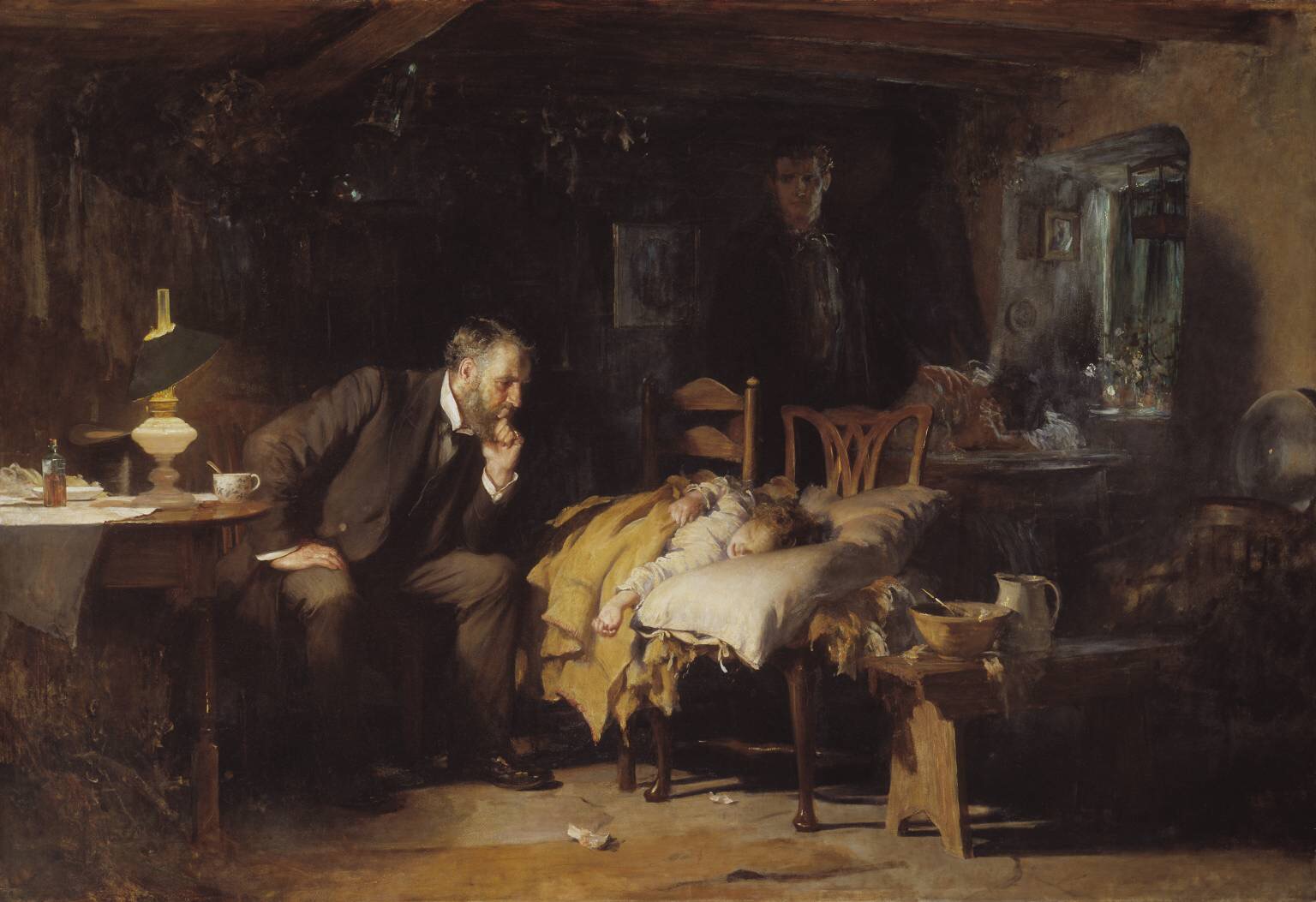
One Day In The Life …..of a rural GP

He had an agenda, he wanted others who read the story of his day to see the joy and satisfaction that can be derived from a life in General Practice, through the passage of 24 hours in his life he wanted to inspire and sustain, to draw in new people and affirm those who had chosen this life.

He knew this to be an impossible task, every day has it’s pleasure and it’s pain, there would be nothing believable about a perfect day in General Practice, just as no-one would accept that driving a train or being an astronaut was a daily round of bountiful excitement.

But he had been asked to write his story.  One day in his life, “in detail” she had said, everything.

3.00am

He woke, not in his usual state – bladder full – but this time hunted by a giant silver ball in his head –  anxious about the task ahead.

The French philosopher Montaigne wrote, amongst his serious contemplations of the mysteries of life,  a detailed account of his thoughts and actions, of his nagging wife, of his bowel habits and boredom, surely she did not want that detail ?

Maybe more like Samuel Pepys’ reports of his appointments and visits to important people sometimes distressingly bland of detail. But even he spattered the texts with a love of the theatre and ‘pretty things’, being caught in flagrante delicto and heavy drinking – would she want to know everything..really ?

Solzhenitsyn’s Ivan Denisovitch had also woken feeling sick on his day. A day in the gulag had more than a fair share of pain, but by the end of it even there, he had found satisfaction, even pleasure; in his fellow man, and in finding the necessities of life.

Perhaps it would not be so hard, to inspire and sustain, inform and entertain with the tale of a day in the life of a rural GP.

4.00am.

He checked his emails..six..none for Viagra or penis enlargement – the spam filter was working well .. one from a patient telling him about the latest specialist appointment and the surprise offer of further shoulder surgery.

He read between the lines. This man was telling him off, he should have been prepared, the months of waiting, the physio, the pain and suffering had been wasted, he could have been fixed so much sooner if only his GP had been a better diagnostician and decided to refer him sooner.

Shuffling off  self-recrimination, he replied all “jolly hockey sticks”, it never paid to read between the lines of an e-mail, face value communications at best – the modern equivalent of tipping one’s cap from a passing carriage “hale fellow – well met.” At least the mail would show he was doing this in the early hours.

Another  .. a paper had been rejected from another journal – this work was supposed to be fun. That weekend it had been – talking to the practice nurse conference “From Maids to Masters” about standing orders. He had left in all the jokes and taken out all the graphs, a good move given that they had put him on first thing Sunday morning after “the Maids” had had a heavy conference dinner and danced all night.

He believed standing orders would help expand patient services and could help practice team development, it was important to spread the word, enthuse people and provide good tools for their use.

His brother in law was researching a cure for AIDS and TB in Kenya – he tried not to live a comparative life, but it was hard sometimes.

The dog needed walking, an hour’s stroll along the beach whilst the sun rose, listening to his iPod. His playlist compiled as he “walkied” a rather ambitious blend of Hamish and Andy – two loveable Ozzie lads –  BBC Friday Night Comedy, Scientific American and The Archers – an ancient UK radio soap opera about the lives of people in the small fictional town of Ambridge – the local stately home estate is planning a horse race, scandal !

Podcasting was his entertainment life, iTunes fired up whenever his computer booted and updated each of his 51 chosen programmes. These self selected radio shows and educational broadcasts made up his listening diet whenever he was alone. He wore huge hearing protectors over his ear pieces whilst he mowed the lawns, so the noise of the machine did not drown out the “Best of Today” or “Health Matters.” NASA, National Geographic, TED talks and New Yorker Cartoons entertained him in waiting rooms, on flights and in the bath.

Reading was confined to bedtime Harry Potter with his daughter – the final book, the final chapters, the final daughter, a whole lifetime of bath, books, bed.

During breaks in work he would dip into BPAC, NZ Doctor, Obs and Gynae Journal, JPHC and NZMJ and BJGP- but probably not enough.

7.00 am

Home for breakfast, he woke the wife with a coffee, showered and the frantic school preparation began- lunches to make, teeth to brush, clothes to find and shake free of yesterday’s mud  – for his daughter not himself – cheque in an envelope – whatever happened to state funded education?

Mobile coffee made, he bundled off to work, a 25 minute drive with Garrison Keillor reciting poems over the car stereo.

8.00am

Check in on his computer and go over results, patients already waiting whilst he greeted the staff with a cheery grunt and lit his oil burner. The washed who came in after the great unwashed appreciated lemongrass and lavender generally.

(One patient had been horrifed “You don’t have that going all day do you ?“ Quack  “It’s very dangerous to have lemongrass in such concentration it will give you cancer” Quack.)

Fifty three results and scanned letters to view.  For many years he had been building a knowledge of these people, some of course were new to him, but many names triggered brief life histories in his head.

A poor HbA1c- man with a wife and a fishing addiction, overweight and under exercised mentally and physically, in town for years but still hankering after the busy town life that economics had driven them from.

A normal FBC – a busy woman with a family and an unmotivated husband -trialed for years by an illness that was getting better but would take many more months to overcome.

He greeted the GP registrar, shared news of the night on call, a few phone calls from the nurse but nothing major.  He settled in to his patient-filled day.

His morning was punctuated with three phone calls. Two from the chemist checking that the prescription he had just written for the medication he had just arranged to give the patient he had just seen was the medication that he intended to give and in that dose.

He had taken to writing “This is deliberate -I know what I am doing” on scripts the week before as this was not in uncommon occurrence. They needed a meeting.

The other call was from the hospital, the Sparky Young House Surgeon transferring Mr Cellulitis back to the cottage hospital, apologetic as the old school consultant had put him on IV Penicillin and Flucloxacillin, a very old school combination, but it had worked, “surprisingly” or so it seemed to Sparky.

Fifteen patients before lunch, another fifteen booked for the afternoon. A full “blue” book. But the day’s “blue” appointments gradually turning “yellow” as extra patients were fitted in…

08.30am  Morning:

Mr Diabetes Review.  Mr Stop Smoking (day 7.)

Mrs Back Pain Off Work.  Miss Infected Eczema.

Messrs Scabies and Lice and Sores and Snotty Nose.

Mr Cough. Miss Buckled Up With Abdominal Pain.

Mrs Medication review. Mr Erectile Dysfunction.

Mrs Discharge Transition Admission For Stroke.

Master Earache.  Mr Testicle swelling.  Mrs Sprained Ankle. Mr Arthritis.

Mr My life Is Shit, Cough, Cough, Cough, Cough.

Mr Man in A Wheelchair Insurance Form.

Mr Funny Mole On The Ear And My Wife’s Affair.

Did she want him to write the details ?

Roger Neighbour talked about the 2 other people in the room in each consultation: the subconscious doctor and the subconscious patient, searching for what is unsaid.

Listening to those inner voices whilst Earache’s mum talked, revealed anxiety about the MMR vaccine. Testicle swelling had a cancer fear, Infected Eczema feared a DVT.

No-one had only one problem and his own voice needed constant attention to keep it focused:

“When he asks for an off work certificate why does the hair on my neck go stiff ?” “When abdo pain screeches try not to let your face show you think it sounds funny.”

The pleasure and the pain.

He chatted to the GP registrar. Her morning had been much the same, she told him of the exemplary management of all her cases.  He felt his contribution was to listen and affirm, to reassure, but was this education?

Teaching theory would talk of apprenticeship learning.  His burden was sharing the decision making vicariously.  Perhaps a CXR would have been good, maybe think about the unexpressed fear of dementia next time.

12.30pm  Lunch.

Half an hour in the local café. Alone with the paper, a bacon wrap and a cup of strong coffee, head down, he avoided eye contact with yesterday’s Chlamydia out of fear of triggering an embarrassed response. He made no decisions.

1.00pm  Afternoon.

Mrs Review The Drugs – Stop The Beta Blocker.

Mr Carpal Tunnel Syndrome And A Funny Mole.

(Discuss new vaccine schedule with nurse.)

Master Heel Pain . Mr Impetigo.

Mr Severe flank pain – admit to hospital.

(Discuss 2 patients with rest home manager.)

Mrs Atrial Fibrillation Counsel About An Operation.

Miss Infective Exacerbation Of Asthma.

Master Epididymal Abscess.

Mrs Review The Drugs And Chase Up Surgery.

Mrs Depressed and Fat For Sickness And Loan Form.

( Telephone from chemist are the rest home scripts right?)

Mr My Wife Says I’m Cold To Her Touch.

Mrs Worried Well Results. Miss Spots and Flu.

Miss Urinary Tract Infection and Medication  Review.

He checked his e mails. Twenty Four. None for Viagra or penis enlargement – strange.

Two from the Professor – put the papers to a different journal, apply to a different ethics committee.

One from the DHB – a newsletter from the GP liaison – One from the college asking for volunteers to do a Cornerstone visit, minutes of the PHO Board meeting to approve,  PHONZ asking for expressions of interest in a new pilot project, Australian students confirming their elective, Swiss friend asking how goes it, BMJ and NZMJ and NZ Doctor and Medscape, MOH minutes of a Taskforce meeting.

He went through his in tray – insurance forms to complete.

Would he put them off until another day?

Does the pope wear a funny hat ?

ECGs to review, Spirometry results, newsletters from ACC and plastic covered bumpf from the drug companies, he discarded into  the rubbish 50 % of the mail after a cursory glance, completed a questionnaire for a university researcher about the elderly, and switched off his computer.

5.30pm.

He chatted to the GP registrar, the afternoon had thrown up a problem, literally in the form of a child who had been vomiting repeatedly and become sufficiently dehydrated to warrant admission, the hospital doctor had been obstructive but she had stuck to her guns, confidence growing, what else could  have been done ?

He discussed a planned trip to the local amateur dramatic production for the staff outing.

The receptionist stopped him as he left.

Venison had been left by ‘My Life Is Shit, Cough, Cough, Cough, Cough’ freshly butchered from a newly slaughtered beast.

A bag of beans had been left by Mrs Review the Drugs.

He popped over to the hospital. Mr. Cellulitis was happily settled into the ward, eating what could have been a roast dinner at one time, but was now what could only be called ‘hospital food’ – the amorphous gray green slime collected into pockets on a harshly cleaned plate that always reminded him of the film “Soylent Green.”

He drove home, listening to Stephen Fry, and part of Agatha Christie’s Radio Mysteries.

He stopped to check no-one was hurt at a minor crash, a car spun off the road in the gorge, just around the corner from where he had written off his own car two weeks previously answering his cell phone whilst driving to an out of hours clinic.

6.15pm

He arrived home just after the family and asked his wife “How was your day?” He wandered off the bedroom to change whilst she expounded upon the daily grind of a teacher in a high school. He mistakenly thought she was oblivious to his absence.

A cycle ride, “Health Matters” and “TED Talks” on the iPod, and then tea.  Venison steaks and fresh green beans.

Bath, Harry Potter, Bed for the daughter and the Food Channel to numb the brain for his wife before bed.

He wrote it all down.

He wondered about you. Inspired ? Sustained ? Informed ? Entertained ?

He thought “there is joy in each day and that’s not bad.”

He contemplated the list of conditions he had dealt with. The human contact and connections that he had made. The lives he had changed. The people he had helped.

He had not found a cure for AIDS and TB in Kenya, but every day was different, every pain and cough had a unique story, he was making a difference atom by atom, doing what he could.

He loved his work.

He thought of an empty chair in an empty room and fell asleep.

Jo Scott-Jones

(A version of this story appeared in NZ Doctor Magazine in 2008)

WONCA Rural Conference 2015 – Dubrovnik, Croatia

Fantastic summary and resource around the social media content of #woncarurall2015

drmelconsidine's avatarGreenGP

I was extraordinarily privileged to be able to attend and contribute to the World Organisation of Family Doctors (WONCA) Rural Conference in picturesque Dubrovnik, Croatia on 15th-18th April, 2015 (on Twitter: #woncarural2015).

The conference also had a specific stream for the Croatian college of family doctors (KoHOM) 6th congress, with a mascot which, after a stroke of pure genius, I named “Gastroboy”, as a term of endearment…

Gastroboy - Screen Shot 2015-04-21 at 7.27.13 pmThanks to Dr. Ewen McPhee (@Fly_texan) and Dr. Graham Emblen (@gemblen) who got the ball rolling on our abstract early, I was able to be part of a dyamic and growing team of enthusiastic rural GPs and budding rural GPs including Ewen, Graham, Dr. Gerry Considine (@ruralflyingdoc), Mr. David Townsend (@futuregp) and Dr. Aaron Sparshott (@IVLINE), to showcase how social media can be a safe, effective and efficient means for rural clinicians to gain clinical knowledge and skills to improve the care of…

View original post 848 more words

Critical Landmarks on the Journey to Change #woncarural2015 Dubrovnik Workshop report 

Implementing Change Workshop. #woncarural2015. Dubrovnik. 

Facilitator Martin London NZ / Scribe Jo Scott-Jones 

The workshop was well attended by people from South Africa who were effecting change for small rural communities, from Canada – who were facing government imposed changes and wanting to learn ways to change for others, from the USA seeking international perspective on change, from Ireland having undertaken significant change looking for more ideas, and from the UK  a work renowned expert able to share expertise about change through organisations. 

The process was one of “snowballing” discussion starting with pairs and building to larger groups, than sharing generated ideas to the whole group. 

To draw out initial ideas The facilitator made each pair speak to each other for two minutes without interruption starting each sentence with “One thing that has changed for the better in my practice has been… ” there were two iterations of this until the larger group feedback. 

Our workshop findings are below: 

Critical Landmarks on the Journey to Change 

There is a need for persistence, patience and time to enable change 

5-10-18 years is not uncommon. Be ready for rapid change because when it comes it will happen quickly. 

In terms of workforce problems train in rural for rural, a culture of learning is a fertile ground for change. 

Courage and Critical Mass 

Once there is opportunity there needs to be enough people in place to move with the cascade of change, face to face meetings work well, the people need a shared courage to make the move. Use IT resources to maintain conversations in between meetings, they can especially be helpful for the diaspora of people in rural communities. 

Demonstrate value

There will be barriers to change financial, or political keep the dream you have for your patient in focus. Cost effective change is a key to enabling change so you need to understanding “value” you can bring to the table. Resources go to what is measured. 

Cost effective discussions are hard, seek advice. 

Build on your strengths, we often circle the drain and focus on problems – celebrate what you do well. 

Opportunity prefers the prepared mind – having a vision and sharing it is important even if it is not implemented straight away it is part of the preparation for others. 

In South Africa, private practices often need to shift into government policy, a lightbulb moment has been that the private practice is demonstrating great care it can drive the government to change. 

Sometimes it is important to make a step change away over major structural barriers but sometimes major structural barriers can be changed if the right people understand. Elevate the conversations to the people above the barrier – use the organisations. 

Resistance is futile

You can always go up, down, round, or through – remember the shadow system in complexity theory – the shadowy power brokers if exposed can be extremely helpful. 

Identify the shadowy powerful people, get to know them, bring them into the rural areas, allow them to taste the vulnerability of distance, demonstrate hospitality and they will be friends for life. 

The Doctors Dilemma Workshop Report – Recruitment and Retention – Junior Doctor’s Perspective

The Doctor’s Dilemma Workshop   – Ms Veronika Rasic (@DocVei) FM Trainee

Support and Scribe: Dr Jo Scott-Jones (@opotikigp)

The workshop was designed to explore the dilemma that we need people to work in health in rural areas, but we have great difficulty in attracting them.

Question : What would make an ideal future practice from the point of view of a young doctor or medical student?

Question : What needs to be done to make rural practice attractive from the point of view of a young doctor or medical student?  

In attendance were around 15 experienced and knowledgeable senior doctors from NZ, UK, Canada, Slovenia, Australia and Veronika a Family Medicine trainee and Rok Petrovcic (@Rok5rovcic) a Medical Student from Croatia.

Process:

Because the expected audience of young doctors and medical students did not attend, the original plan for the workshop was modified.

Veronika and Rok were given an exercise to perform which was observed silently by every one else. They each had 2 minutes to talk to each other without being interrupted. Each sentence they said they had to begin with the phrase “My ideal rural practice will….” Once their two minutes was up they swopped over. This was repeated 3-4 times until the issues rasied were becoming repetitive and the information gained exhausted.

They then undertook a brief reflection on the process and how it felt as did the observers – the main feedback being it is hard to listen without interruption.

(In this context it is a good exercise to ensure that a minority relative powerless voice is heard within a group setting, it quickly can take you places you would not usually go without support, and it produces an exhaustive list of issues that probably reflects combined wisdom.)

Outcome:

The discussion was captured on a flip chart using a “mind map” technique – My ideal rural practice will…

The students and larger group then discussed what “the system” needs to do in order to recruit more health professionals into this ideal rural practice:

  1. Start Early

Community role models have an early influence on career choice, be a great GP to your patients and you will inspire them – go into the primary schools and give talks,organise medical students to go into schools and give health or career talks.

It is most powerful when someone FROM that community can GO BACK and say “ I was once where you are now and it is possible to get to University, and to a health professional training” it is hard for kids to see unless they are shown it is possible.

  1. Undergraduates

Show undergraduates it is attractive to work in rural areas.

There are many myths that propagate amongst undergraduates – partly supported by the specialist who are training them in hospital settings – that GPs are the “poor cousins,” they not experts, they work long hours, they are isolated, that emergency work is overwhelming, they are isolated.

Hold an undergraduate “myth busting” evening to expose and modify the perception of risk at an early stage in undergraduate years. Try and persuade senior doctors to use less negative language about GPs and about Rural practice.

Of course selecting for rural, training in rural, maintaining long periods of time in rural communities is great for undergraduate education and for rural recruitment.

There is a feeling that even once qualified junior doctors don’t feel they have been given all the skills and attributes to “cope” in a rural practice – make sure they have the opportunity to gain those skills, or better skill make sure every graduate feels they could work in a rural practice.

  1. Make the workplace attractive.

Money makes the world go around.

It does cost more to live and work as a doctor in a rural area – there are greater locum costs, greater costs incurred in staffing, higher after hours work rosters to staff and pay for, greater costs getting away to education opportunities, and often a need to send children to boarding school because of lack of local facilities. A “rural premium” funding that gives a bonus to people working in a rural area can help make the job more attractive, it also shows the work is valued by the community.

Provide a junior doctor with a car and accommodation, at least for the first 6-12 months of work so they can find their feet and explore the community properly, it is a time when earning capacity os not great and this sort of incentive is highly prized.

Practices need to be well equipped.

It is satisfying to be able to provide comprehensive continuous care for a community. If the practice has access to some in-patient beds, and good diagnostic equipment like near patient laboratory services and an ultrasound scanner there will be fewer unnecessary transfers out of the rural community with the additional risk and costs that will occur. We know from work in Canada and Australia that small well equipped hospitals can be more cost efficient than larger centres.

Provide support.

Be a mentor to another doctor, older professionals can find this a sustaining role and younger colleagues are looking out for effective mentorship – if this can extend into private and personal aspects of life it can be even better to support a young professional through hard financial and personal decisions.

Support community initiatives.

An attractive community is a better place to work, a happy community is a better place to work, a resilient community is a better place to work. Engage in your community, support local initiatives that make the place you work more attractive, happy and resilient.

Gender Equity.

Make sure that maternity leave is provided for in a safe and comprehensive way within your system. Even if a junior doctor is not going to have a child, they need to know they could and it would be no problem, think about a crèche at work if the workplace is big enough. (In some countries it is still accepted practice to discriminate against women by asking about family planning during a job interview!)

Develop a clear career pathway for General Practice.

Young doctors want to see how they can advance in the career, often it seems that once you have become a GP you have reached the peak of the profession, the rest is experience. It is good to have something to strive for.

For Veronika and Rok, the students there it was good to hear the response of the experts and to understand that their ideal practices were achievable. The more senior people in the group felt the exercise was worthwhile for a variety of reasons, the two minute silence listening exercise was useful to observe, it was interesting that much of what the students had drawn out were issues that are on the agenda for the WONCA Working Party on Rural Practice.

The Rural Hero Test – #woncarural2015 

Rural Health Hero Test (after ZeFrank) 

It is safe here. 

Imagine We are surrounded by a soundproof glass bubble that protects us from all outside, only you and I are here and you and I can be honest with each other without fear. 

This test is designed to show if you are a rural health hero or not. 

Your only task is to answer honestly, by sitting down if the answer to the question is “yes”. 

Have you ever trodden in cow shit on your way to a home visit? 

It’s OK. You are with friends. 

Have you ever been chased by a gravel path by a goat, goose, dog, cow or chicken? 

Have you ever fallen over a wire fence at the scene of an accident and heard police, ambulance and fireman laugh  ? 

it is OK, you are with friends here,you are a rural health hero

Have you ever been on a home visit and had to have your car rescued by a tractor because it fell off the side of the road because the road was narrow and your reversing skills too poor? 

Have you ever fought with a manager or government official over the future of a service to your community? 

Yes. You are a rural health hero. 

Have you ever tried to match up skin edges ragged by a chainsaw? 

Have you ever fallen asleep in front of a patient on a warm afternoon after a busy  weekend on call?  

Have you ever spent an afternoon persuading a patient the trip to town to get healthcare is worth it? 

Have you ever seen a man, a barn, a gun, his blood and brains? 

Have you comforted a spouse in a kitchen left behind to deal with the debts? 

Be calm, you are safe here, you are a rural health hero. 

Has your spouse ever been asked by a stranger in the street if you have the results of their Chest X-ray ?

Have you ever sat at a family dinner party with your best friend and his wife who you have just treated for an STI that she caught from someone who is not at the party? 

Have you seen someone’s inner thigh in the cereal aisle of the local shop? 

You are safe here. It is OK. You are with friends. 

Do you live in a most beautiful house ? Is the view from your window amazing? Do you breathe clean air and walk in forests, fields, beaches, or mountains after work ? 

Have you ever thought your was the best job in the world ? 

Have you ever wondered what will happen next and smiled? 

It’s Ok, I see you have all passed the test, well done, you are all rural health heroes. 

Jo Scott-Jones 

(More on rural heroes can be found here  Rural Heroes

National Rural Health Conference 2015 – Closer to Home

http://www.nationalruralhealthconference.org.nz/nrhc15 

 People who have an interest in the health and wellbeing of rural communities will find substantial benefit from spending time at the National Rural Health Conference 2015 in Rotorua this year. 

 Rural communities are high needs communities, they have populations that are characterised by a high proportion of Maori, and poor socioeconomic profile. 

New Zealander of the year Lance OSullivan’s opening keynote will highlight some of the positive things that are being done in rural communities to address the gaps between mainstream and Maori New Zealanders.  This will be followed by Health Minister Jonathon Coleman who I am sure will talk about the current direction of travel of government policy and how initiatives like Alliancing are impacted on the way services are delivered. 

 The conference has clinical, research, management, hospital and community streams that reflect the pressures and issues that face rural health providers and communities.

Farmers, local government officers, rural business owners, NGOs and others will find specific conference presentations that will open opportunities and address the pressures they face in their daily lives. 

 Dr William Rolleston , National President of Federated Farmers will chair two presentations and workshops  about health and safety reforms implemented by WorkSafe NZ and the implications for rural businesses and workers, and around mental health issues, which remain a significant pressure in rural New Zealand. 

 Rural Communities in New Zealand have been referred to as “zombie towns” recently by an influential economic expert, to counter this world view Dr Ernesto Sirolli is coming back to New Zealand to present and run a workshop focussed on building community resilience and developing the economies of small communities.  Ian Proudfoot of KPMG will present on how rural communities can best equip themselves to deliver to global food markets. 

 New Zealand relies heavily on rural communities for its economic health, and the health of those  communities is vital to enable an effective workforce. All rural communities need to look at ways of futureproofing their rural health provider teams and leading rural educationalists will talk about how we ensure that we maximise training opportunities in rural communities. 

 What is amazing is that this is all on day one, and it represents only a small reflection of the opportunities the conference will offer to delegates. 

 Day two has more opportunities to work with Dr Sirolli on how to grow local economies,  inspiring stories from rural health students, developing sustainable health services, shifting services closer to home, challenges for Maori providers, technological advances in rural communities,  and how we best advocate for equitable sustainable services. 

 It is going to be a busy weekend – if you have an interest in the health and wellbeing of your community and want to socialise and network with like minded others – make time to be there !

Alliancing Progress

RoadNotTaken

The Road Not Taken by Robert Frost

Two roads diverged in a yellow wood,
And sorry I could not travel both
And be one traveller, long I stood
And looked down one as far as I could
To where it bent in the undergrowth;

Then took the other, as just as fair,
And having perhaps the better claim
Because it was grassy and wanted wear,
Though as for that the passing there
Had worn them really about the same,

And both that morning equally lay
In leaves no step had trodden black.
Oh, I kept the first for another day!
Yet knowing how way leads on to way
I doubted if I should ever come back.

I shall be telling this with a sigh
Somewhere ages and ages hence:
Two roads diverged in a wood, and I,
I took the one less travelled by,
And that has made all the difference.

DHBs and PHOs have by now all formed Alliance Leadership Teams, and in the near future ALTs will form “Service Level Alliance Teams” to provide advice and recommendations about “whole of system” approaches to improvement in services across a range of issues important in their communities – youth health, emergency care, and where appropriate rural providers across the country are being approached to engage in rural service level alliance teams.
This is a huge opportunity for rural providers. For the first time every DHB in the country – yes, even you South Canterbury – is being encouraged to develop an infrastructure that allows rural based providers a significant voice in the planning of sustainable health services for their communities.
At the recent workshop jointly organised by the MOH and NZRGPN (see what we are doing there – this is about working together) we heard the MOH say:
“This funding is to support rural general practice, there is no intention to reduce the financial sustainability of rural practice.”
“If ALTs think this is about making shifts in the way rural bonus is paid they have missed the point, this is about sustainable services for rural communities.”
Somewhere in ages and ages hence, we will tell our trainees with a heavy sigh, “two roads diverged in a wood, and I, I took the one less travelled by, and that has made all the difference.”
But if we are honest, just as for Robert Frost, the choice between the road taken and the alternative was not based on whether or not one was more trodden than another. For us the decision was based on the fact that one branch of the road looked pretty much like the road behind – increasingly fractured and uneven whilst the other had at the very least a few road signs.
At the end of the road whether we reach our destination will depend on how much effort we all put into the journey.
To be successful providers need to engage with the process.
The NZRGPN has on its website an “Alliance 101” link that hopefully will give rural providers a bit of a map to help them on their way. The website provides a link to tools to ensure that communication between the “centre” and rural communities works as best as it can in “rural proofing” – it provides a sample “terms of reference” to guide rural service level alliance teams as to how they should work together and direction for teams to consider principles and values by which they might work.
The website provides links to video summaries of the September Alliance Workshop and information about how these teams will be supported in the future.
The NZRGPN, MOH, DHBs and PHOs will regularly get together to share information and concerns about the sustainability of services to rural communities at the Rural Advisory Group – so even when the road travelled becomes leaf thick and slippery help is on hand to clear the path ahead.
No one relishes change, but the NZRGPN hopes and expects this change will be a positive one for our members and the communities they serve.

New Zealand “Alliance Contracting” Workshop – Sept 4th 2014

Alliancing is one approach that the New Zealand health system can use to efficiently allocate scarce resources through building communities of interest across more than one practitioner or organisation. There are core elements to alliancing that contribute to improving success.

An Alliance reflects a group of organisations agreeing to work together to achieve shared outcomes and using a shared decision-making forum, the Alliance Leadership Team (ALT). The approach provides a more ‘fit for purpose’ arrangement that promotes and facilitates integration, regional service planning, and alliance funding and planning. It provides a mechanism for clinical leaders to be involved in the development of health services.
Service Level Alliances are established by the ALT, as required, to implement significant service change and or specific service redesign. ALTs are decision-making forums for organising groups of related health services, including decisions on contractual mechanisms and budgets.

Who will be involved in a Rural Service Level Alliance?
DHBs, primary health organisations (PHOs) and providers will work together in a Rural Service Level Alliance. They will involve GPs and possibly other health professionals and organisations who deliver a given service. They are likely to engage with patient groups and communities. The range of participants depends on the agreed scope of the discussions.

Workshop Summary:

More than 80 representatives from rural general practices New Zealand-wide, DHBs, PHOs and other allied rural sector organisations attended a workshop in Wellington on September 4 to hear about and discuss the new Alliancing era and its impact on rural communities.
In October 2013, Associate Health Minister Jo Goodhew announced the Government’s support for a new way of allocating rural funding through Service Level Alliances and that additional rural funding would be provided in the form of transitional funding and rural practice sustainability funding.

Alliancing will see DHBs, PHOs and other health providers’ work together in Rural Service Level Alliance Teams. These teams will involve GPs and other health professionals, and organisations and could also involve community representation. Discussions and negotiations will ultimately determine funding levels allocated to rural practices for services provided.
Organised jointly by the New Zealand Rural General Practice Network and the Ministry of Health, workshop delegates gathered at the Rydges Hotel to hear speakers including the Deputy Director-General of the Sector Capability and Implementation Business Unit Cathy O’Malley, Network chairperson Dr Jo Scott-Jones, Network Board members and representatives from Midland Health Network and the Canterbury Clinical Network speak about the Alliancing concept and their experiences of instituting it. During the day delegates participated in workshops, listened to panel discussions and discussed and questioned the Alliancing concept.
New Zealand Rural General Practice Network chairperson Dr Jo Scott-Jones was delighted with the turn-out and with the positive attitude from delegates to embracing the new funding era. He urged them to “get involved” in the process and engage with their peers, communities, allied health services, DHBs and PHOs to ensure the future viability of their practices and services to communities and patients.

Dr Scott-Jones said Alliancing offered a formal infrastructure which would allow rural general practice to look closely at the way it operates alongside PHOs and DHBs.
“We need to be open to how we can “do things better”, so that services in rural communities continue into the future.
“At the same time we need to ensure the current somewhat fragile services are supported and retain their financially viability.”

Key outcomes of the workshop were:
• A MoH assurance that “there is no intent for rural funding to go anywhere other than rural general practice” There has been a lot of anxiety about this amongst providers. The process was much more about the sustainability of services in communities than about the funding.
• If an ALT wants to just talk about changing the “rural premium” funding streams it has missed the point – this is about big picture planning and innovation and is a real opportunity to develop sustainable rural health services
• Examples of Alliancing work already underway around the country provided an opportunity for delegates to hear what had worked well
• Acknowledgement that many rural practitioners, PHOs and DHBs will want to take their time over this process and develop these new relationships with trust and integrity
• The Network will continue to facilitate/share progress related to rural Alliancing
• Key messages and interviews with presenters will be available via the Network’s website: www.rgpn.org.nz

The Importance of Training in Rural Areas

The recent Rural Health Conference in Gramado gave us time to reflect on a number of important issues facing rural communities across the world – along with the pressures of climate change, population growth and increasing burdens of chronic disease the “perfect storm” is compounded by the continued problem of access to the quality medical services.

New Zealand began life as a rural nation, and our national identity takes pride in our ‘can-do’ approach to life. It is a fundamental human right that people living in all regions have access to high quality health services, perhaps especially in regions at distance from main population centres, regions that are often the backbone of a country’s economic wealth, and centre of leisure activities (1).

Having a healthy, engaged and well educated health workforce is important to the wellbeing of all communities. Attracting health professionals to live and work in rural areas is an international problem familiar to all WONCA members (2).

It may be a little confusing why this is a problem for those of us that have made this lifestyle choice, but it may be more prevalent in areas where there is a high demand, especially on after hours care, low reward and professional isolation and where family and social issues put pressure on rural providers (3).

In New Zealand year after year GP workforce surveys have detailed the on-going problems of recruitment and retention into rural practice (4-6), and the shortage of providers in rural areas continues, with over 25% of practices currently seeking full time GPs and Nurses (Rural General Practice Network unpublished data 2014.)

The medical workforce is the best studied example of a need that is widely reported to affect rural nurses, pharmacists, midwives, dentists and physiotherapists (7).

New Zealand needs 50% of its medical graduates to choose General Practice as a career, currently only 29% have a “strong interest” in doing so at the end of the medical degree offered by Auckland University, (8) and it is unclear how many NZ graduates actually become GPs and even less is known about how many of them to choose rural practice.

We do know that currently only 9.2% of doctors working in rural areas are NZ trained, and only 16.4% of NZ trained GPs choose to work in rural areas (9). We do know that as a proportion of the workforce the number of GPs is falling compared to specialists (10).

Rural workforce statistics show that the average age of rural General Practitioners continues to age and these communities rely heavily on international medical graduates to provide services. This leads to a continuing need for recruitment as we are failing to “grow our own” health workforce (9).

If we are to “grow our own” workforce it is very clear from international studies that choosing students with rural interests and backgrounds, exposing undergraduates to positive training experiences in rural areas, and providing well supported career pathways in rural practice increases the intention of medical students to work in rural communities once they graduate (2, 11).

We know that the career decisions of students and young professionals in the future will be affected by the way health career choices are viewed by society, available financial incentives, appropriate professional development and career opportunities, the availability of locums, a good quality of life ability to achieve balance, and the lifestyle choices of their spouses and family needs (2).

Many of us involved in education will be aware of the idea of “constructive alignment” of intended learning outcomes – what we hope to achieve – and the assessment and learning activities that are planned. The same theory applies to issues that face us in our rural communities.

We want to see an improvement in the health outcomes for rural communities, “Health for All Rural People”, we need our governments, colleges and colleagues to be measuring these outcomes – because of it is not measured it won’t be changed – and then we need our recruitment and retention and service delivery model thinking to be focused on achieving these outcomes.

This may seem bigger than Ben Hur but from what we do know it is clear that in order to meet the needs of our current and future population, in order to achieve equity and fairness or health outcomes for rural communities, in order to support and further develop the economic health of our rural sector, government needs to further support and expand initiatives that that increase exposure of training health professionals to positive rural experiences.

Dr Jo Scott-Jones

REFERENCES:

1. Ministry for Primary Industries : Rural Communities 2014 [09/05/2014]. Available from:http://www.mpi.govt.nz/agriculture/rural-communities.
2. WHO. Increasing access to health workers in remote and rural areas through improved retention:global policy recommendations. Geneva: World Health Organisation, 2010.
3. Burton J. Rural Health Care In New Zealand. Wellington: Royal New Zealand College of General Practitioners, 1999.
4. London M. New Zealand Annual Rural Workforce Survey 2000. Christchurch: Centre For Rural Health; 2001.
5. Mel Pande M, Fretter J, Stenson A, Webber C, Turner J. Royal New Zealand College Of General Practitioners Workforce Survey 2005 part 3: General Practitioners In Urban and Rural New Zealand. 2006.
6. The New Zealand Medical Workforce 2007. New Zealand Medical Council; 2008.
7. Health Workforce Development: An Overview. In: Health Mo, editor. Wellington, New Zealand2006.
8. Poole P, Bourke D, Shulruf B. Increasing medical student interest in general practice in New Zealand: where to from here? The New Zealand medical journal. 2010;123(1315):12.
9. Garces-Ozanne A, Yow A, Audas R. Rural practice and retention in New Zealand: an examination of New Zealand-trained and foreign-trained doctors. The New Zealand Medical Journal (Online). 2011;124(1330):14-23.
10. Medical Council of New Zealand: The New Zealand Medical Workforce in 2012 Wellington, New Zealand2013.
11. Walker JH, DeWitt DE, Pallant JF, CE. C. Rural origin plus a rural clinical school placement is a significant predictor of medical students’ intentions to practice rurally: a multi-university study. Rural and Remote Health. 2012;12(1908):Online.
12. Farry P, Hill D, Isobel Martin I. What would attract general practice trainees into rural practice in New Zealand? NZMJ. 2002;115(1161).
13. Worley P, Strasser R, D. P. Can medical students learn specialist disciplines based in rural practice: lessons from students’ self reported experience and competence. Rural and Remote Health. 2004;4(338):Online.
14. Ministry of Health: Voluntary Bonding Scheme Wellington, New Zealand2014 [09/05/2014]. Available from: http://www.health.govt.nz/our-work/health-workforce/voluntary-bonding-scheme.
15. Rural Health Interprofessional Immersion Programme Wellington, New Zealand2014 [09/05/2014]. Available from: http://www.rhiip.ac.nz/.
16. University of Otago: Rural Medical Immersion Programme Otago University, New Zealand2014 [09/05/2014]. Available from: http://rmip.otago.ac.nz/.
17. P Poole, W Bagg, B O’Connor, A Dare, J McKimm, K Meredith, et al. The Northland Regional-Rural program (Pukawakawa): broadening medical undergraduate learning in New Zealand. Rural and Remote Health. 2010;10(1254):Online


(published in Wonca News June 2014)